
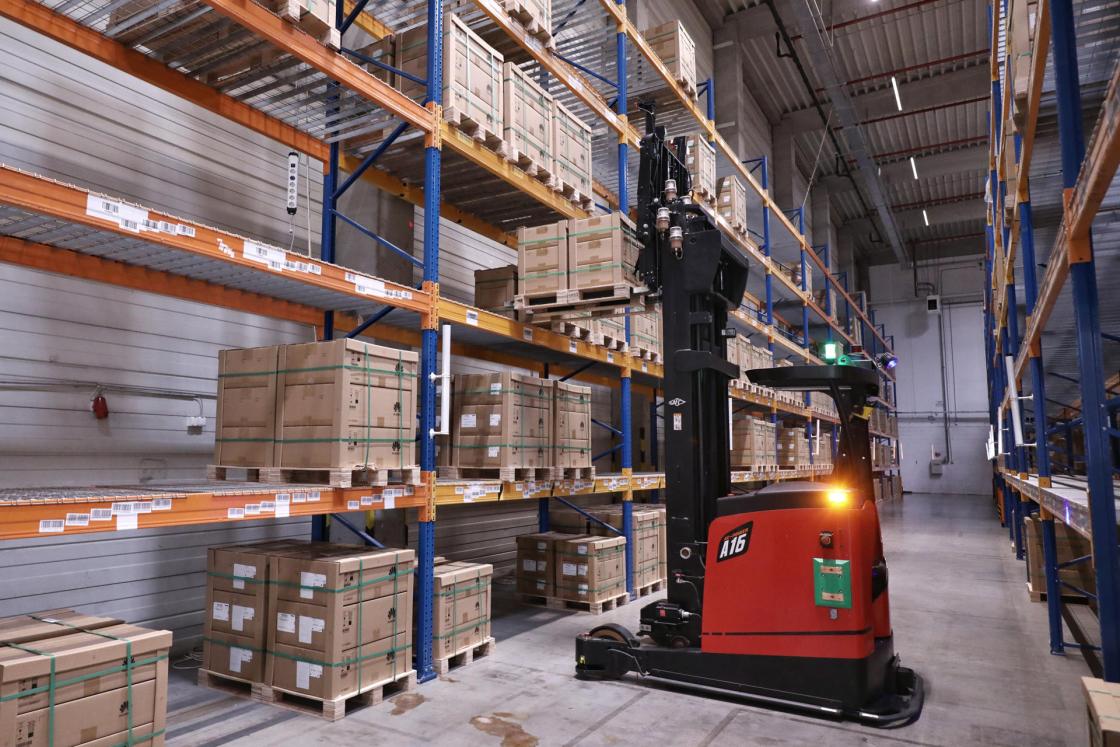
Despite slower-than-expected deployment in Europe, 5G mobile technology is gradually making its way into factories and logistics centers. This advanced technology is transforming warehouses with sensors and replacing traditional, operator-driven forklifts with newer, autonomously running versions equipped with cameras.
Proponents argue that the automation brought by 5G increases worker safety in factories by alleviating the need to handle heavy machinery, thereby potentially extending their working lives.
“It’s impressive to see how technology transforms job roles and reduces physical strain. This is crucial as it allows people to work longer in a factory setting,” says Dr. Ulrike Fasbender, a business professor at the University of Hohenheim, Germany.
According to her, successful digital transformation in a factory requires employees to feel involved and eager to be part of this transition.

Fasbender identifies three key factors for achieving this: recognizing the utility of process automation, ease of applying automation, and preserving human autonomy. “Employees should not be controlled by technology, but rather, they should be in control of it,” she said.
However, she acknowledges that the new digitalized industrial environment will necessitate a shift in employee skills. She emphasizes the need to include older workers in this transition, offering them opportunities for continuous learning and adaptation to new roles.
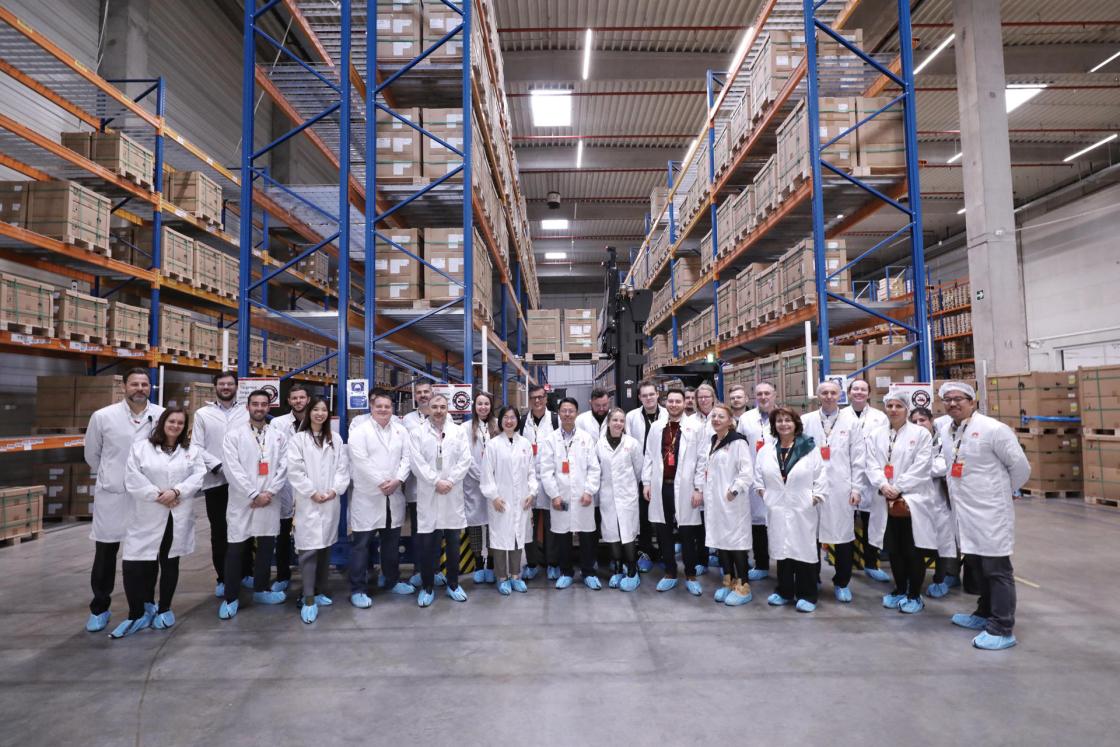
This week, Dr. Fasbender attended a visit in Budapest, along with EFE, to one of Huawei’s main manufacturing and distribution centers in Europe. This facility is a pioneer in adopting 5G for industrial use in Europe.
5G technology provides significantly faster connection speeds than previous generations like 4G or 3G, minimizes website response times, and allows for more devices to be connected within a network.
Attila Bolla, the director of Huawei’s European manufacturing and distribution center in Budapest, tells EFE that 5G implementation in industry ensures higher cybersecurity and allows for more extensive data collection. This data forms the ‘big data’ used for training company algorithms.
Bolla asserts that automating a factory with a 5G network is “much more stable” than using Wi-Fi technology, which he considers better suited for office environments.
“5G also supports higher uplink and downlink speeds and very low latency. This is crucial for real-time communication with overseas locations, requiring latency of just a few milliseconds,” he says.
In the logistics center he oversees, tasks like assembling parts or connecting cables demand high precision.
Using glasses equipped with cameras and connected to the factory’s 5G network, the movements of an employee in Budapest can be monitored in real-time by engineers in China, with only milliseconds of delay.
Bolla believes that implementing 5G in a factory or logistics center “always guarantees higher production volume” and paves the way for “a more stable future for any company” that adopts it. EFE
(Note: This article is part of a series supported by Huawei. The editorial content of EFE is independent of this company’s positions.)