
São Paulo, Mar 29 (EFE).— The ratification of the Escazú Agreement is both urgent and fundamental to protect territorial defenders in Latin America and the Caribbean and to encourage youth participation in environmental causes, a group of activists said.
Adopted in 2018 by 24 countries, the Escazú Agreement is the only regional environmental treaty in Latin America and a global pioneer in defending the rights of environmentalists. However, eight countries—including Brazil, Paraguay, Peru, and Venezuela—have yet to ratify the accord, jeopardizing its implementation.
“Escazú is a reference in the protection of defenders, but it also promotes social participation in decision-making. That’s why young people have mobilized to push for its ratification,” said Jarê Aikyry, an indigenous leader and executive director of Engaja Mundo, Brazil’s largest youth activist network, in an interview with EFE.
Escazú to Empower Young Voices in Environmental Policy
Aikyry emphasized that ratifying Escazú would require governments to offer tools and legal mechanisms enabling youth to engage in shaping socio-environmental policies that will determine their futures.
He called the agreement “an instrument of unity” for Latin America:
“They are territories with a gigantic historical, territorial and socioeconomic similarity. Many also have difficulties with transparency, in addition to very high rates of murder of defenders. So, Escazú allows us to identify ourselves as Latin America,” he said.
Violence and protection for defenders
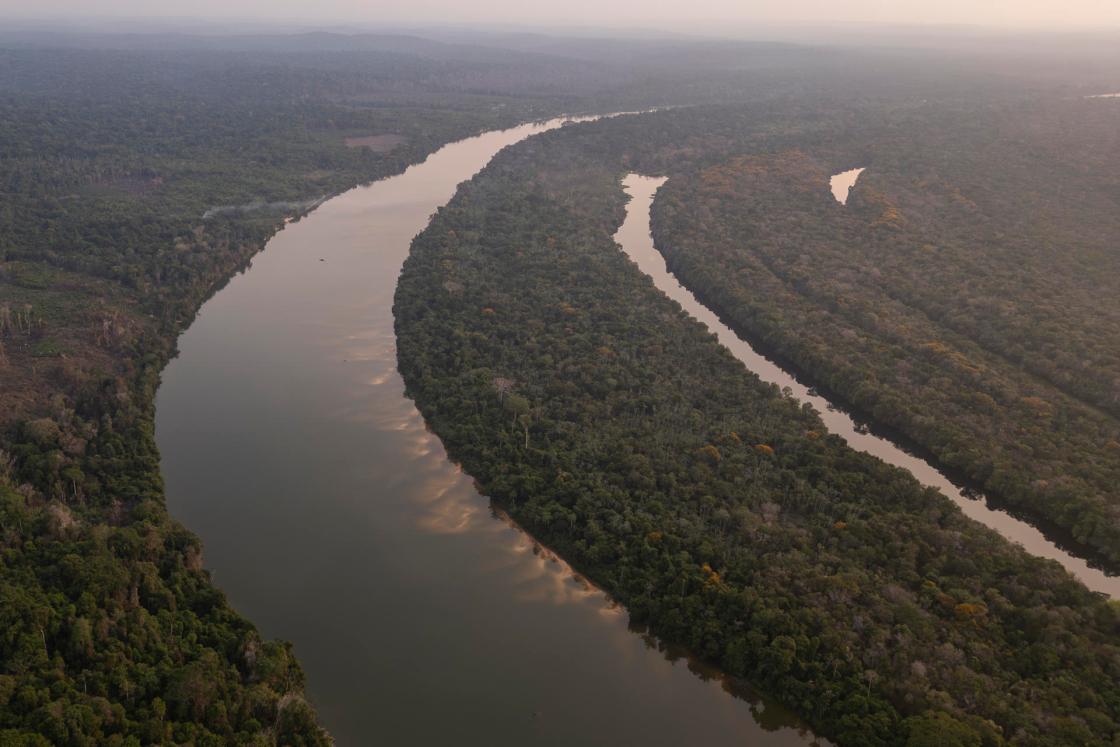
Aikyry, a 25-year-old transgender man from the Kuanã community in the state of Amazonas, also hopes the agreement’s ratification will increase integration and safety for defenders, especially in the Amazon.
According to the latest Global Witness report, 85% of the 196 murders of land and environmental defenders in 2023 occurred in Latin America. Brazil ranked second globally, with 25 murders.
“When we see ourselves in this situation of socio-environmentalism, we are terrified. Our territories end up being more dangerous for us because it is where we fight directly,” he said.
Despite the danger, Aikyry—who received his first death threat as a teenager—believes the struggle is greater than any one individual.
“The desire to defend the territory and this action was here before we named it. But naming it is where we meet the other defenders and understand the collectivity,” he added.
Beyond murders and threats, defenders face disappearances, isolation, defamation, criminalization, and impunity for those responsible.
Recognition within Escazú
According toBrazilian Joara Marchezini, one of six public representatives in the Escazú Agreement,
“Much of the challenge is within the action plan that was approved within the treaty and involves the recognition of the role of defenders as fundamental actors for the planet’s continuity.”
COP30 as a window of opportunity
In this context, Marchezini views the upcoming COP30 UN Climate Conference—to be held in Belém, in the Brazilian Amazon, this November—as a key chance to speed up Brazil’s ratification of the agreement. She cited Colombia, which ratified Escazú in 2024 during COP16 in Cali, as a recent example.
Brazilian President Luiz Inácio Lula da Silva sent the agreement to Congress in 2023, but no progress has been made due to resistance from the conservative-dominated legislature.
“If Brazil wants to be a leader in Latin America and the Caribbean, it cannot stay out of the first regional environmental agreement we have,” said Marchezini, an expert in access to information and transparency at the Nupef Institute.
EFE
This news item on forestry and land use issues is supported in part by the Climate and Land Use Alliance. EFE maintains complete editorial independence and is solely responsible for the content.