São Paulo, Jan 28 (EFE).— Brazil posted a historic tourism record in 2025, registering 9.3 million foreign arrivals, a 37.1% increase from 2024, driven largely by the country’s soft power, which authorities aim to leverage further to accelerate growth in the sector.
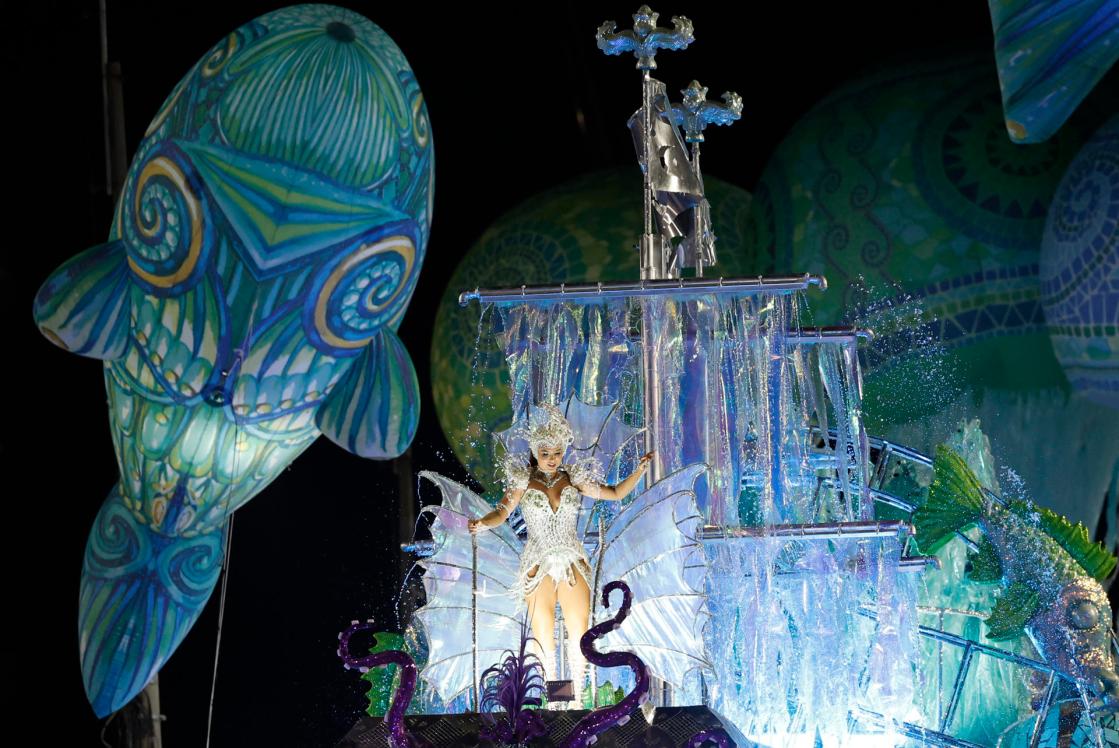
Brazil’s soft power lies in its music, culture, cuisine and football—a set of intangible values that shape the country’s global image and play a decisive role in attracting visitors, explained Marcelo Freixo, president of Embratur.
“When Brazil appears positively on global screens, when our music goes viral, when our festivals win over the world, a real desire to visit the country is sparked. That is what the data show: 2024 and 2025 were historic years, with records for tourist arrivals and revenues,” Freixo told EFE.
Soft power as an economic driver
Freixo stressed that soft power, combined with a clear international promotion strategy, helps energize the economy, generate jobs and bring development to more regions of Brazil.
Tourism already accounts for 8% of Brazil’s gross domestic product (GDP).

A competitive edge
Among Brazil’s most powerful attractions are Brazilians’ warmth and joy, cultural expressions such as street samba circles, spiritual and religious traditions, mate drunk on Rio de Janeiro’s beaches, and açaí prepared in the Amazon.
Brazil also offers culinary and nature experiences “that cannot be explained,” but are capable of forging a strong emotional connection with visitors.
“Soft power may be our most powerful differentiator. There are many beautiful destinations in the world, but few have the symbolic and emotional package that Brazil represents,” Freixo said.

From cultural strength to strategic policy
The Embratur president noted that Brazil has long relied on its cultural strength for promotion, but in recent years this has evolved into an explicit, organized and data-backed strategy.
Within that framework, the agency officially launched in late 2025 the campaign “Brazil. It’s a vibe. Come experience it,” aimed at further boosting inbound tourism.
“In the short term, we want to maintain and accelerate the pace of growth in international arrivals and increase average spending per tourist (…) further driving our economy,” Freixo said.
Medium-term vision for tourism growth
In the medium term, he added, the goal is to strengthen Brazil’s image as a cultural and creative powerhouse, diversify destinations and expand opportunities for sectors such as gastronomy, music, audiovisual production and traditional communities.
“It is a strategy that seeks not just volume, but quality and real economic impact,” he underlined.

Record after record in 2025
Travelers from France, Portugal, Germany, Italy, the United Kingdom and Spain totaled 1.2 million visitors.
According to UN Tourism, Brazil in 2025 grew almost 10 times faster than the global average, posting a 37.1% increase in arrivals versus a worldwide average of 4%.
Rising spending and local impact
Brazil also set a new record for foreign tourist spending. Visitors left $7.865 billion in the country in 2025, up 7.1% from 2024, according to the Banco Central do Brasil.
For Freixo, the figures confirm tourism’s role as “an economic engine for job and income generation” that also benefits small businesses.
“The expectation is to keep growing, always in a sustainable way, upgrading tourism and showing the world that Brazil is much more than a beautiful destination: it is a country that stirs emotion,” he concluded. EFE
EFE published this report with the support of Embratur.