
São Paulo, Sep 4 (EFE) – The executive director of the upcoming UN Climate Conference (COP30), Brazilian Ana Toni, said Thursday that the event “will mark a turning point” in the way climate finance is addressed worldwide.
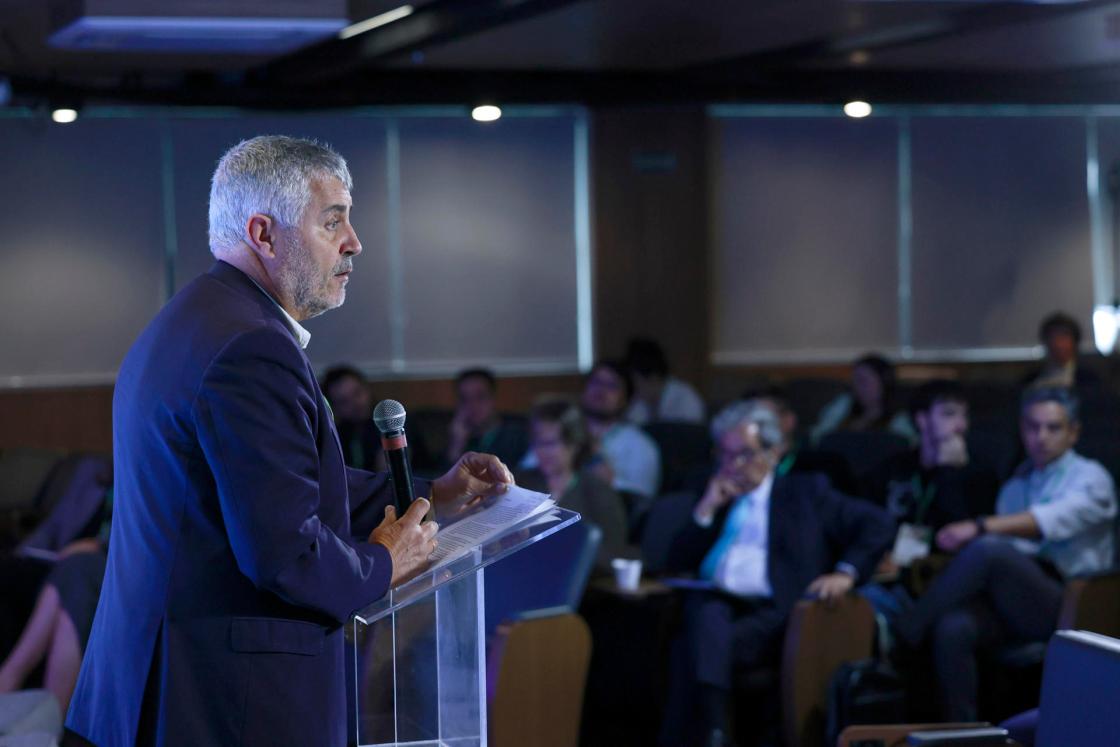
In a video address at the opening of the 3rd Latin American Green Economy Forum (FLEV), organized by Agencia EFE in São Paulo, Toni stressed that for the first time, new financing mechanisms for decarbonization are being debated, including tools to reward ecosystem preservation.
“Climate debate always centers on energy, and that makes sense because it accounts for more than 70% of emissions. But forests, oceans, and mangroves continue to be sidelined, and it’s time to change that,” she said.
Beyond energy: forests and ecosystems
Toni emphasized that Brazil, whose electricity grid is already 90% renewable, wants to go beyond energy transition and place conservation at the heart of the green economy.
She highlighted the Tropical Forests Forever Fund (TFFF), a new economic mechanism created by Brazil that will be officially presented at COP30 in November in the Amazonian city of Belém.
“This is not a donations fund; it is a tool that will provide payment per hectare of preserved forest,” Toni explained.
The mechanism aims to recognize and reward ecosystem protectors. Those include Indigenous peoples, rural communities, farmers, and private actors who conserve areas beyond what the law requires.
“So far there has been no economic instrument that guarantees the preservation of standing forests. The TFFF is an innovation that can change that,” she said.
A basket of economic instruments
Alongside the forest fund, Brazil will propose a “basket of economic instruments” at COP30. These will include payment for environmental services linked to mangroves and so-called “blue carbon” associated with marine ecosystems.
This agenda, first discussed during Brazil’s G20 presidency, will be consolidated at the climate conference as part of a strategy to accelerate the transition to a low-carbon economy.
Inclusive dialogue for the green economy
In her remarks, Toni also called for broadening dialogue on the green economy to include local authorities, the private sector, and civil society.
The FLEV is a forum for debate on energy transition and sustainable development.
Now in its third edition, it is sponsored by:
-
ApexBrasil, Brazil’s trade and investment promotion agency.
-
Norte Energia, operator of the Belo Monte hydroelectric plant.
-
Lots Group, a logistics company focused on decarbonization solutions.
It is also supported by Imaflora, the Climate Observatory, and IBMEC University, which is hosting the event at its São Paulo campus. EFE