
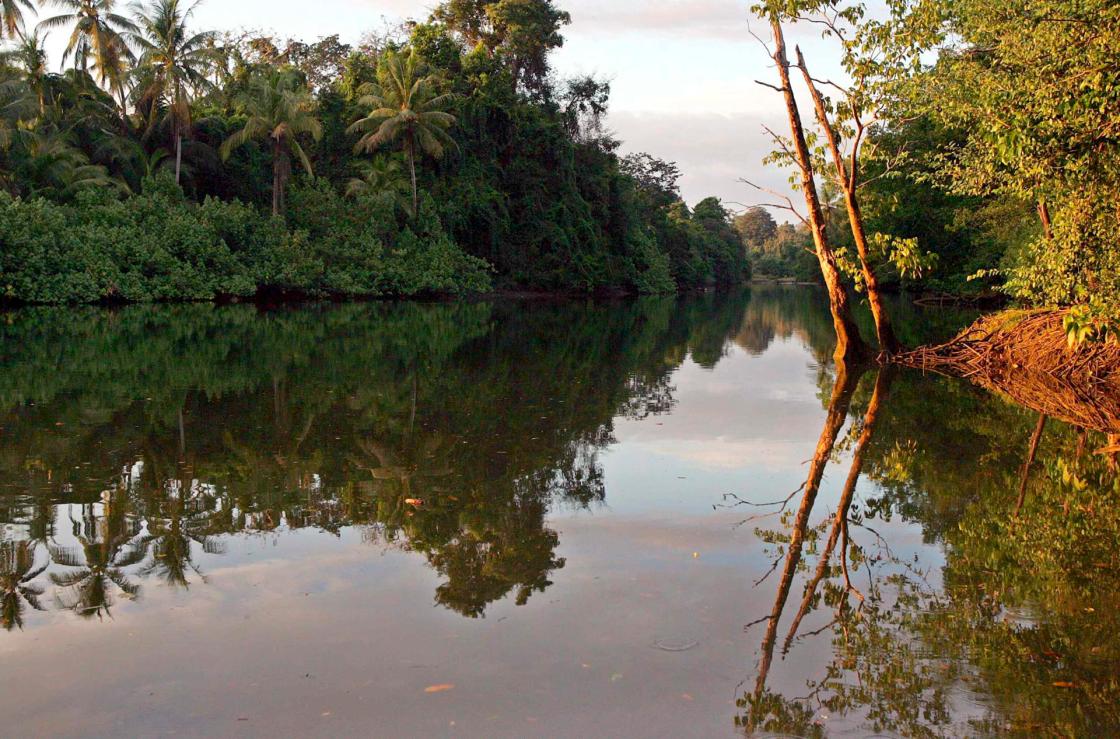
San José, April 11 (EFE).- Nearly three decades in, Costa Rica’s Payment for Environmental Services (PSA) program, recognized for its financial incentives provided by the state through the National Forestry Financing Fund (Fonafifo) to forest and plantation owners for the environmental services their lands offer, has emerged as an international benchmark for forest protection and reversing deforestation.
Launched in 1997, the initiative has strengthened over the years, initially funded by 3.5% of the fuel tax, it now also benefits from contributions from companies and international bodies such as the Green Climate Fund (GCF).
In 2021, for instance, the GCF granted Costa Rica $54 million in recognition of the country’s forests capturing 14.7 million tons of carbon dioxide between 2014 and 2015.
Official data indicates that by the 1980s, Costa Rica had lost most of its primary forest, with only 21% of its land under forest cover, due to the highest deforestation rates globally.
However, thanks to environmental initiatives, including the PSA, the country has reversed this trend, now boasting over 52% forest coverage and a quarter of its territory as protected areas.
The program supports services such as greenhouse gas emission mitigation, biodiversity and ecosystem protection, water conservation, and efforts to preserve natural scenic beauty for tourism and scientific purposes.
Fonafifo data from 2010 to 2023 shows an addition of 748,338 hectares to the PSA, primarily for forest protection.
The State of the Nation Program (PEN), a research initiative by the National Council of Rectors from public universities, reported an increase in the annual area contracted under the PSA in 2022, following two years of significant reductions since the program’s inception.
“Fonafifo awarded 953 PSA contracts covering 51,546 hectares, marking a 759.5% increase from 2021. Ninety-one percent of these contracts were aimed at forest protection, showing significant recovery; 5% for natural regeneration, 3.3% for reforestation, and the remaining 1% for forest management,” the State of the Nation report stated.
“The government has done something interesting internationally with carbon markets and has created an institutional framework,” Levi Sucre, coordinator of the Mesoamerican Alliance of People and Forests (AMPB), told EFE.
Sucre highlighted Costa Rica’s robust institutional framework for the PSA and a “robust” agreement with indigenous peoples for their participation in carbon markets.
Sucre called for increased government social investment in indigenous communities and advances in legal security for land, as well as further diversification of PSA financing sources, noting the fuel tax as a primary source.
In 2021, Costa Rica was awarded the Earthshot Prize by Prince William of the United Kingdom for its nature conservation and biodiversity efforts through the PSA.
This report on forestry and land use is partially supported by the Climate and Land Use Alliance. EFE maintains full editorial independence and is solely responsible for the content. EFE