
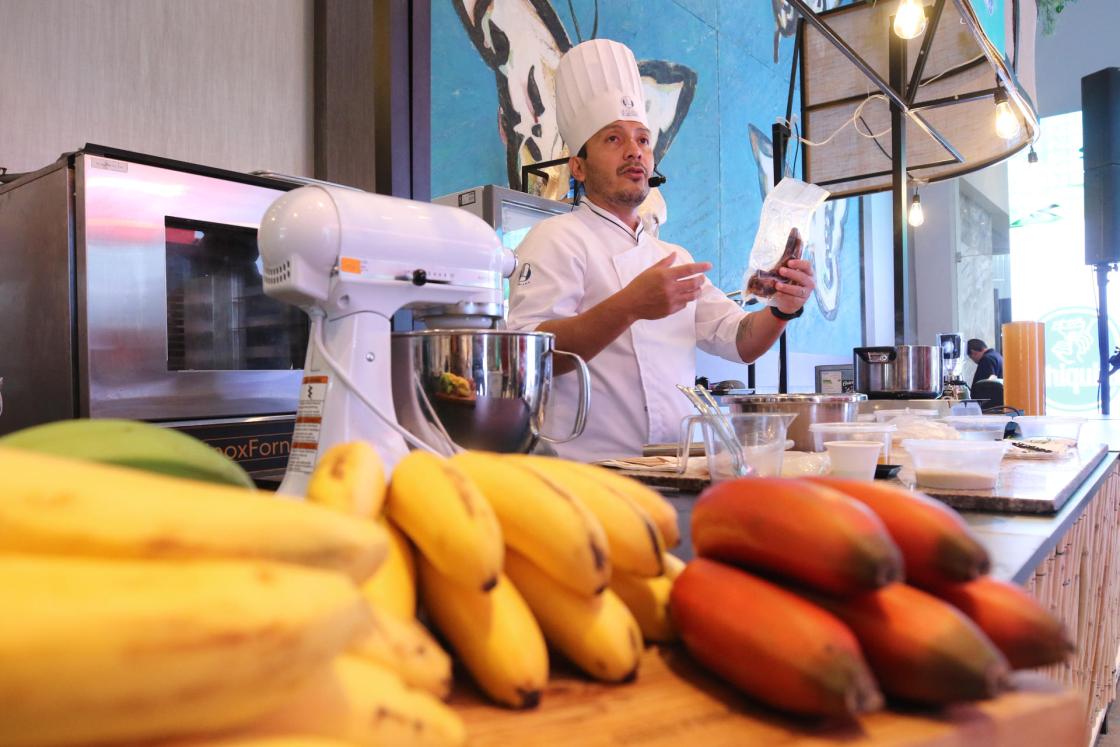
Guayaquil, Ecuador, Nov 5 (EFE).- What is considered a simple fruit in many countries reveals remarkable culinary versatility in Ecuador, where banana is prepared in countless ways—from breakfast to dessert—and reimagined with creative techniques and unexpected combinations in empanadas, ceviche and more.
Professional chefs demonstrated banana’s sensory range during “Banana Cooking,” a live culinary exhibition at Banana Time 2025, the flagship annual event of Ecuador’s banana industry and the largest of its kind in the Americas, organized by the Ecuadorian Banana Exporters Association (AEBE) in Guayaquil.
Banana as a flavor modulator in ceviche
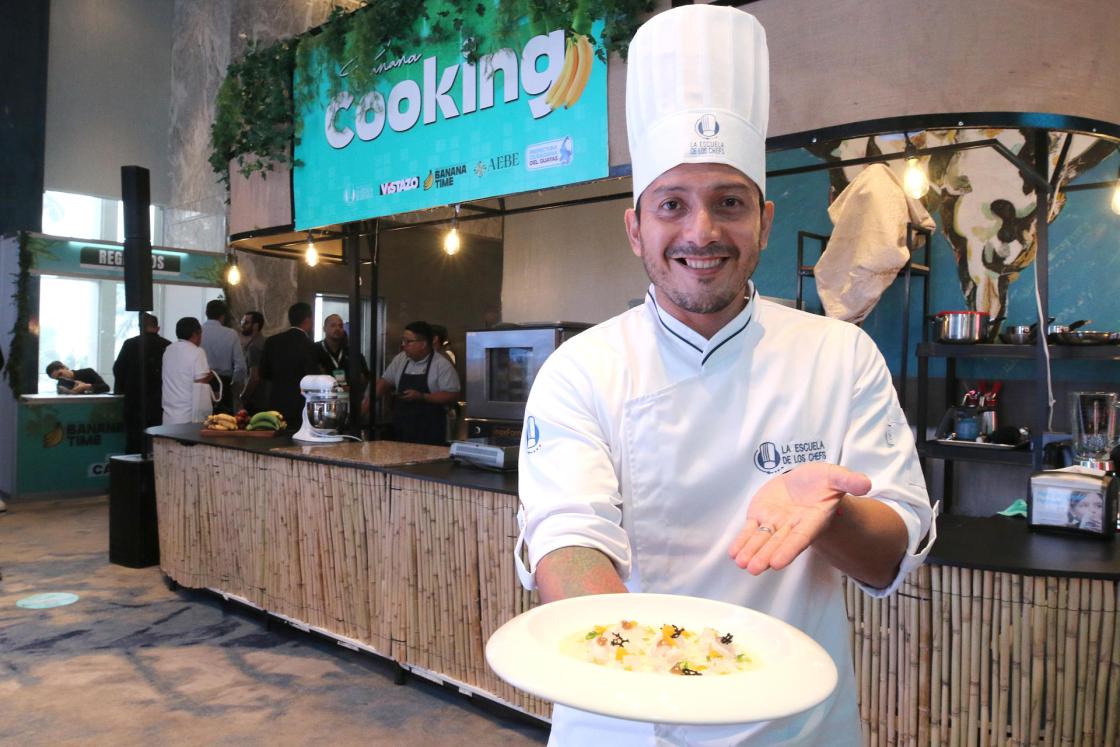
“We tend to pigeonhole it, but it has so many characteristics that it can truly be used in any type of preparation, and it always contributes something good,” said chef Xavier Estévez of the Escuela de los Chefs, who prepared fish ceviche where banana balanced the acidity of citrus.
Estévez used both peel and pulp, prepared in different textures, to complement and enhance the flavor of the coastal dish.
“You can do wonders with banana,” he said.
Zero waste through fermentation
Chef Igor Burlutskiy, professor and researcher at the same institution, highlighted the promise of green banana, still underused in Ecuadorian kitchens.
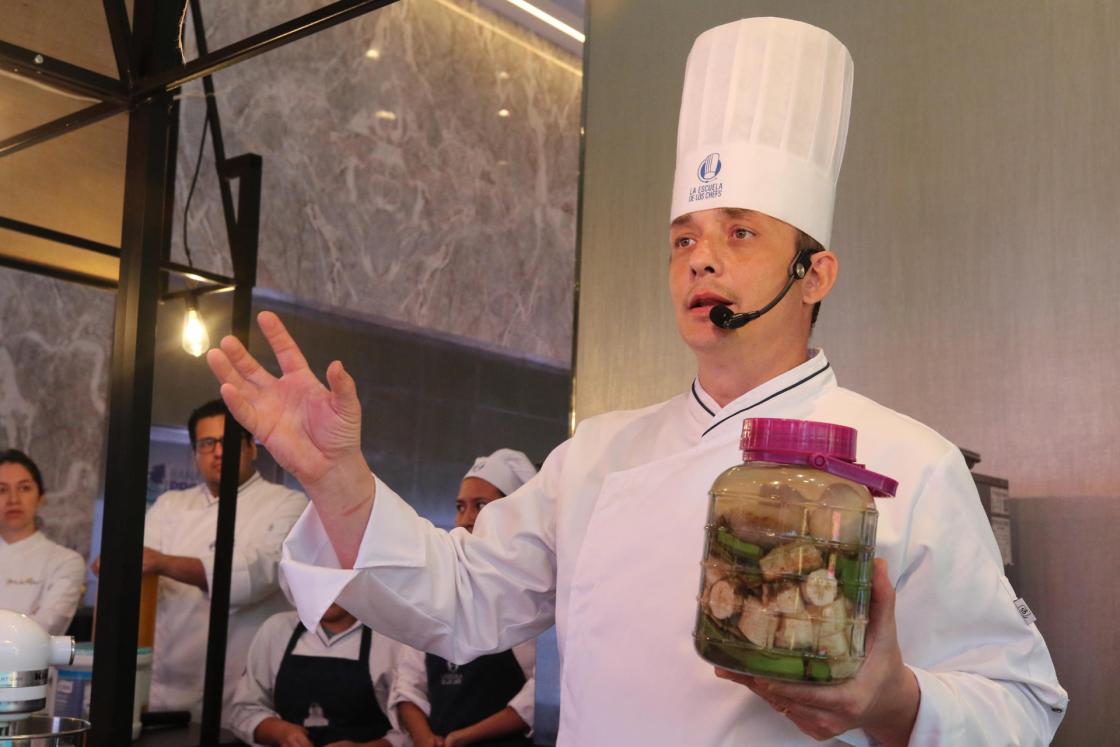
He demonstrated a simple fermentation technique.
“Through fermentation we can obtain a product with greater nutrient and vitamin bioavailability. It also reduces sugar levels and removes pesticides. You just submerge the product in salted water for 48 hours,” he explained.
Fermenting the banana peel allows total use of the fruit. Burlutskiy presented chewy candies made from fermented peel paste, which can also be used in jams and oven sauces.
“The main benefit is sustainability, since a product that would otherwise be discarded can be transformed into something bioavailable,” he said.
Green banana in contemporary cuisine
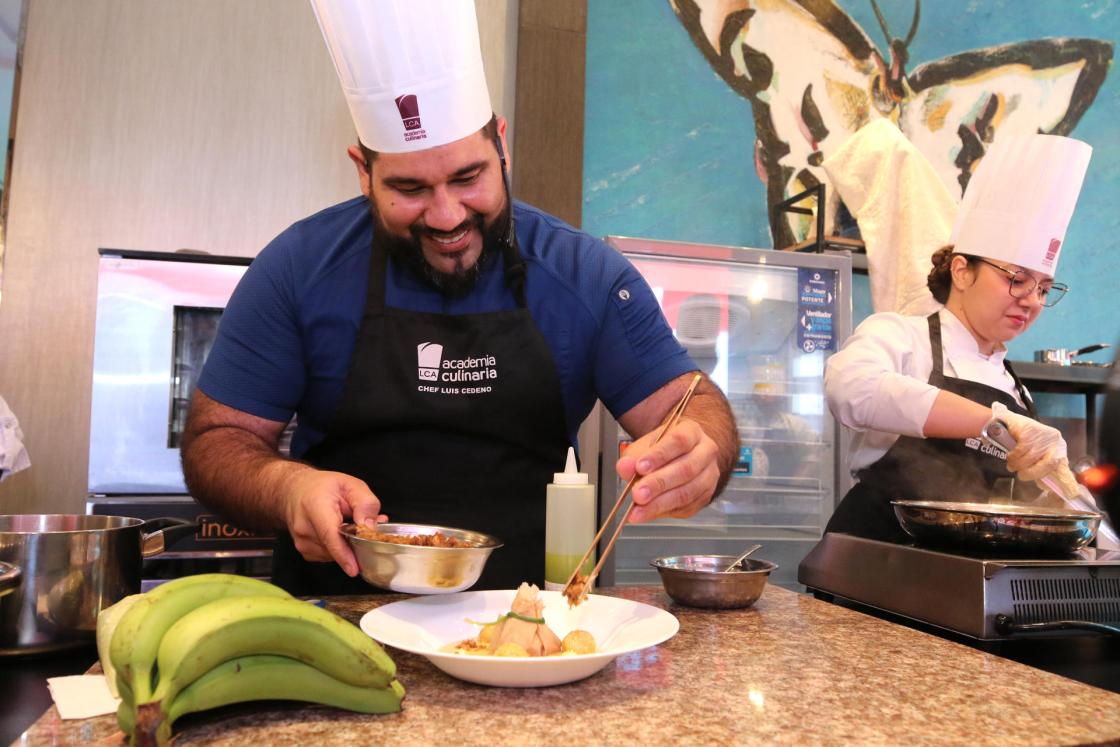
Luis Cedeño, director of the LCA Culinary Academy, demonstrated how green banana adapts to modern dishes. He prepared repe, a traditional soup from Loja, and crepes filled with roasted pork, both using green banana as the base.
“It’s for those who want to make different recipes with another twist, because even though the banana is green, when you cook it, it softens quickly but still releases its sweet tones. It doesn’t need to ripen to taste sweet,” he said.
He noted that Ecuador’s green banana variety is one of the best and widely exported.
Cedeño encouraged more experimentation.
“The more people know it, the more they use it,” he said.
“It’s a very versatile fruit, and Ecuador is one of the countries that gets the most out of its produce. We’re a small nation, but one that applies a wide variety of techniques and products in every region.”
From bread to ice cream
Cedeño added that in many countries banana is mostly used for chips or flour, but in Ecuador it is part of tortillas, empanadas and other everyday dishes.
“It’s important for the public to see that you can make many kinds of recipes with the same product—from green to ripe, even using the peel,” he said.
Throughout the day, chefs also demonstrated banana-based breads, avant-garde dishes, and banana ice cream. EFE