
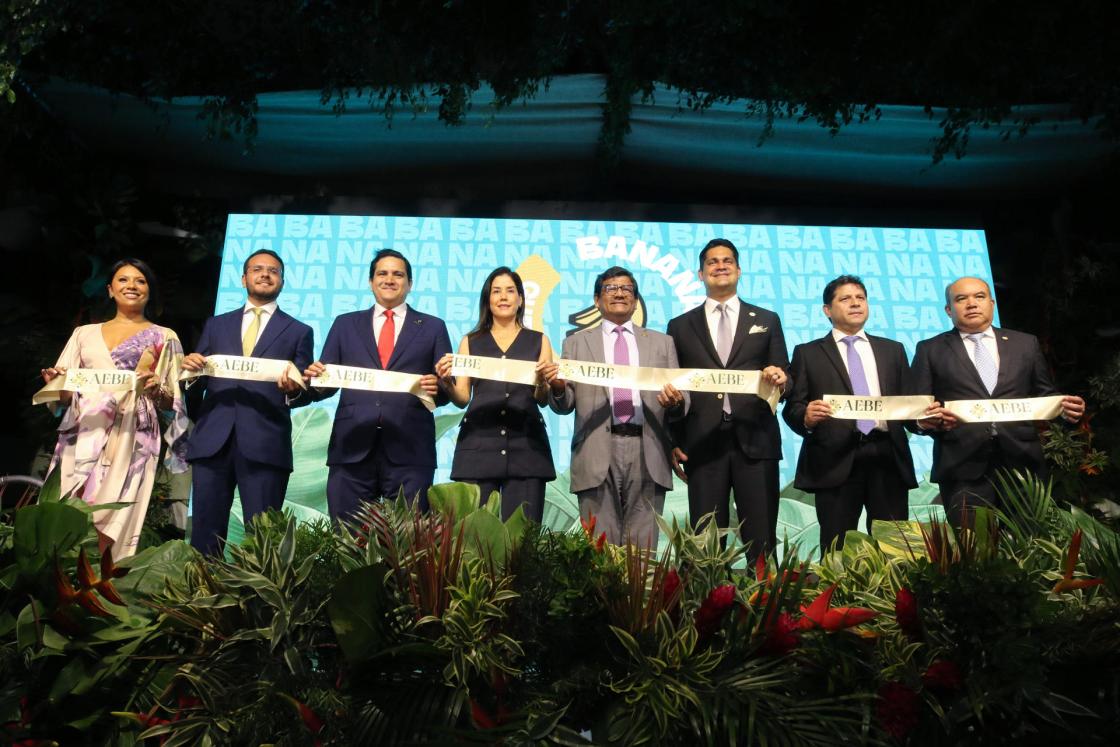
Guayaquil, Ecuador, Oct 15 (EFE).— Ecuador, the world’s top banana exporter, opened Banana Time, Latin America’s largest convention devoted to the fruit, with a call for cooperation, innovation, and sustainability to strengthen its global leadership while facing phytosanitary threats and supply-chain security challenges.
The 22nd edition of Banana Time, organized by the Association of Ecuadorian Banana Exporters (AEBE), began Tuesday in the port city of Guayaquil. The event serves as a forum to anticipate market trends, address crop protection challenges, and shape the future of the world’s leading banana industry.
Shaping the future of the global banana industry
“Banana Time Guayaquil 2025 is not only the most important event of its kind in Ecuador but also Latin America’s key forum for the banana industry, bringing together science, public policy, and business strategy to confront global market challenges,” said AEBE president Jorge Encalada.
“This year, with a focus on phytosanitary issues, we want to reaffirm that this event is the essential meeting point for anticipating trends, building partnerships, and defining the direction of Ecuador’s most exported fruit,” he added.
Ecuador’s leadership and global reach
Encalada recalled the “humble roots” of Ecuador’s banana industry, which now provides more than 2.5 million direct and indirect jobs and “continues to raise Ecuador’s name in more than 70 countries.”
Exports totaled $3.6 billion in 2024, with a 14.7% increase in the first half of 2025.
He praised Ecuador’s new trade agreement with South Korea and ongoing efforts to begin negotiations with Japan for a similar deal.
However, he warned that the industry faces two major threats: drug trafficking and the Fusarium R4T fungus.
Shared responsibility from Europe
On the first issue, Encalada stressed that drug trafficking is “a global problem that hits Latin America but originates and thrives on consumption in destination countries.”
He urged Europe to “assume its share of responsibility,” adding, “You cannot fight transnational crime without treating consumption as a global public health and cooperation challenge.”
The European Union is the primary buyer of Ecuadorian bananas, accounting for over 30% of exports, and it is in these shipments that most contamination cases have been detected.
“We at AEBE are not standing idly by,” Encalada said, noting that exporters are working with the government to secure logistics chains and protect Ecuador’s top exports — bananas, cocoa, and shrimp.
Fusarium and the call for unity
Regarding Fusarium R4T, a fungus suspected to have reached Ecuador, Encalada issued an urgent call to action and unity, saying “every grower must be the first guardian of their farm.”
The fight against the disease will involve experts from Brazil, Colombia, Venezuela, Peru, and other countries. It will also feature the presentation of Ecuador’s national strategy to combat it.

Aligned with the government
At the opening ceremony, Agriculture and Livestock Minister Danilo Palacios and Production, Trade and Investment Minister Luis Alberto Jaramillo joined the call for unity. They reaffirmed the government’s commitment to the sector.
Palacios praised the resilience of Ecuador’s banana industry in facing multiple crises. He recalled the black sigatoka outbreak in the 1980s, which was controlled, and the later shocks of the Covid-19 pandemic and the Russia–Ukraine war.
He expressed confidence that the sector would also overcome Fusarium.
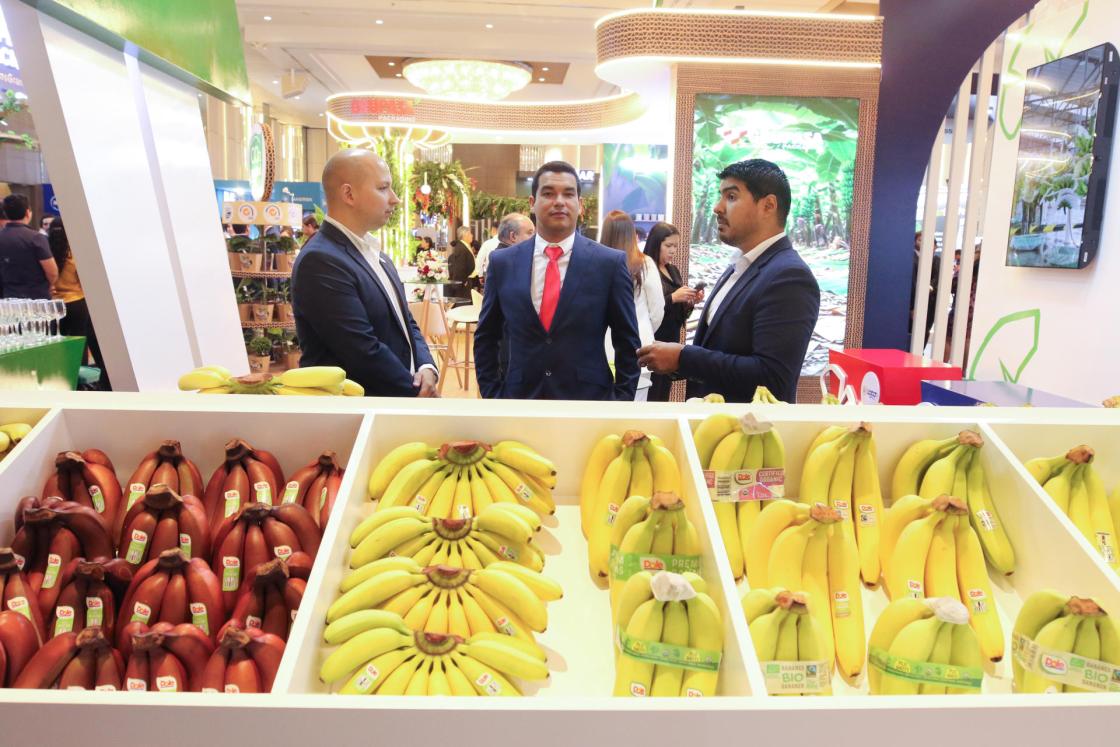
The convention gathered key players from across the value chain — producers, exporters, suppliers, researchers, government officials, and financial institutions such as Banco Guayaquil, a main sponsor.
Its corporate banking manager, Pablo Martínez, underscored the banana sector’s importance in the bank’s portfolio. EFE
EFE published this report with the support of the Association of Ecuadorian Banana Exporters.