
Agencia EFE and FGS Global analyzed the global impact of Donald Trump’s tariff policy and the latest news on negotiations with China and the European Union with the help of experts.
The debate, available in full on YouTube in English and Spanish, addressed the future of US tariff policy, how companies have prepared to navigate these changes, and investment opportunities during the new Trump administration.
Experts on China, US domestic policy, Latin America, and Europe discussed the evolution of trade negotiations between the United States, China, and the European Union.
Matthis Kaiser, a partner at FGS Global and expert on European politics and security, noted that although markets are optimistic about a possible negotiating framework with the major trading blocs, there is still much uncertainty about the new base level for tariffs.
“One of the big issues for the global economy right now is the lack of confidence and high level of uncertainty facing investors and businesses,” Kaiser explained.
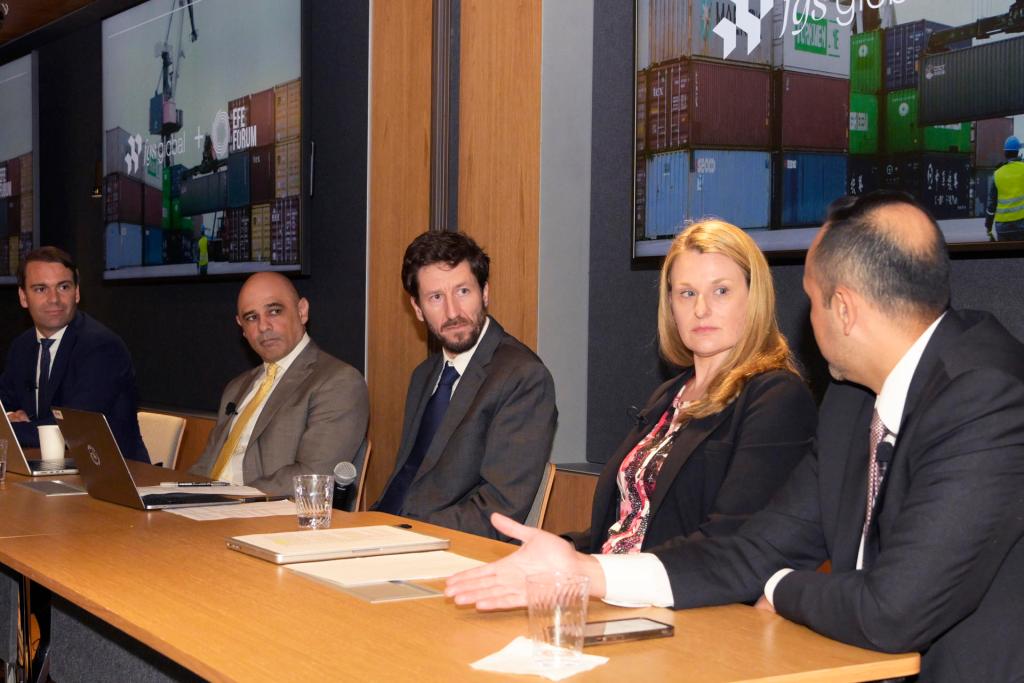
Sarah Trister, managing director at FGS Global and an expert on legislative policy and China, said that President Trump’s real goal regarding tariff policy remains unclear.
“If Trump can present the agreement with China as a victory to his party and his base, he will be satisfied. He is less ideological than many other Republicans who have been talking about China for years,” she said.
Trump’s tariff policy: unpredictable and complex
David Olave, a trade expert at the law firm Sandler, Travis & Rosenberg, explained the practical complexities of the new tariffs. He said that some companies find benefits in the tariff changes by being able to declare lower values on specific raw materials rather than finished products. Still, he noted that the situation remains unpredictable and complex.
“You plan one thing, and the next day it changes. It’s a new world. Some companies and products have much room to be creative and find a solution, or at least not be so affected. It will be tragic for some, but not for the economy as a whole as long as there is negotiation,” Olave said.
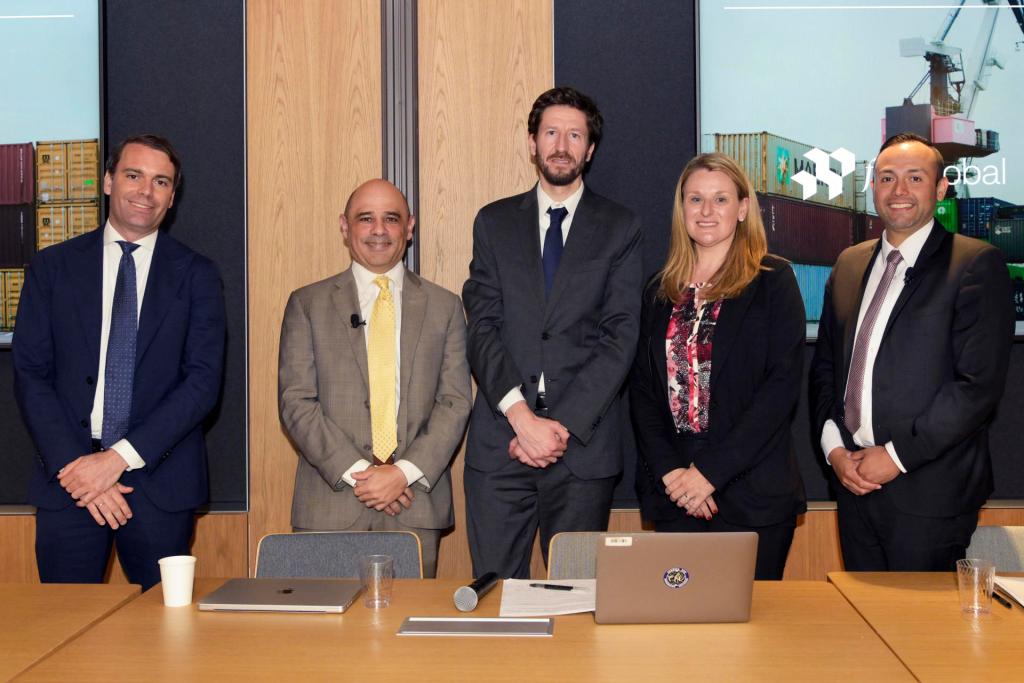
For José Parra, partner at FGS Global and head of FGS Próspero, the agency specializing in the Latin American sector, regardless of the outcome of the tariff negotiations, there has already been “a paradigm shift” in the US decision-making process. He also pointed to the relevance of nationalism in Mexico, comparable to that in the US, as another key factor.
FGS Global is one of the world’s leading firms in stakeholder strategies, with approximately 1,400 professionals distributed globally. It specializes in crisis management, corporate reputation, public affairs, and financial communication.
The firm offers top-level consulting with a presence in key international cities and headquarters in New York. EFE