Madrid, Jan 5 (EFE).- The debate initiated by French President Emmanuel Macron on democracy in social media and digital sovereignty has been taken up by local services, such as the literary and journalistic creation platform Panodyssey, with CEO Alexandre Leforestier defending an alternative internet based on “the democratic reappropriation of the digital space.”
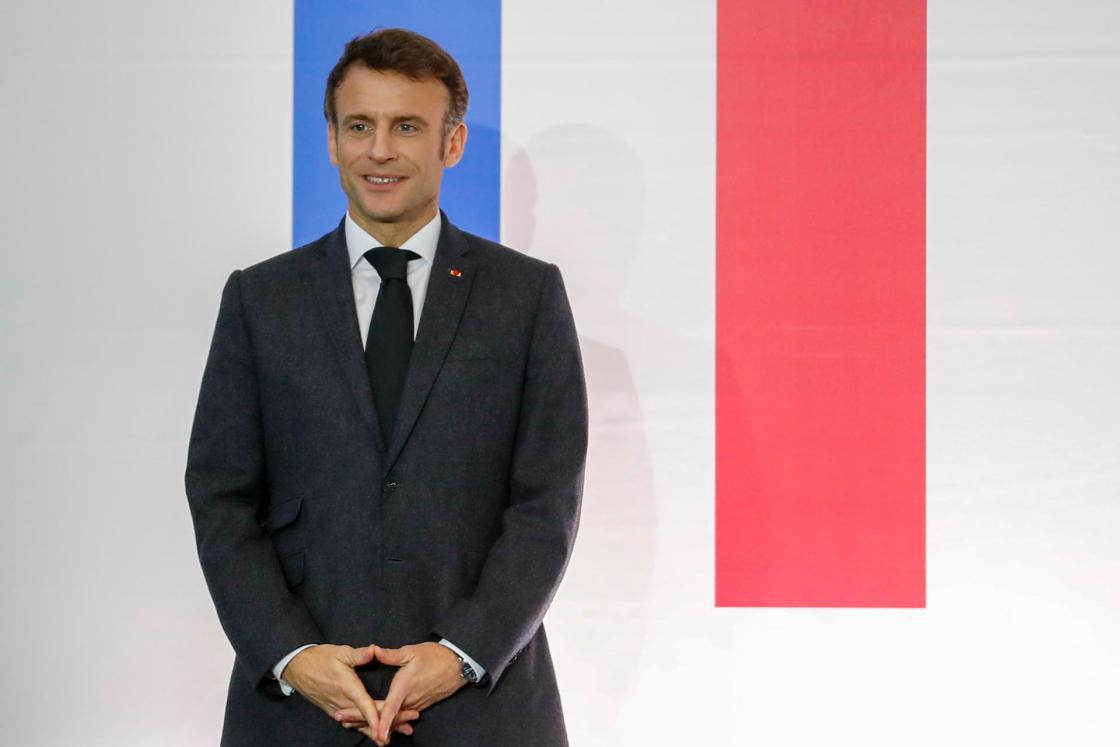
At the end of 2025, Macron called for “algorithm transparency” on social media, because many are involved in “political battles,” and cited as an example of “interference” a Facebook post with millions of views that talked about a coup in France.
“I am in favor of free and open debate, but these people [social media] are mocking us, they don’t give a damn about the serenity of public debate, they mock the sovereignty of democracies and put us in danger,” Macron warned from Marseille.
Democracy in “digital spaces for sharing”
In an interview with EFE, Leforestier recalled that France had a long tradition of “digital spaces for sharing,” with the pioneering Minitel (computer-like terminals used to connect to forums and other services, which were hugely successful in France for years), and he supported the debate started by Macron.
He stated that, in a public speech before the European Commission in 2019, he had highlighted a reconciliation between ethics and technology that would create an alternative, local digital ecosystem to the technological powers.
In his opinion, public debate today has been “confiscated by American and Chinese private infrastructures whose business model is built on anger, extreme simplification, and the permanent competition of opinions,” and they optimize debate for polarization, misinformation, and violence: “It’s their economic model.”
In this regard, he highlighted some of Panodyssey’s features compared to other social media companies, such as the defense of copyright “in the age of artificial intelligence,” the fight against misinformation, fake content, and cyberbullying, and technological and algorithmic transparency. All this is amidst one of the main objectives of the pan-European social network: “The renewed desire to read, write, and create on digital screens.”
“The democratic reappropriation of the digital space”
“In a world where public speech has become an algorithmic battlefield, Panodyssey does not promise virality. It offers something better: the democratic reappropriation of the digital space,” he said.
He has calculated that the long-form writing and reading solutions of the social network, which has collaborated with EFE in the publication of this content, is currently operating with 500,000 readers. The system is “designed to scale to 500 million European users by 2030,” demonstrating that “another internet” based on copyright, linguistic diversity, individual responsibility, and technological transparency “is possible.”
Since Panodyssey does not have algorithm-based personalized advertising for each user, “there is no technical incentive to push the most violent or simplistic content,” and so “the very architecture of the platform defuses conflict.”
Furthermore, as the texts show their authors (even if it is a pseudonym, there is a certificate of authenticity), harassment, toxic behavior, and misinformation are reduced, without the need for “brutal or opaque” moderation.
Posting on foreign social media
On the other hand, Leforestier has criticized those who proclaim themselves “defenders of the Republic, of French culture, or of digital sovereignty” but “spend their days” posting on foreign social media: “They willingly hand over French public discourse, citizens’ data, and the visibility of our creators to extra-European companies that respect neither our values, nor our laws, nor our strategic interests.”
“One cannot claim to defend freedom of expression in France while abandoning the infrastructures of democratic debate to foreign powers,” he added. “Cultural and democratic sovereignty begins with the choice of the tools we use.” EFE