
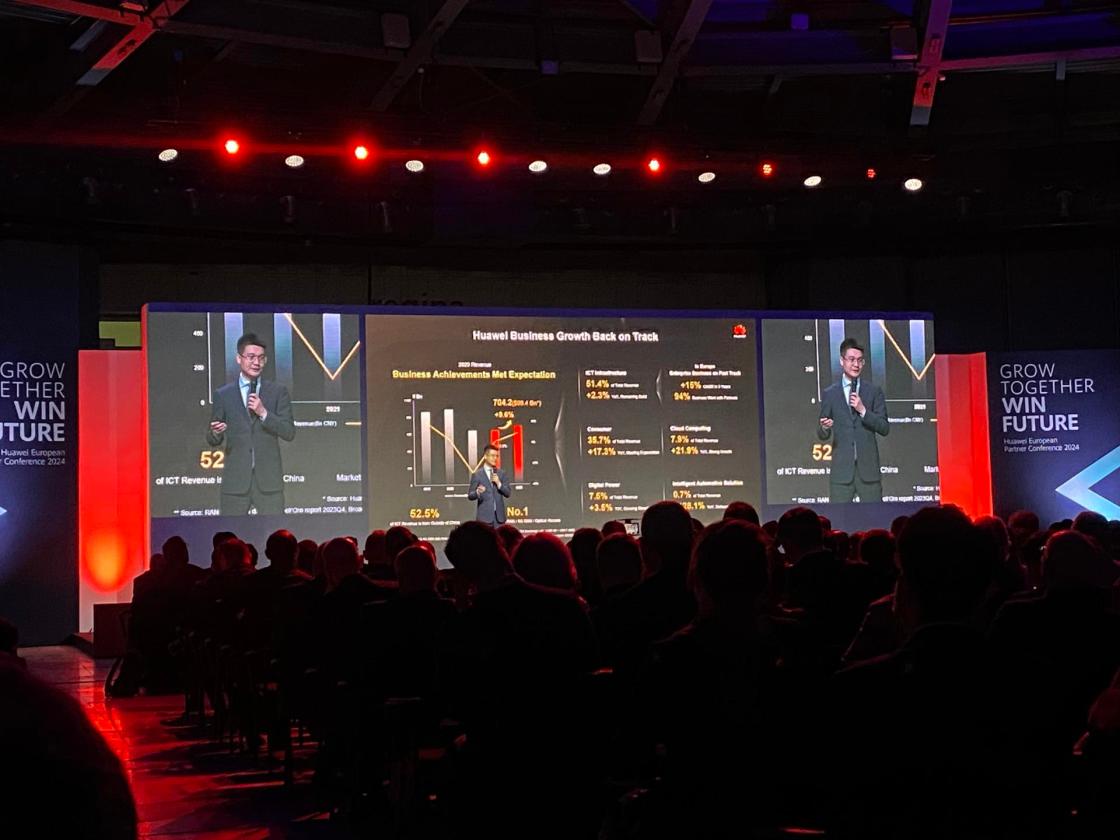
Como, Italy, April 12 (EFE).- Huawei is working to strengthen its business network in Europe and become a leading player in assisting the continent with developing digital infrastructure to meet the European Union’s digitization goals, despite the European Commission’s recommendation to exclude the Chinese tech giant from supplying 5G networks to the EU.
Huawei gathered over a thousand partners at its inaugural Huawei European Partner Conference this week in Como, Italy, to solidify its presence in the European market, enhance cooperation with clients, and introduce new products.
“We want to use our technological products to help local businesses become digital and smart more quickly. Together, we can help Europe build digital infrastructure, nurture talent, and achieve its Digital Decade 2030 goals,” said Jim Lu, Huawei’s Regional President in Europe, during his opening speech.

The Digital Decade 2030 is the EU’s action plan to implement digital transformation, prioritizing digital education and recognizing this transition as a “key element” for economic development and strategic autonomy.
In this context, Huawei seeks to become a key player in assisting both the public sector and European businesses with this transition: “Huawei is in Europe for Europe,” Lu emphasized at the conference, noting that the company employs more than 13,000 people and operates 27 research and development centers across 13 countries.
“Our long-term strategy is to have an open, fair, and transparent partner ecosystem, which is why we are making multiple investments to achieve shared success with our partners,” said Willi Song, President of Huawei European Enterprise Business.
Huawei’s net profit in 2023 was more than double (up 144.4%) from the previous year, reaching 87 billion yuan (€11.171 billion), and as Lu and Song highlighted during their presentations, the company reinvested 23.3% of its revenue into research and development.
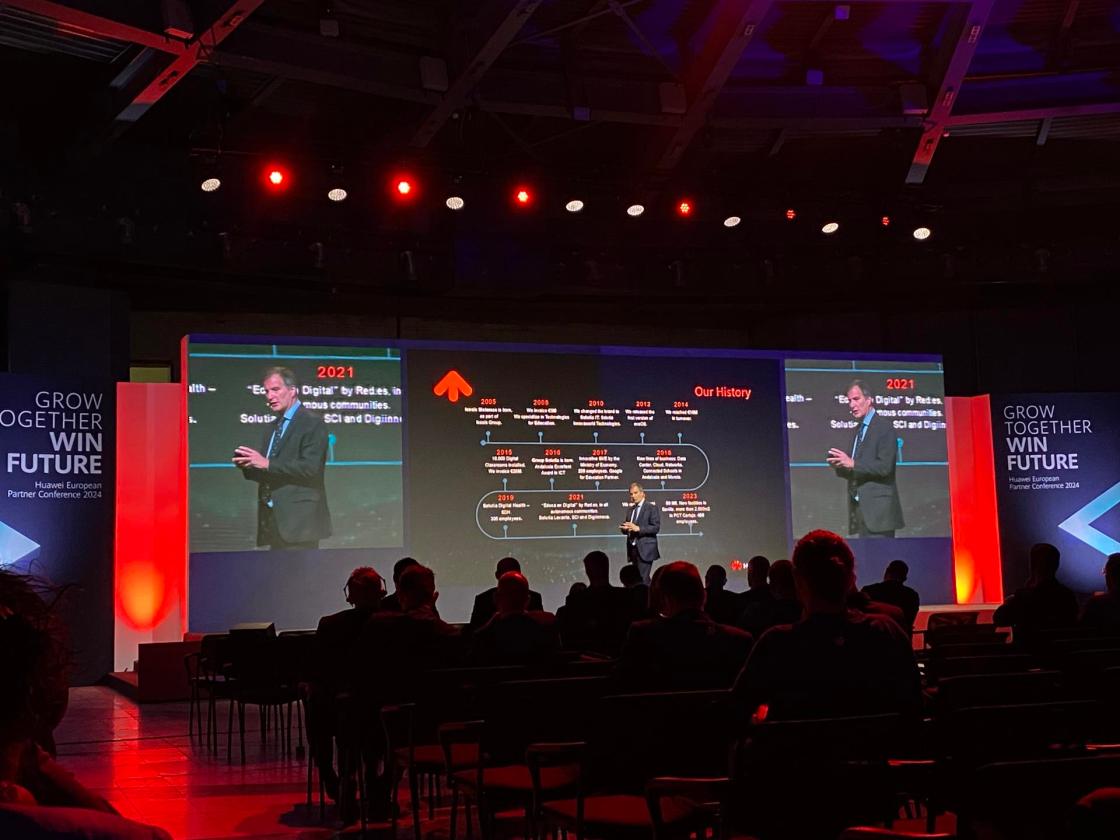
The conference, themed “Grow Together, Win Future,” was held on the shores of Lake Como and featured a variety of presentations and workshops with representatives from both public services and private companies (all clients of the tech giant) to address a range of technical solutions to meet the needs of its partners locally.
“So far, large companies have led the digital transition, but what we are now seeing is that the next wave of digitization will occur in small and medium-sized enterprises: in the coming years, 90% of European SMEs will undergo digital transformation,” stated Kenneth Fredriksen, Huawei’s Regional Vice President in Europe, in a meeting with the media.
When asked about the European Commission’s warning last June, which recommended excluding Huawei and ZTE from the EU’s 5G network deployment due to national security risks, Fredriksen considered these “accusations” to be “based only on political agendas.”
“From Huawei’s perspective, all we can do is continue to provide safe products and, of course, demonstrate our reliability through daily interactions with our customers in the local market,” he said.
During the two-day partner event, Huawei officially presented its market entry strategy with a portfolio of new technological products in data communication, storage, and optical networks, including a complete range of Wi-Fi 7 access points. EFE
(This article is part of a series supported by Huawei. The editorial content of EFE is independent of this company’s positions.)