

Santiago, Mar 28 (EFE).— The Inter-American Development Bank (IDB) on Friday launched Conexión Sur, a new program aimed at boosting connectivity across South America. Co-created with countries from the region, the initiative seeks to bridge fragmented markets and attract investment by strengthening physical and digital links.
A Three-Pillar Strategy for Regional Growth
The program is built on three core pillars:
-
Physical connections—through improved roads, ports, waterways, electric grids, and digital networks
-
Value chains—by developing local production and market integration
-
Regulatory and institutional strengthening
The initiative was unveiled in the Chilean capital during the IDB’s Annual Meetings, which began Wednesday with thematic seminars and will run through Sunday. The event brings together the 65th IDB Board of Governors Assembly and the 39th for IDB Invest, the bank’s private-sector arm.
A Shared Commitment to Integration
IDB President Ilan Goldfajn said in a statement that Conexión Sur reflects “a shared commitment to building a larger, more integrated, and more investment-attractive regional market.”
“With better connectivity, stronger value chains, and modernized institutional frameworks, the program will help South American countries overcome historical barriers and create new opportunities,” said the Brazilian economist.

Economic Integration as a Catalyst for Development
Anabel González, IDB Vice President for Countries and Regional Integration, emphasized during a panel discussion that:
“Economic integration is a key driver of growth and sustainable development. Latin America and the Caribbean share borders, resources, and economic opportunities, and together we can scale solutions to attract investment and pool resources for greater impact.”
The new program expands on the Integration Routes alliance, launched under the Brasilia Agreement signed in May 2023 and backed by the IDB, FONPLATA, Brazil’s BNDES, and CAF–Development Bank of Latin America and the Caribbean.
The IDB and FONPLATA also formalized a cooperation agreement to deepen their bilateral collaboration, including co-financing opportunities for regional projects such as the Integration Routes, now part of Conexión Sur.
Shared Regional Challenges and Cross-Border Solutions
Despite progress, González acknowledged that “important challenges remain: integration levels in the region are still relatively low compared to other parts of the world, with limited advances in physical and digital connectivity, logistics, and cross-border efficiency.”
“Aligning policies across countries is essential to create a broader, competitive environment that attracts private investment,” she said, noting that the program renews efforts to “build together and strengthen the region’s role in the global economy.”
Governors to the IDB and senior representatives from Argentina, Bolivia, Brazil, Chile, Colombia, Ecuador, Guyana, Paraguay, Peru, Suriname, and Uruguay joined Goldfajn in signing a declaration of support for the program, which had been requested by South American countries.
Expert Voices Call for Coordinated Action
The declaration acknowledges the cross-border nature of many of the region’s challenges and calls on the IDB to help address them jointly through a pragmatic regional approach.
Felipe Larraín, president of the Latin American Center for Economic and Social Policies (CLAPES UC) and former finance minister of Chile, said in another panel that the main barriers to deeper integration include:
-
Political, economic, and trade obstacles
-
Governance and coordination issues
-
Unequal access to digitalization and connectivity
Among his proposals for effective regional integration were prioritizing efficient multilateral agreements, strengthening regional institutions, and advancing both physical and digital infrastructure.
A Stronger Region Benefits the World
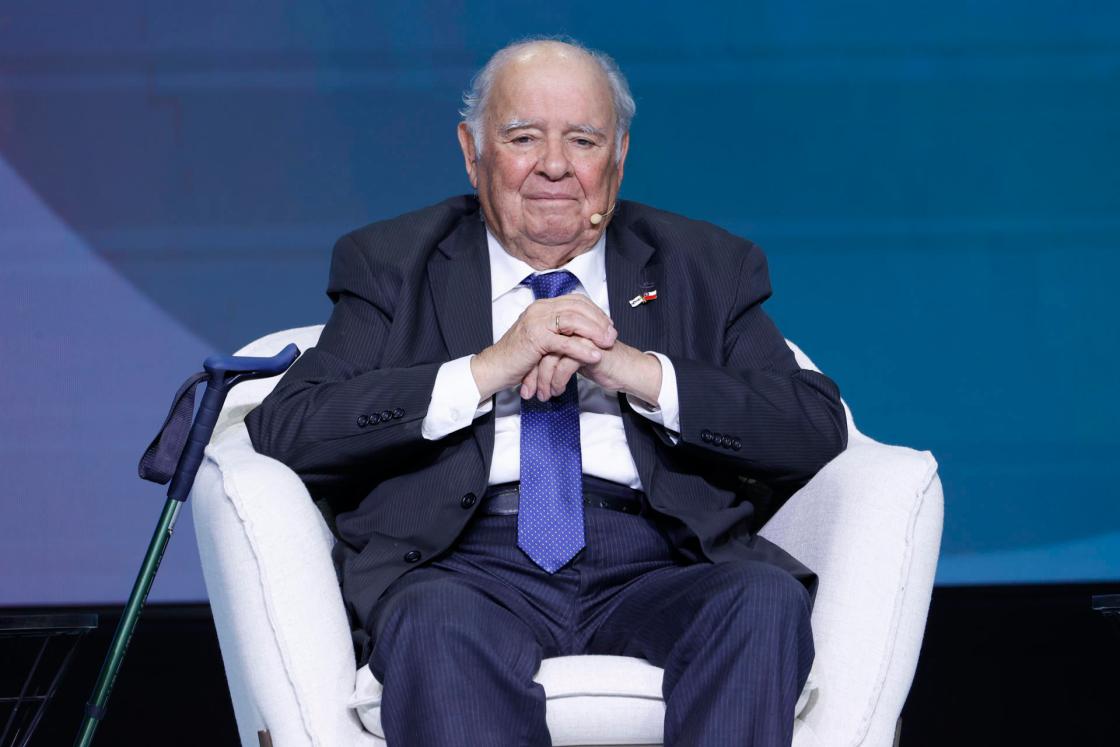
As former IDB president and head of the ASTUR Foundation, Enrique Iglesias, put it during one session:
“A more dynamic and growing Latin America is good for Latin Americans but also for the United States and the rest of the world.” EFE