
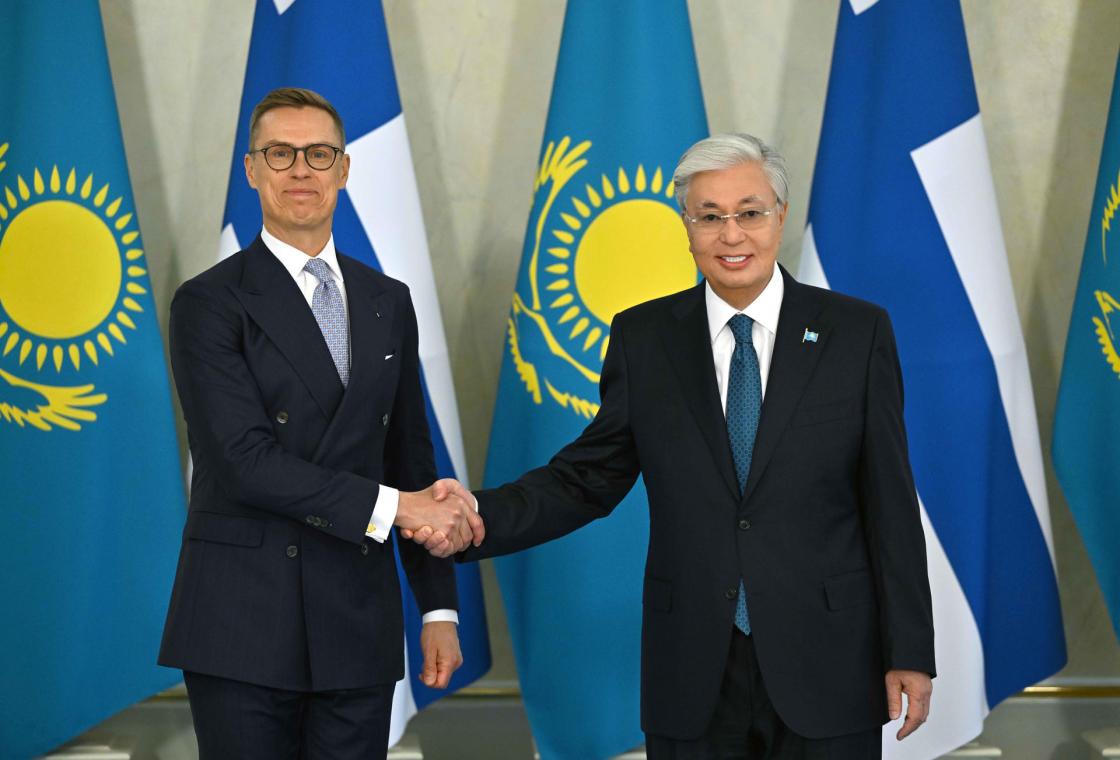
Astana, Oct 29 (EFE).— Kazakhstan and Finland have signed 15 bilateral agreements during Finnish President Alexander Stubb’s visit to the largest republic in Central Asia, accompanied by a delegation of around 20 business leaders.
“One of the businesspeople in our delegation said that things happen very quickly in Kazakhstan, so we can’t afford to be slow or bureaucratic. It’s nice to hear that, as our countries have embarked on a path of active development,” Stubb said during a meeting Tuesday with his Kazakh counterpart, Kassym-Jomart Tokayev.
Wide-ranging cooperation agreements
The two leaders signed a package of 15 documents, including memorandums of understanding on cooperation in the peaceful use of nuclear energy, agriculture, forestry, and water management.
They also covered cooperation in tourism, hydrometeorological and agricultural observation, eco-friendly wooden housing construction, and joint measures to mitigate the effects of oil spills.
Finland as a strategic partner
Tokayev described Finland as “a key trading partner for Kazakhstan in Northern Europe and the European Union,” noting that Finnish investments in Kazakhstan have totaled $500 million since 2005.
He highlighted Finland’s “globally recognized” standards in renewable energy, technology, digital innovation, environmental responsibility, and education.
Tokayev invited Finnish companies to take advantage of Astana’s favorable business conditions, saying these would provide access to the Central Asian market.
Joint commitment to international stability
Following their talks, the two presidents issued a joint statement reaffirming their commitment to international law and the UN Charter, including respect for the sovereignty, independence, and territorial integrity of all states.
They urged that conflicts be resolved through peaceful, political, and diplomatic means and stressed the importance of achieving a just and lasting peace in Ukraine.
Focus on trade, clean energy, and infrastructure
The leaders agreed to expand cooperation in economy, trade, and investment, with emphasis on:
-
Energy and clean technologies
-
Water and forest resource management
-
Construction and infrastructure
-
Information technology, transport, and logistics
They underscored Kazakhstan’s key role in developing the Trans-Caspian International Transport Route (TITR), which connects Europe and Asia.
They also expressed support for the European Union’s Global Gateway initiative, designed to assist emerging and developing countries. EFE