
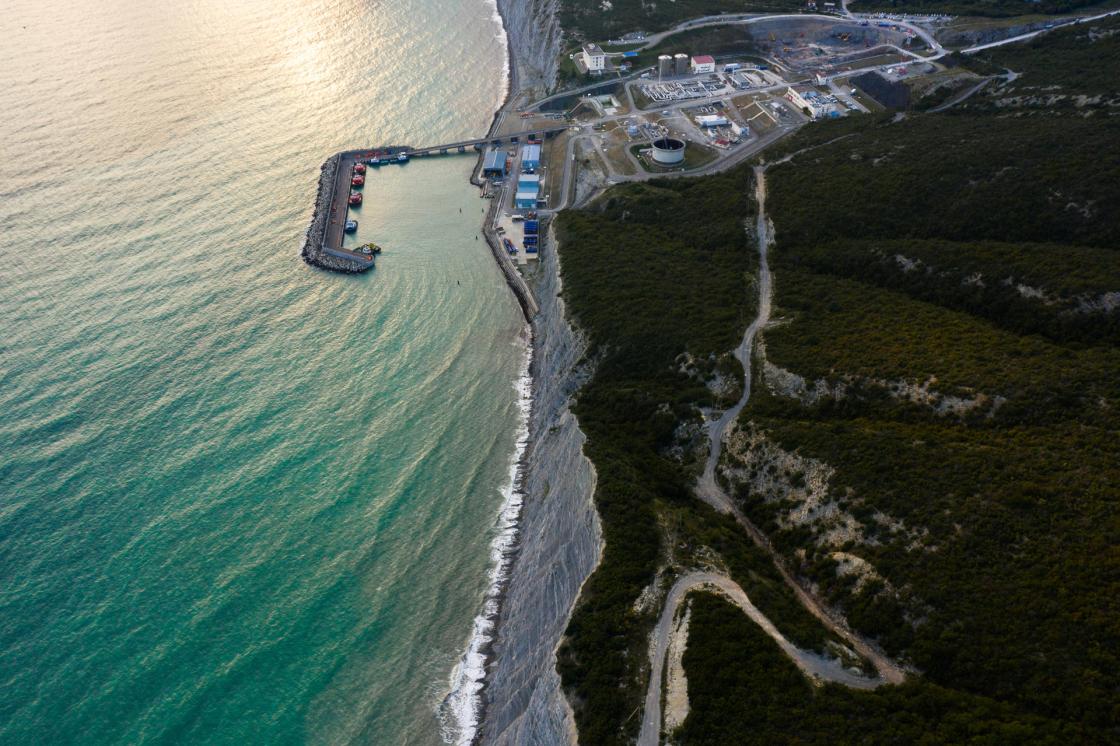
Astana, Jan 13 (EFE).- Kazakh oil and gas company KazMunayGas on Tuesday denounced a Ukrainian drone attack on a tanker it had chartered and was waiting to be loaded at the Caspian Pipeline Consortium (KTK) terminal in the Russian port of Novorossiysk (Black Sea).
“On January 13, the oil tanker was attacked by a drone. The attack caused an explosion, but did not result in a fire,” the company said on its Telegram channel.
According to the company, “the vessel Matilda was chartered by Kazmortransflot,” a subsidiary of KazMunayGas.
“The tanker was scheduled to load Kazakh crude oil at the KTK terminal on January 18, 2026,” it said.
The company said that “there are no casualties among the crew” and “according to preliminary estimates, the ship remains seaworthy, and no serious damage to its structure has been observed.”
The Kazakh Ministry of Energy later confirmed the incident and said that the tanker Delta Harmony was also attacked while waiting its turn to be loaded.
The crews of both ships were unharmed, authorities confirmed.
The attack is the fourth against the consortium, following the Kropotkinskaya pumping station and offices in Novorossiysk.
On November 29, a marine drone struck a maritime cargo terminal in the Russian port of Novorossiysk on the Black Sea, causing “considerable damage to the VPU-2 cargo terminal” and losses of between $70 million and $100 million for Kazakhstan.
The consortium brings together major companies from Kazakhstan, the United States, Russia, and several European nations. It accused Ukraine of “undermining the interests of the participating countries.”
Kazakhstan acknowledged on Tuesday that the attacks on the infrastructure caused a temporary reduction in shipments via that route. This forced the authorities to increase supplies via other routes, particularly to China. EFE