
Authors and small publishers commonly struggle with minimum print runs, high initial investments, and limited visibility when publishing a book. Print on demand (PoD) directly addresses these issues by offering a sustainable, profitable model for literary self-publishing.
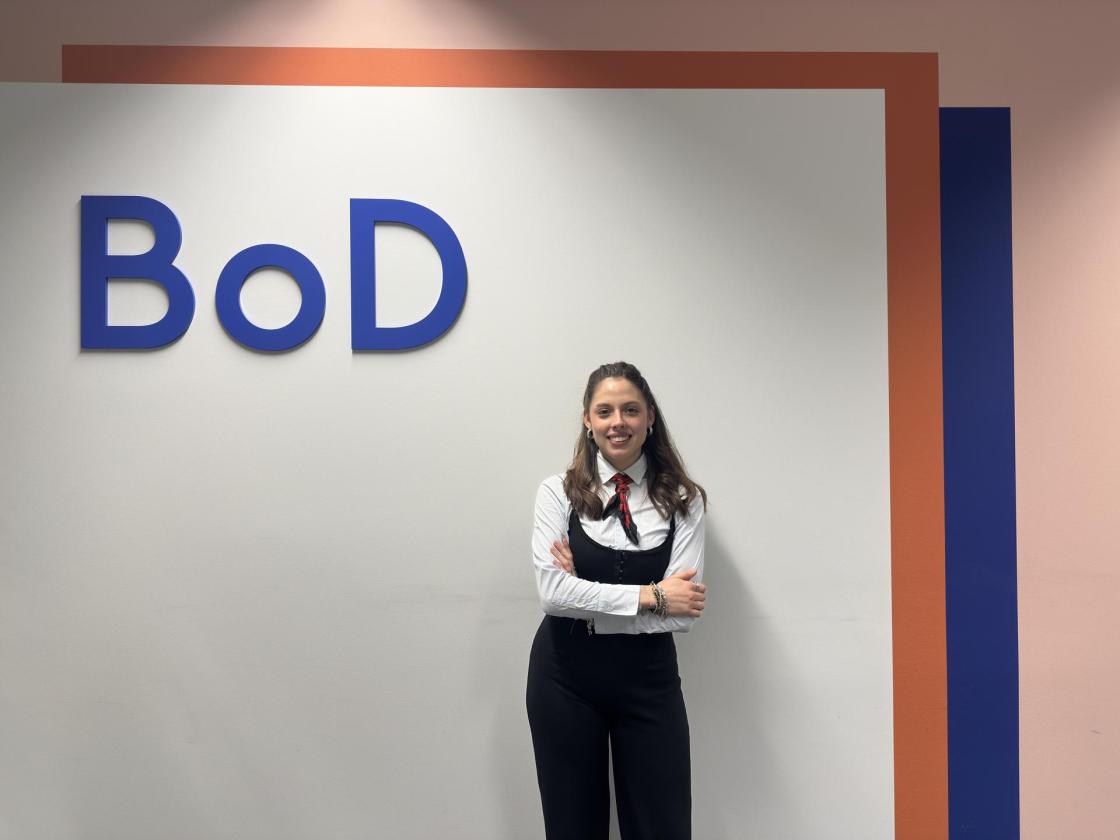
With print-on-demand publishing, books are only printed “when someone buys them,” which eliminates the need to store unsold copies, Beatriz Marín, a publishing consultant and representative in Spain for Books on Demand (BoD), the leading European platform for self-publishing services, told EFE.
“When a reader or bookstore places an order, the book is printed at our production center in 24 to 48 hours and shipped directly to the buyer or point of sale in less than a week,” explained Marín. She believes this allows the title to be available “continuously” without the author having to make large investments.
In addition to avoiding surpluses and reducing environmental impact, BoD highlights faster market access, as there is no need to wait to print thousands of copies. This approach also provides total control for the author, who decides the price, design, and publication date, and greater profitability per copy compared to the traditional model.
An alternative to traditional publishers
For the BoD representative, whose company has published more than 70,000 authors in Europe since 1998, these advantages make self-publishing a “real and professional alternative” in a market where she predicts “greater growth in audio and subscription models, stable demand for printed books, growth of professionalized self-publishing, and an increase in hybrid authors.”
In 2024, the printed book sector in Spain reached record sales of 77 million copies and a turnover of more than 1.2 billion euros, a 9.8% increase in the publishing market compared to 2023, according to data from the report “Mercado del Libro en España 2024” (Book Market in Spain 2024) by GfK.
“Our mission is to democratize book publishing in Europe by allowing any author to publish their work to professional standards, reach bookstores, and maintain complete control over their project,” added Marín.
New digital solutions
Democratizing the literary community is precisely one of the commitments of the pan-European social network Panodyssey, in which BoD is present. Its CEO, Alexandre Leforestier, believes that self-published writers are looking for “new digital solutions” to reach their audience.
This writing platform combines “the immediacy of social media” with “the depth of a literary library” and offers visibility that is “very valuable for authors” both on Google and in new AI tools, since “100% of accounts are verified,” Leforestier said.
With the aim of increasing content visibility, the head of Panodyssey—which has collaborated with EFE in publishing this content—has announced the recent launch of Panodyssey Enterprise, a tool for publishing professionals and cultural brands that enables them to use the platform’s more than 50 tools. EFE