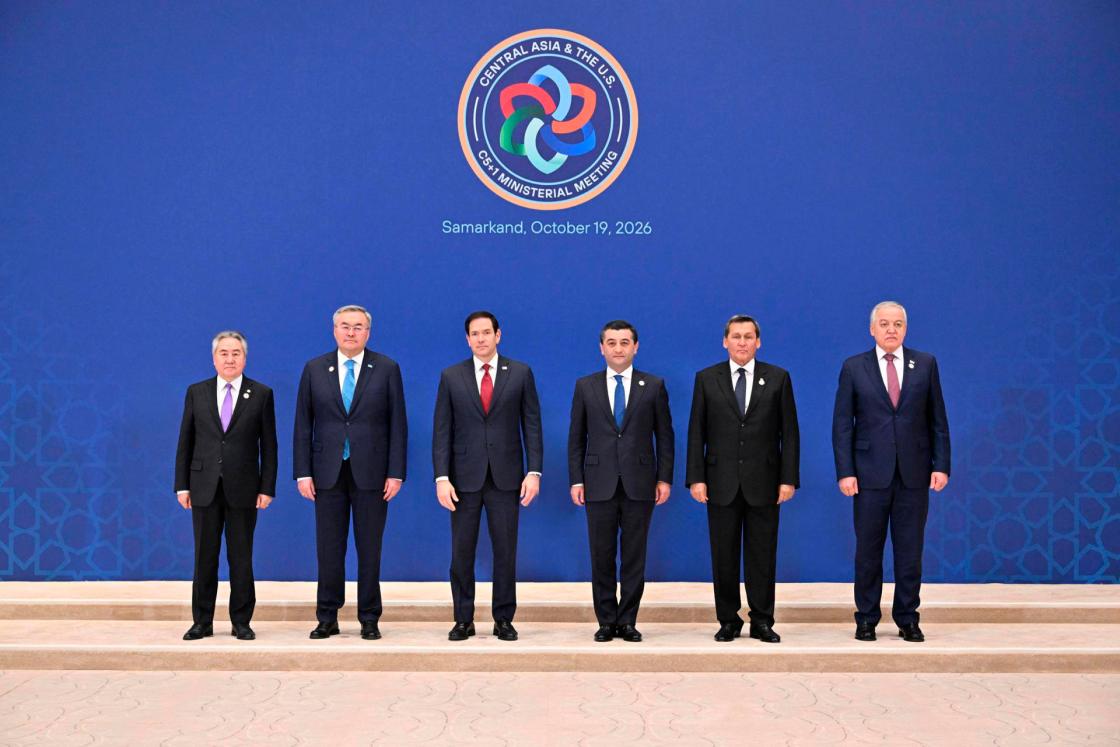
U.S. Secretary of State Marco Rubio met Monday with the foreign ministers of the five Central Asian nations in the C5+1 format, held in the historic Uzbek city of Samarkand, a jewel of the Silk Road.
Rubio, who arrived in Uzbekistan accompanied by representatives from more than 200 U.S. companies — including Boeing, Citibank, and Franklin Templeton — stated that “nothing strengthens relationships more than shared prosperity.”
During the meeting, the diplomats discussed expanding trade cooperation, attracting investment, and developing energy, digital, and transport infrastructure, according to a statement from the Uzbek Foreign Ministry on Telegram.
The U.S. and the five Central Asian republics — Uzbekistan, Kazakhstan, Tajikistan, Turkmenistan, and Kyrgyzstan — focused on critical minerals to foster new industries, technological development, and job creation.


Bilateral meetings with Kazakh, Uzbek foreign ministers
Additionally, Rubio held separate bilateral meetings with the foreign ministers of Uzbekistan and Kazakhstan, both of whom U.S. President Donald Trump intends to invite to the G20 summit taking place late this year in Florida.
The two countries — the most populous in the region and its economic powerhouse, respectively — generated over $30 billion in new investments in U.S. markets
Upon his arrival, the secretary of state highlighted the potential during his visit to “sign deals worth tens of billions of dollars that will not only enrich the region, but will also be economically beneficial for the U.S.”
“For too long, the U.S. focused on the Middle East and East Asia, and this region in the middle, Central Asia, did not receive the attention it deserves,” he said.
Rubio is to be received on Tuesday by Uzbek President and host Shavkat Mirziyoyev, who met with Trump last month in New York on the sidelines of the UN General Assembly.
Mirziyoyev previously pledged to invest up to $100 billion in the U.S. economy, starting with the purchase of 22 passenger jets from the Boeing Corporation.
Trump also hosted the leaders of all five Central Asian nations, which maintain close ties with Russia and China, at the White House in November 2025.
According to analysts, Washington has set aside past administrations’ criticisms of the questionable democratic credentials and human rights records of some of these regional states in favor of a policy exclusively focused on business. EFE