
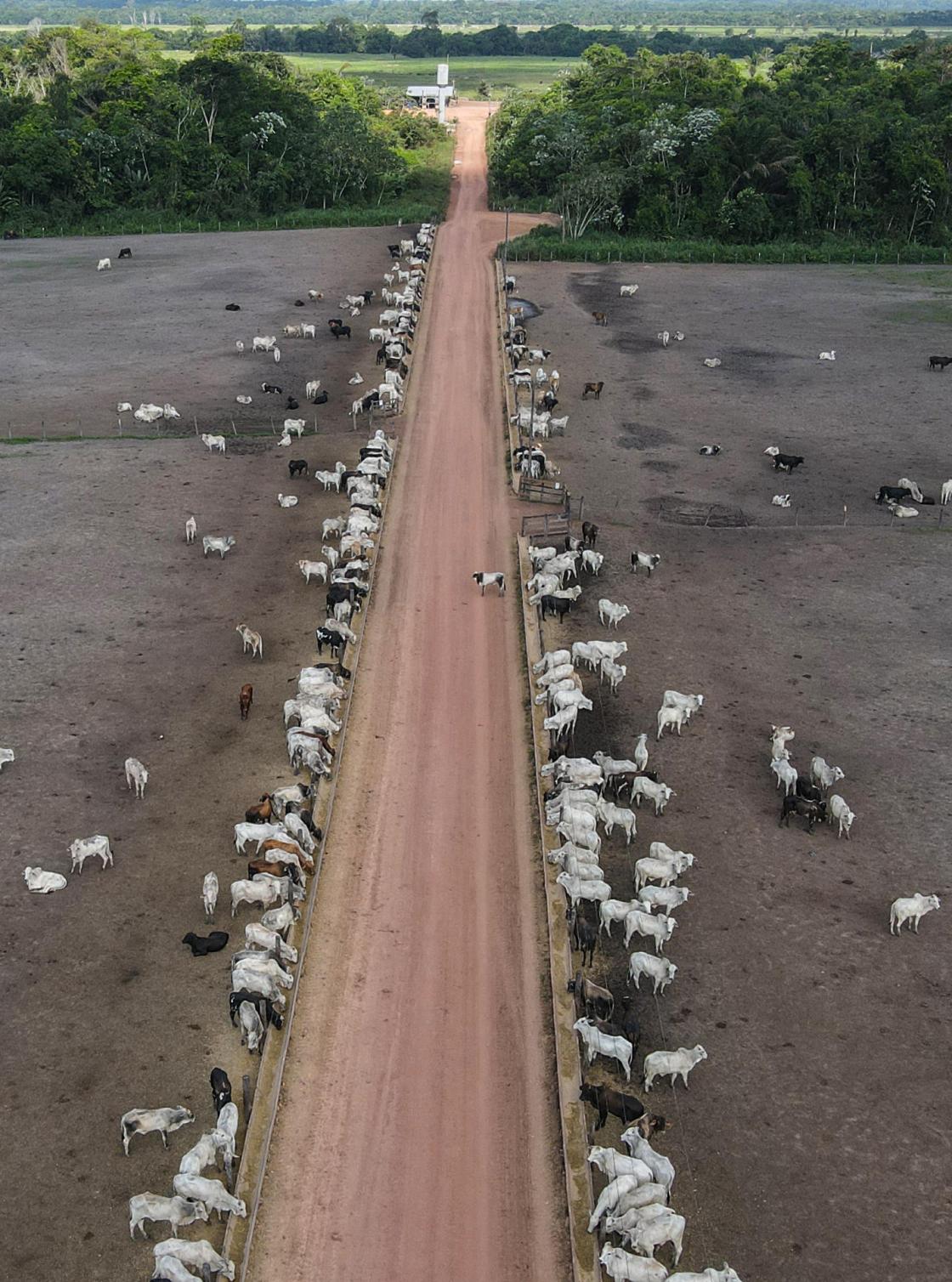
Rio de Janeiro, Aug 27 (EFE).- Methane emissions in Brazil, which rose 6% between 2020 and 2023, could be reduced through sustainable livestock management practices, according to environmental organizations.
In 2023, Brazil released 21.1 million tons of methane into the atmosphere, the second-highest level since measurements began under the Climate Observatory’s Greenhouse Gas Emissions Estimates System (SEEG).
The Climate Observatory, a coalition of more than 100 environmental groups and academic institutions, noted that cutting methane emissions by 45% could lower global warming by 0.3°C by 2040.
According to the study, Brazil could achieve major reductions mainly by implementing programs to improve cattle management, the country’s leading source of methane, and through better solid waste management.
Sustainable agriculture: the key to reductions
Gabriel Quintana, a climate science analyst at the Institute of Agricultural and Forest Management and Certification, told a press conference that even with a growing cattle herd, Brazil could cut methane emissions by up to 25% by 2035 through sustainable agricultural practices.
“To achieve this, it needs to improve animal diets, reduce the slaughter time for beef cattle, and invest in herd genetic improvement,” he explained.
Brazil: the world’s fifth-largest methane emitter
With 21.1 million tons of methane released in 2023, Brazil ranks as the fifth-largest emitter globally. Only China, the United States, India, and Russia emit more.
The study found that 69% of Brazil’s methane emissions in 2023—some 14.5 million tons—came from enteric fermentation in cattle, or cow burps.
That level reflects Brazil’s status as the world’s largest beef producer and exporter. Brazil is home to the second-largest cattle herd after India, with 238.6 million head of cattle in 2023.
Overall, the agricultural sector was responsible for 75.6% of Brazil’s methane emissions last year, or 15.7 million tons.
The waste sector ranked second, accounting for 14.6% of emissions, followed by forest fires (6.3%) and the energy sector (2.6%).
Methane: a powerful greenhouse gas
Claudio Angelo, coordinator of international policy at the Climate Observatory, said that while the 6% increase in four years may seem modest, the overall volume remains dangerously high.
“Methane is a greenhouse gas that can heat the planet far more than carbon dioxide. Although its life span is shorter, between 10 and 20 years, it has a warming potential 28 times greater than carbon dioxide over a 10-year period,” he said.
The rise in emissions jeopardizes Brazil’s pledge under the Global Methane Pledge, signed in 2021, to cut methane emissions by 30% by 2035.
“Like other major emitters, Brazil has done almost nothing to meet the commitment it made in Glasgow,” the Climate Observatory said.
The organization stressed that a rapid, coordinated response to reduce methane is essential to slowing global warming. It could also deliver quicker results than carbon dioxide reduction measures.
Green Economy Forum: cattle traceability in focus
Cattle traceability will be one of the central topics at the 3rd Latin American Green Economy Forum. It is organized by Agencia EFE in São Paulo on September 4.
The event will bring together officials and experts to address the challenges of the climate crisis. It is sponsored by ApexBrasil (Brazilian Export and Investment Promotion Agency) and Norte Energia, with the support of IBMEC University, the Climate Observatory, and Imaflora. EFE