
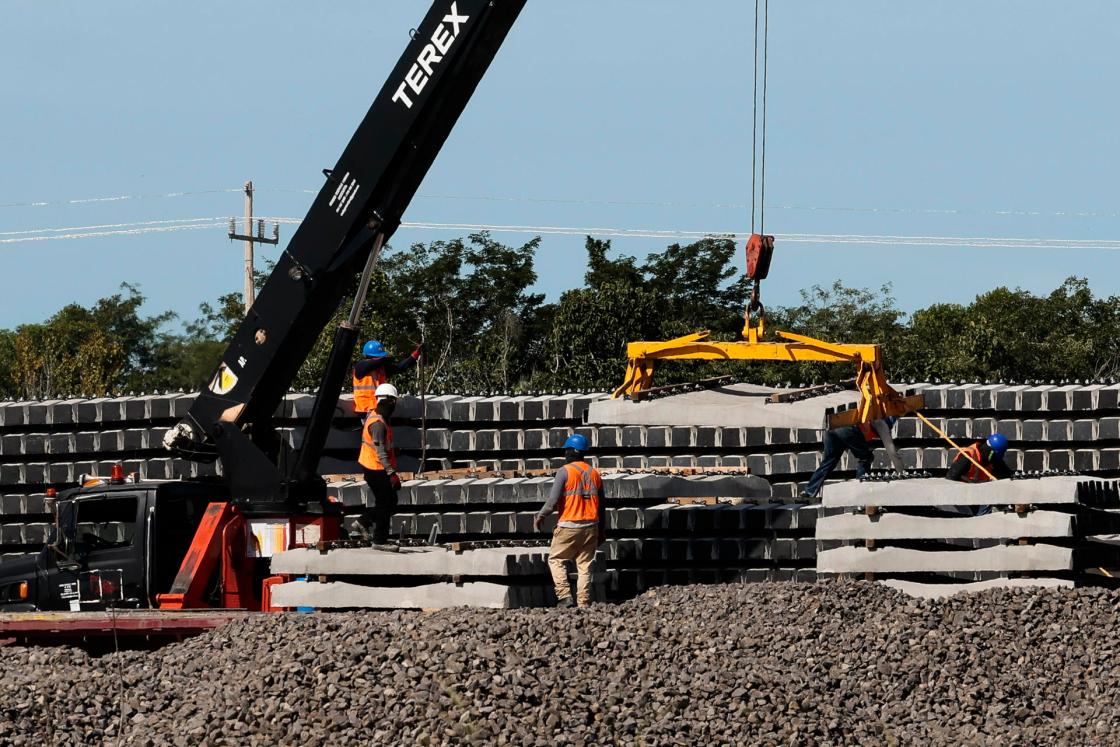
Local communal landholders are hopeful that the Mayan Train, Mexican President Andrés Manuel López Obrador’s emblematic project, will bring greater visibility and economic growth never seen before to Mexico’s traditionally forgotten southeast, although they recognize the impact on labor and their ways of life.
“I believe that this, by bringing a fairly large economic boost to the entire area, it is obvious that there will be an economic improvement, and therefore the standard of living in the area will improve,” José Eduardo Angulo Cab, Laguna Guerrero communal land commissioner, explained to EFE during a tour of the area.
The Mayan Train includes more than 1,500 kilometers of railroad for cargo, tourists, and local passengers in the five southeastern states of Campeche, Chiapas, Quintana Roo, Tabasco, and Yucatán.
Angulo considered that, for producers and inhabitants of the region, the train construction project has brought an unprecedented economic bonanza since work began on section 6, which runs from Tulum to Chetumal (255 kilometers), and section 7, which runs from Chetumal to Escárcega (254 kilometers).

“Income is already different. It is no longer what people used to earn in the city or a restaurant or any other company,” he stressed, recognizing that many people who worked in other construction sites have been employed in the Mayan Train since they are paid “perhaps double” what they can earn before.
For his part, Roberto Salgado Sangri, president of the Peninsula communal land committee, agreed that the train has been beneficial not only by bringing employment to various sectors, but also to the communal lands, or ejidos, through which the tracks pass.
Ejidos are the traditional Mexican type of collective land ownership, linked to the agrarian reform of the early 20th century.
“It has benefited them in terms of payment for the land on which the train tracks will be built. So there they have received financial compensation for the sale of their lands, that is an important impact, an economic one,” Salgado Sangri said.
Greater visibility
With an area of 5,400 hectares and diverse natural attractions, the La Península Ejido in the municipality of Othón P. Blanco has been forgotten by the government for more than 40 years, activists pointed out.
There are still areas that lack basic services such as electricity and drinking water, so Salgado Sangri expressed hope that the Mayan Train could make these problems visible and help solve them.
Likewise, farmers are optimistic that the Mayan Train will help reduce the transportation costs for their products, such as lemons and pitaya since they currently have difficulties reaching markets because they are located in the extreme southeast of the country.
“That would be a great benefit for us as producers because if we concentrate our products in Chetumal (state capital) and from there they can take them to perhaps the center of the country, to Tabasco, Chiapas, then I think that would benefit us,” said Angulo.
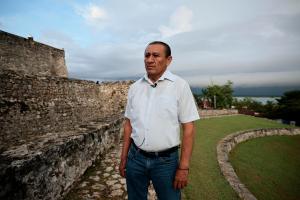
The communal landholders recognize that the 1,500-kilometer mega-project has also encouraged people to purchase land to develop ecotourism in the area.
Impact on the labor force
However, one of the collateral effects that the project has had is that it has reduced the labor force on farms.
According to Angulo Cab, a person can earn 500 pesos (almost 28 dollars) for working 8 hours on the construction of the Mayan Train while farmers struggle to pay even half of that.
“As producers, we have a little bit of trouble getting people to work on the farms, because the most we can pay is 250 pesos (13.75 dollars), which is half of what they pay,” he said.
He also acknowledged that there is uncertainty about after the project is finished because it is not known how the people currently building the Mayan Train will be employed.
“All that labor force they currently have in the area, what is going to be the government’s plan?” he said regarding the future of the workers. EFE