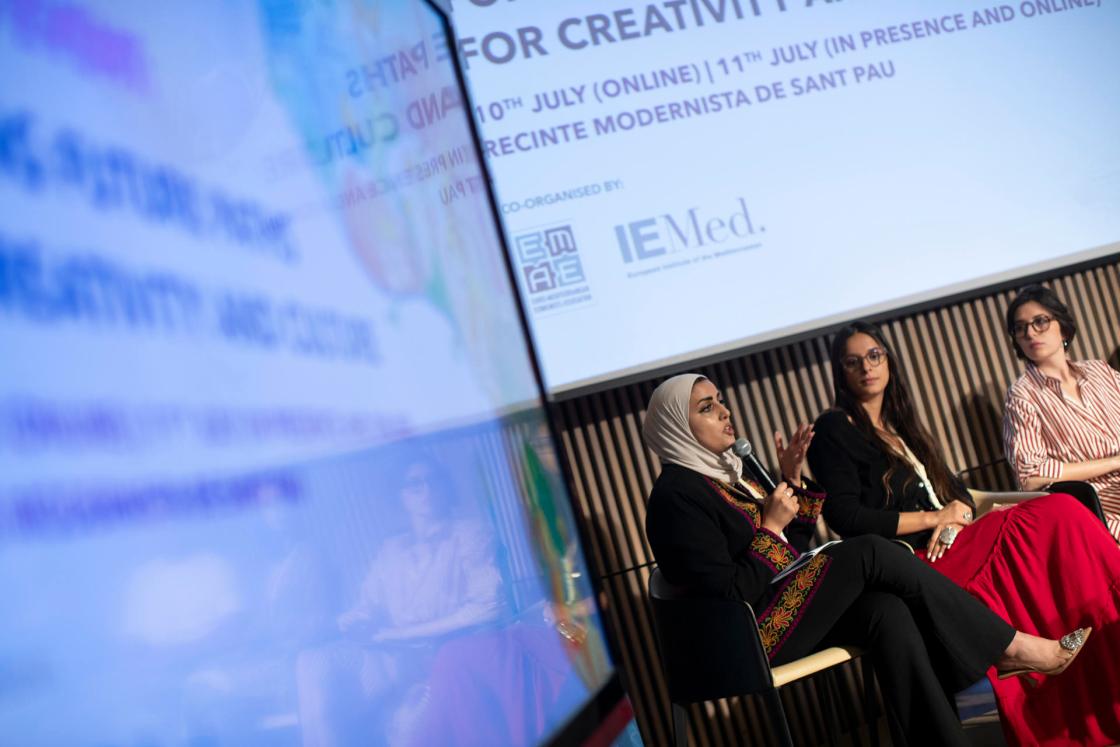
Barcelona, Jul 12 (EFE).– Armed conflicts and tensions in some regions of the Mediterranean complicate daily life for its inhabitants, especially for women entrepreneurs. That is the case for Ayah Awwad, a representative of the Palestinian Businesswomen’s Association (ASALA). She explains that city closures and roadblocks in the West Bank prevent them from carrying out their activities.
“We switched from in-person training to virtual. Additionally, the economic situation is very difficult, especially for SMEs. That is because raw material prices have increased, and they cannot exchange products among themselves,” she explained in an interview with Agencia EFE.
Awwad expressed her gratitude for participating in the CREACT4MED program. It is co-financed by the European Union, through which more than 400 people have received training to develop their businesses in the cultural and creative industries of southern Mediterranean countries.
ASALA focused on enabling 30 women entrepreneurs to access funding for activities such as digital marketing, financial literacy, and e-commerce.
Maryam Hazem’s Reform Studio
Helping women entrepreneurs
Another example of a woman entrepreneur benefiting from this program is Maryam Hazem, co-founder of Reform Studio. It is a lifestyle brand that promotes sustainability by making 100% eco-friendly fabric from plastic bags and discarded jewelry, woven with cotton threads.
“It is also 100% handmade. Thanks to this initiative, we have been able to expand our brand abroad. We are trying to revive an ancient craft, so we felt the whole program aligned perfectly with our brand’s objective,” Hazem commented.

Conclusion of CREACT4MED
A network of women entrepreneurs
CREACT4MED concluded its four-year journey with a final event held in Barcelona, where Agencia EFE participated as a collaborating media outlet, and a network of entrepreneurs, mostly women and young people, spread across Egypt, Jordan, Lebanon, Morocco, Palestine, and Tunisia.
Rym Ayadi’s Insights
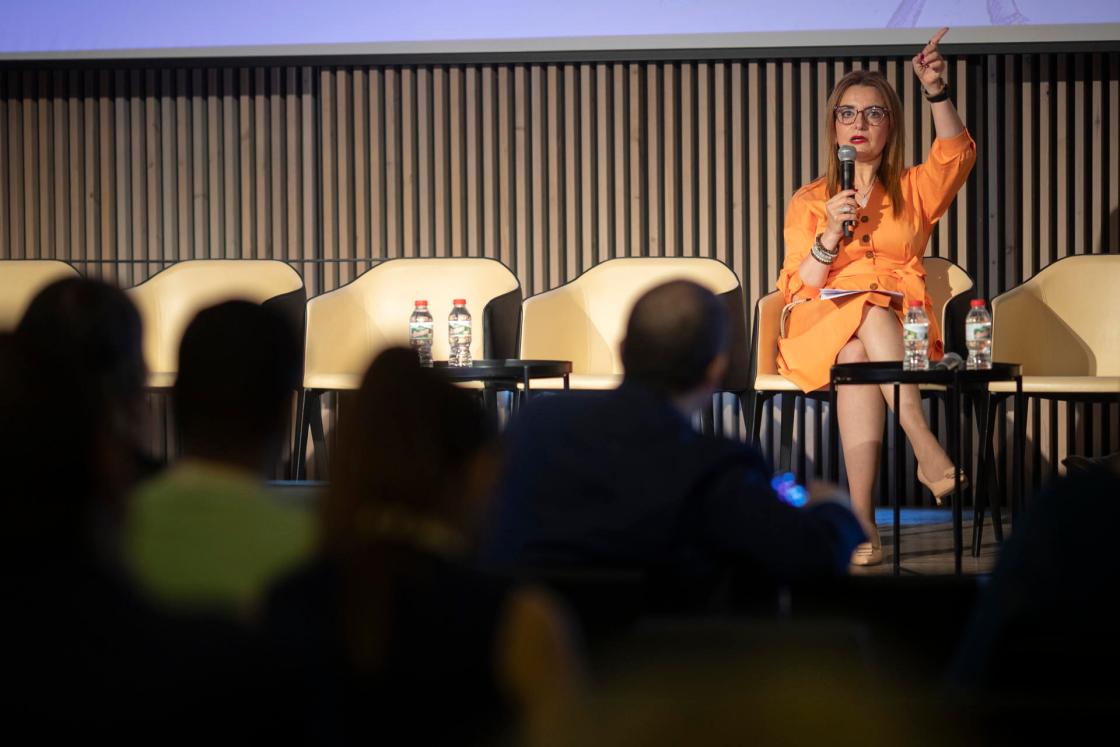
Rym Ayadi is director of CREACT4MED and president of the Euro-Mediterranean Economists Association (EMEA). She said these two population groups have the potential to “truly learn” and create synergies between different cultures to develop activities that create jobs.
For her, culture and creativity are pillars of economic transformation and social well-being.
“Obviously, when there are tensions, when there are political and social difficulties, prosperity and peace diminish. So, what we need is to prevent this destructive trend and turn it into a constructive one,” she said.
Preserving the Mediterranean heritage
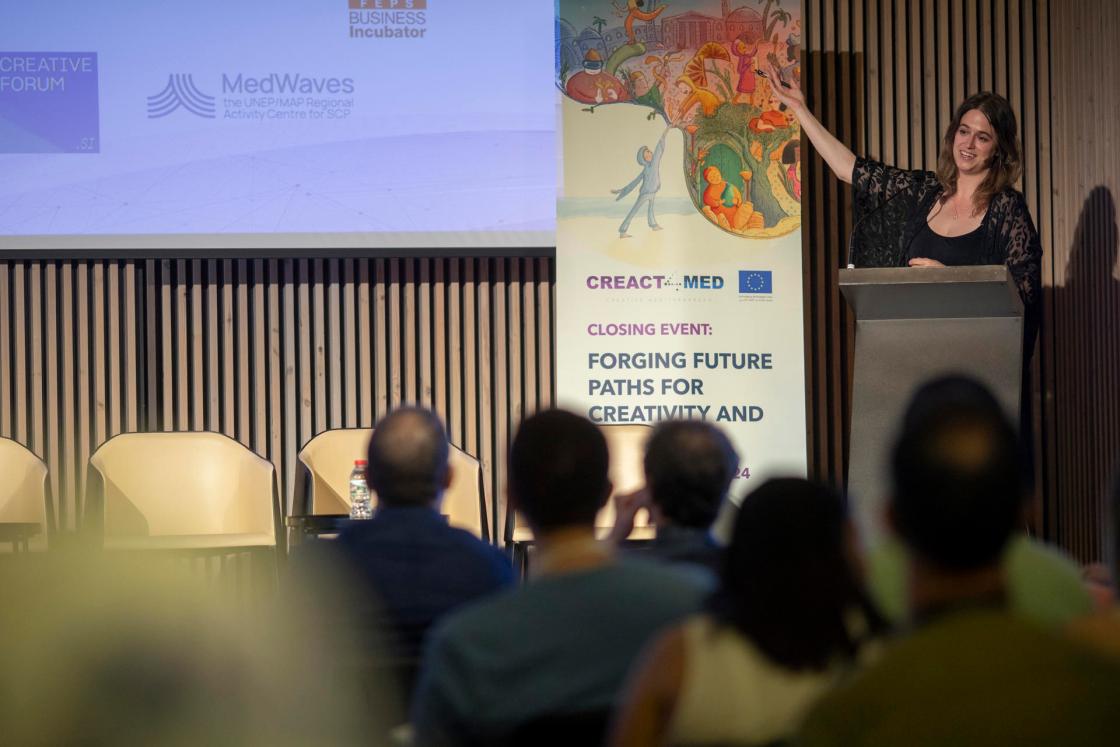
In this regard, the main coordinator of the project and member of EMEA, Maria Ruiz de Cossío, highlighted the community of more than 1,200 “creative minds” aiming to preserve the Mediterranean heritage.
“We are talking about a region with the highest youth population rate in the world, which makes them very vibrant places. Cultural and creative industries unite communities, and facilitate dialogue between people who have nothing in common,” concluded Ruiz de Cossío. EFE