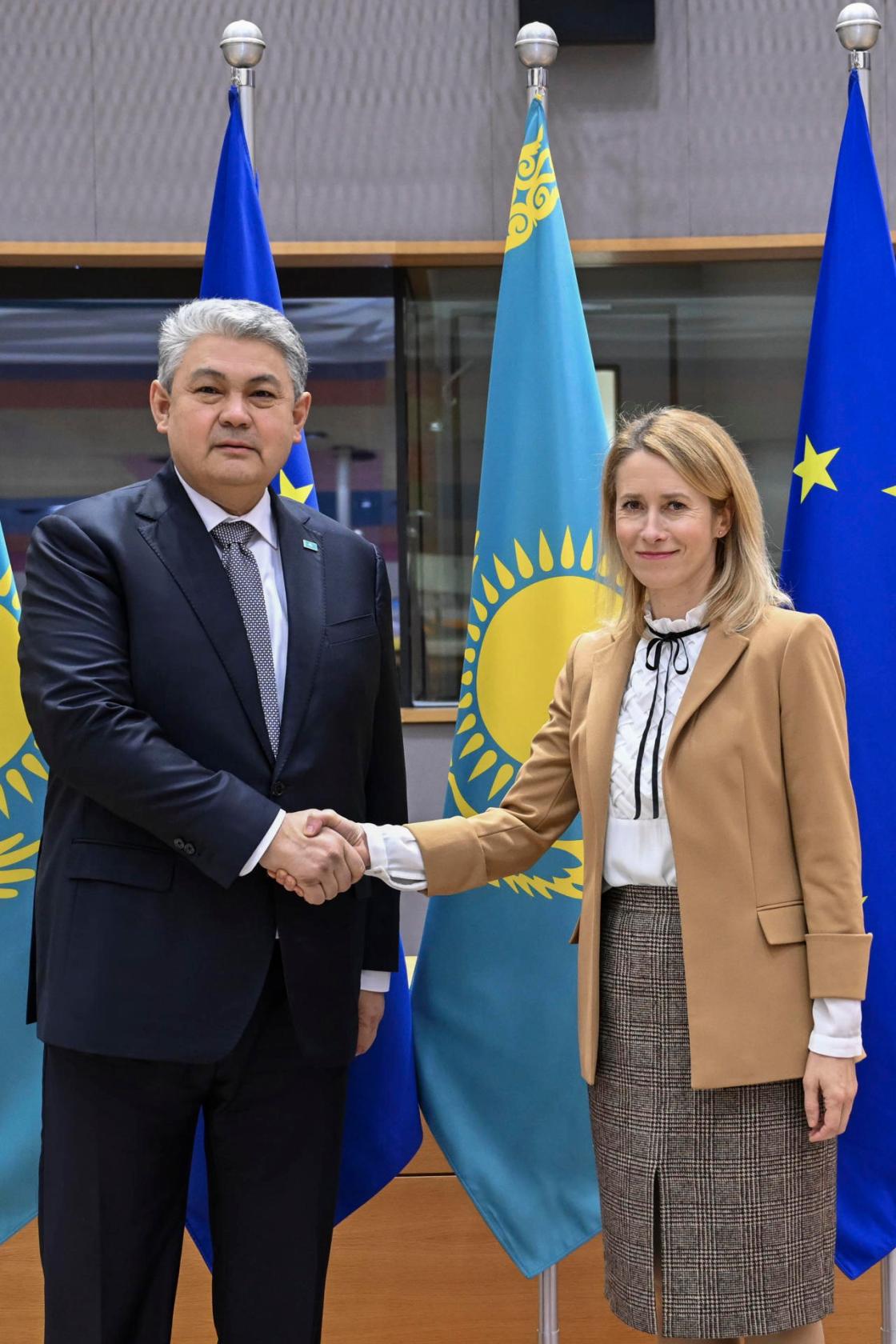
Astana, Dec 1 (EFE).- Kazakh Foreign Minister Yermek Kosherbayev and EU High Representative for Foreign Affairs and Security Policy Kaja Kallas pledged on Monday to deepen cooperation between Astana and Brussels ten years after the signing of the Enhanced Partnership and Cooperation Agreement.
“Economic relations continue to be the main driver of cooperation. The EU retains its status as an important trading partner and investor in Kazakhstan,” Kosherbayev said in a statement after a meeting between the two officials.
During the meeting, the head of Kazakh diplomacy expressed his “willingness to continue diversifying trade and stressed the importance of expanding access for national agricultural products to the EU market.”
“Much attention was devoted to the development of the Trans-Caspian International Transport Route (Middle Corridor),” the Kazakh minister said, adding that both diplomats “confirmed the importance of this route as a reliable and stable link between Europe and Asia.”
Another topic discussed by Kosherbayev and Kallas was cooperation in the field of renewable energy and digital transformation.
“The parties expressed their aspiration to continue developing this promising area of work in the future, which promotes both the modernization of the Kazakh economy and industrial stability in Europe,” he said.
They also emphasized the importance of expanding relations and welcomed the commencement of negotiations on European visa exemptions for Kazakh citizens, which are scheduled to begin on Tuesday, December 2.
EU-Kazakhstan Cooperation Council
The two diplomats met as part of the framework of the 22nd meeting of the EU-Kazakhstan Cooperation Council held in Brussels.
December 2025 marks ten years since the signing of the Enhanced Partnership and Cooperation Agreement between Kazakhstan and the EU and five years since its entry into force, a fact that Kosherbayev described as “an important milestone, which confirmed our common commitment to a broad and future-oriented partnership.”
The Kazakh minister noted that his country’s bilateral trade with the EU totaled $48.8 billion in 2024 and that more than 80% of crude oil production in Kazakhstan was exported to the European Union.
During the talks, the heads of Kazakh and EU diplomacy discussed the extraction and supply of rare earth minerals and the development of transport routes.
Kosherbayev also met on Monday with European Commissioner for International Partnerships Josef Síkela, with whom he discussed the state and prospects of economic cooperation between Astana and Brussels, as well as the development of relations between the EU and Central Asia. EFE