
Diversifying exports, expanding small- and medium-sized enterprise participation, and attracting green-transition investments are the core pillars of Brazil’s strategy to capitalize on the open market following the Mercosur–European Union (EU) agreement.
The May accord is already showing progress. Brazil went from an $855 million trade deficit with the European Union between January and August 2025 to a $3.3 billion surplus during the same period this year, driven by a 20% surge in exports to the European bloc.
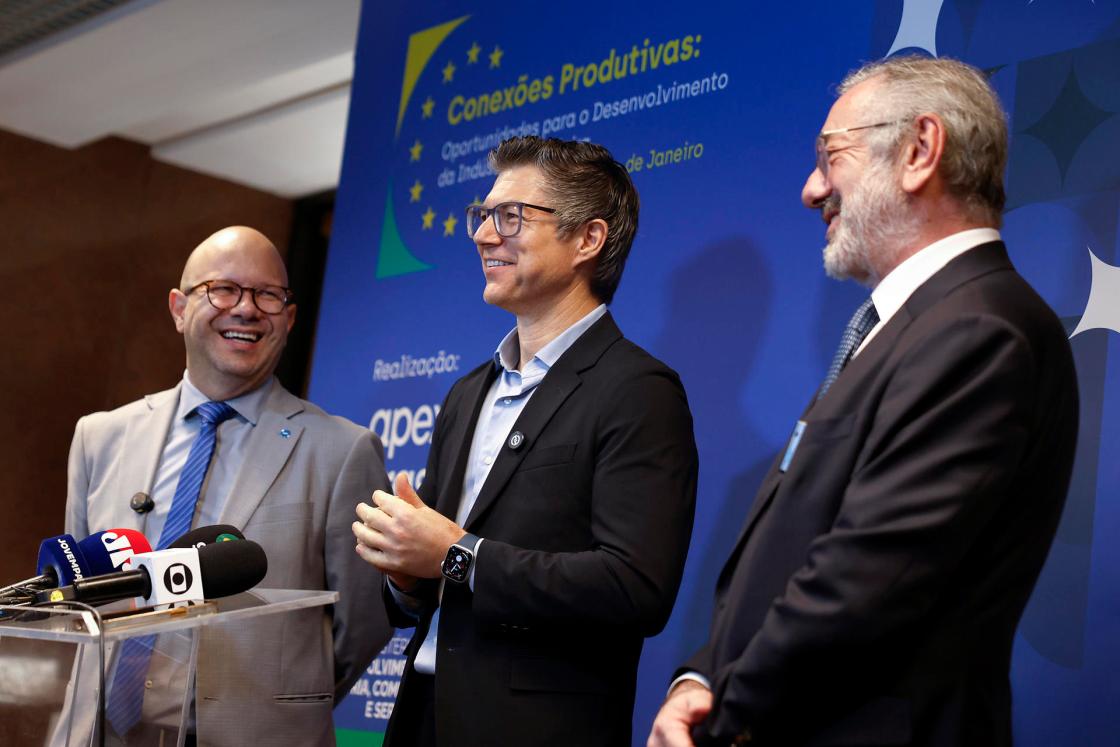
Brazil is boosting foreign sales despite current geopolitical tensions, Laudemir Müller, president of the Brazilian Trade and Investment Promotion Agency (ApexBrasil), explained Thursday during a business gathering in Rio de Janeiro.
While Brazilian exports to the United States fell by $1.9 billion this year, shipments to the European Union expanded by $7.4 billion.
Müller underscored three primary advantages of the EU agreement: building greater investor confidence to attract investment, creating opportunities for sustainable Brazilian products, and boosting trade flows.
Regarding investment, the head of ApexBrasil highlighted growing interest in critical minerals, energy, and hydrogen during an interview with EFE.


Beyond beef and soybeans
The agency is also working to expand European market access for Amazonian products and family farming goods, such as Brazil nuts, native regional fruits like açaí, and local handicrafts.
ApexBrasil has grown from working with roughly 40 cooperatives a few years ago to nearly 600 today, over 95% of which comprise small-scale farmers or family producers. Müller expects at least 400 of these cooperatives to establish commercial deals with European nations.
Promising opportunities within the European market also span sectors such as aeronautics, electric motors and generators, furniture, automotive components, and chemical products.
Müller also noted that the agency aims to support the textile and fashion industry, one of the sectors hardest hit by new tariffs.
As the world’s largest producer and exporter of cotton, ApexBrasil seeks to increase its use in the textile industry as a sustainable alternative to synthetic fibers, reducing microplastic pollution.
The agency has expanded business matchmaking rounds with European buyers, its presence at trade fairs and events, and promotional campaigns for Brazilian goods. It also launched a dashboard to identify product- and market-specific commercial opportunities.
On the investment front, ApexBrasil is actively working to attract European capital, particularly for green energy projects. There is also interest in critical minerals and rare earth elements.
The Brazilian advantage
Müller pointed to Brazil’s foreign policy of “equidistance” as a key competitive advantage, allowing the nation to maintain trade relations and draw investments from diverse global blocs without aligning exclusively with any single power.
According to the ApexBrasil president, this strategic stance enables the country to “negotiate with the entire world,” serving as a vital asset amid ongoing tensions among major world powers and the global search for reliable partners.
He added that this diplomatic posture is complemented by Brazil’s trade openness and intrinsic advantages, including vast natural resources, a renewable energy matrix, rich biodiversity, and strong agricultural and industrial capacity. EFE