
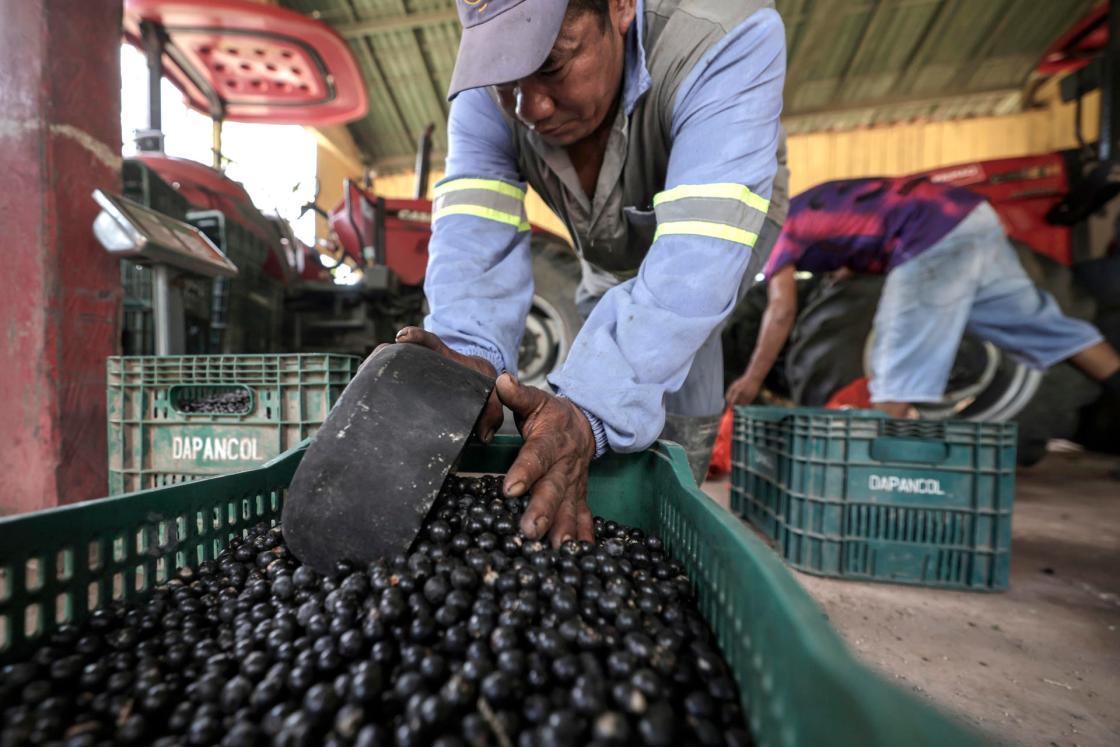
São Paulo, Feb 18 (EFE).- The export of products compatible with forest preservation, particularly those from the Amazon, could become a significant source of soft power for Brazil internationally. However, reaching its full potential presents a major economic challenge, according to the Brazilian Trade and Investment Promotion Agency (ApexBrasil).
The global market for forest-friendly products is worth around $150 billion annually, according to ApexBrasil. However, Brazil has yet to fully capitalize on the export potential of goods from the Amazon, ApexBrasil President Jorge Viana told EFE in an interview.
“In general terms, Brazilian Amazonian products have an average share of less than 1% in the international market,” he noted.
Structural and circumstantial challenges
Despite the growing global interest in these products, several hurdles remain for their international expansion.
Among them is the lack of consumer awareness, which affects exports of cassava flour and Amazonian nuts, for example. The fishing sector also faces the challenge of scaling up due to low technological advancement and a lack of producer organization.
Additionally, the logistical infrastructure of the Amazon region remains insufficient.
To address this issue, the Brazilian government is investing in improving road and river connections between the Amazon and neighboring countries—Colombia, Peru, and Bolivia—aiming to enhance access to Pacific ports and open new export routes to Asia.
Among the initiatives to improve logistics, ApexBrasil signed a technical cooperation agreement with the Ministry of Transport last August to attract foreign investment in road and rail transport with cutting-edge technology, which “will greatly facilitate the export of Amazonian products, reducing logistics costs and improving competitiveness.”
To further boost exports, ApexBrasil also launched the ‘Exporta Mais Amazônia’ project in 2023, connecting importers with local companies and generating approximately $14 million in trade agreements over two editions.
Brazil: Power, Innovation, and Sustainability
The Amazon region primarily supplies agricultural and mineral commodities to the global market. However, authorities are prioritizing export diversification, with an emphasis on sustainable products.
According to studies by ApexBrasil, the export of forest-friendly goods enhances Brazil’s international image and serves as a tool of soft power, strengthening the country’s global influence while promoting innovation, sustainability, social inclusion, and healthier consumption habits.
“Products such as açaí, cacao, Brazil nuts, essential oils, and indigenous crafts, rooted in centuries-old traditions, can reach international markets as an alternative to predatory exploitation, contributing to forest preservation,” Viana stated.
He emphasized that ApexBrasil has been promoting and supporting bioeconomy initiatives to “maintain the necessary natural infrastructure” and enable continued economic progress, aligned with environmental preservation and the well-being of local communities.
Markets and South-South cooperation
The primary destinations for Amazonian products include the United States, China, the Netherlands, Germany, Japan, and Malaysia.
According to ApexBrasil, the growth of exports to developed countries is largely driven by changing consumer preferences, with increasing demand for biodiversity-based products.
Meanwhile, in developing nations, opportunities for expansion stem from productive complementarities, the potential for jointly developing value chains, technology transfer, and alignment on trade principles.
“The fact that we compete with other tropical and developing countries in the forest-friendly product market creates a highly positive effect: South-South cooperation as a driver of innovation, diversification, and social inclusion,” Viana said.
For the executive, Brazil’s challenge is not only accessing existing markets but also creating new ones.
“Our goal is for the world to recognize the cultural and productive wealth housed in our forests,” he concluded. EFE
Agencia EFE has the support of ApexBrasil in disseminating this content.