

São Paulo, Nov 20 (EFE).- Brazil is accelerating efforts to diversify its export markets, a competitiveness strategy aimed at strengthening resilience and expanding its global presence—an effort made more urgent by the tariffs imposed by U.S. President Donald Trump, even after a recent partial reduction.
“Diversification has always been a guideline. What changes now is the speed at which we must act to support the private sector at a critical moment,” said Gustavo Ribeiro, head of intelligence at the Brazilian Trade and Investment Promotion Agency (ApexBrasil), in an interview with EFE.
A 50% surcharge on 379 Brazilian products took effect in August.
Trump, who has adopted protectionist measures against multiple nations, targeted Brazil largely because he viewed as a “witch hunt” the legal case that convicted former president Jair Bolsonaro—one of his political allies—for attempting to subvert democracy.

Partial tariff relief, but a difficult landscape
President Luiz Inácio Lula da Silva opened diplomatic channels with Washington, and on Nov. 14 the U.S. administration suspended the so-called “reciprocity tariff” for 200 products, including coffee, orange juice and beef.
However, the measure cuts current tariffs by only about 10 percentage points, far from eliminating the broader impact.
The situation remains a major challenge for Brazil, whose largest foreign market after China is the United States.
Short-term: diagnostics and rapid action
In the short term, Brazil’s strategy focuses on precise diagnostics, identifying opportunities in already accessible markets and promoting business rounds with foreign buyers, Ribeiro explained.
“In the medium and long term, coordination with the private sector and the government will be essential to open markets that remain closed to Brazil,” he added.
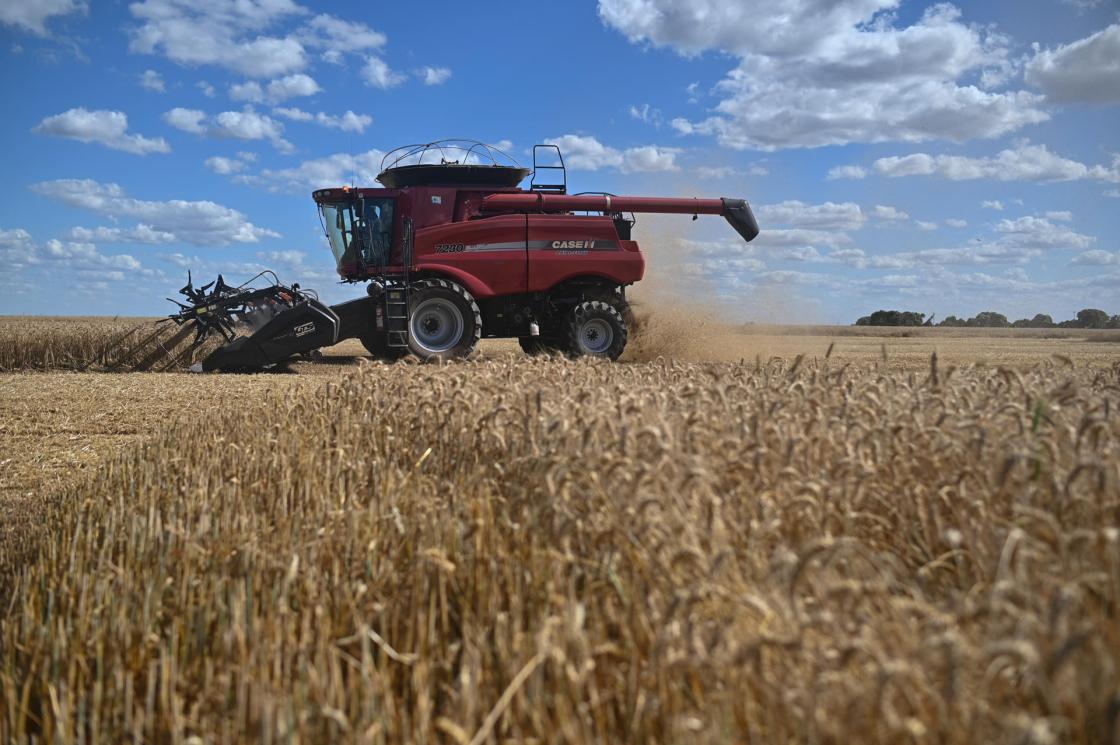
Alternative markets under evaluation
In response to the “tarifazo,” ApexBrasil has identified about 100 potentially affected sectors across agribusiness and industry.
“The most dependent on the U.S. market are the most vulnerable, especially sectors made up mostly of micro and small companies concentrated in the North and Northeast,” Ribeiro said.
At the same time, the agency has mapped alternative destinations that could absorb at least part of the redirected output, including China, Mexico, the United Kingdom, Canada, Nigeria, India, Indonesia, Germany, Switzerland, Norway, the United Arab Emirates and Saudi Arabia.
Latin America, Ribeiro said, offers particularly promising prospects for industrial goods.
“Opening new markets for Brazilian products is always challenging (…), but there is growing willingness among countries to diversify partners and reduce dependence on the U.S. market,” he said.
Despite tensions, the U.S. remains a key partner
Even as Brazil seeks alternatives, the United States remains a “fundamental partner” with diplomatic ties spanning more than two centuries.
The U.S. was Brazil’s second-largest export destination in 2024, accounting for 12% of total shipments, worth about $40.4 billion.
It also leads in foreign direct investment, representing 28% of Brazil’s $1.141 trillion FDI stock.
ApexBrasil president Jorge Viana acknowledged in an agency article that the tariffs create “discomfort.”
“Every crisis opens space for growth. Brazil already enjoys a solid reputation as a reliable partner, and our goal is to turn this moment into another step toward diversifying and internationalizing Brazilian companies,” he said.
EFE published this report with the support of ApexBrasil.