
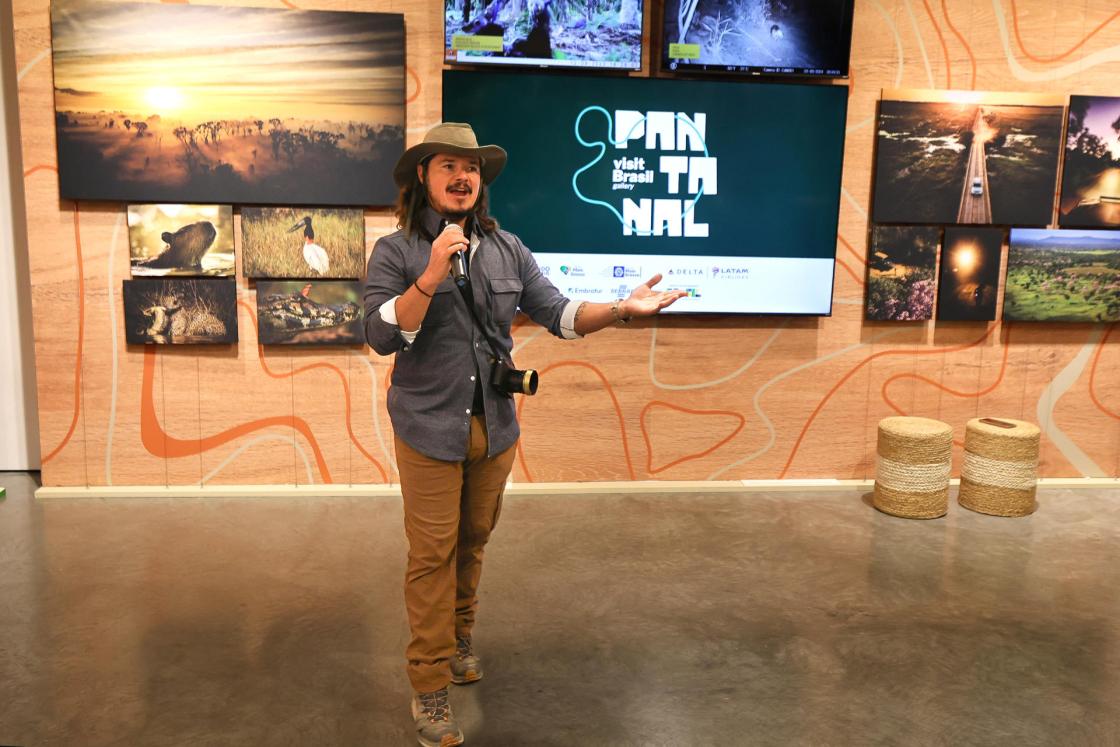
São Paulo, Oct 30 (EFE).- The Visit Brazil Gallery exhibition has arrived in New York with the aim of transporting international audiences to unspoiled landscapes and showcasing the fauna and exuberant natural and cultural wealth of the Brazilian Pantanal, the world’s largest tropical wetland, through immersive experiences that bring together photography, art, dance, gastronomy, and fashion.
The traveling project, developed by the Brazilian Tourism Board (Embratur) and inaugurated on Wednesday, also highlights sustainability, one of the pillars of the country’s strategy for continued growth in the sector.
Between January and September 2025, Brazil received a record 7,099,237 foreign visitors, an increase of 45% over the same period in 2024.
“The Pantanal is the portrait of the soul of Brazil. Diverse, welcoming, and with a very important message of nature preservation,” said Embratur President Marcelo Freixo in a statement.
The executive highlighted that, as host of the next United Nations climate conference, COP30, to be held in Belém in November, Brazil is at the center of these debates.
Therefore, bringing the exhibition to the heart of the third largest source of tourists to Brazil—with 564,160 visitors between January and September 2025—“means showing the world that Brazilian tourism is, above all, an act of preservation and connection between people and cultures.”
“Every image, flavor, and sound presented in the exhibition reflects what we have most valuable: the ability to excite, inspire, and transform through our authenticity. Brazil is not just a destination; it is a feeling that transforms,” he added.


Brazil as a safari destination
The Brazilian Pantanal, which covers nearly 150,000 square kilometers in the central-western region of the country, has great ecotourism potential on the international stage.
Recognized by UNESCO as a Biosphere Reserve and Natural World Heritage Site, the biome, which also partly lies in Bolivia and Paraguay, offers pristine and dazzling natural landscapes marked by the different water cycles that, in each season, “redraw the contours of the earth.”
In addition, its biodiversity exceeds 4,700 species of fauna and flora, some of which are emblematic, such as the jaguar, hyacinth macaw, giant anteater, and marsh deer.
In view of this, the country is seeking to establish itself internationally as an ideal safari destination, with a special focus on the municipality of Aquidauana, in the state of Mato Grosso do Sul, where it is also possible to enjoy life in the local communities.
Collaboration with National Geographic
To bring this experience closer to Americans, who, according to a survey conducted by Embratur, cite nature and ecotourism as the second main reason for their trips to Brazil (15%), the Visit Brasil Gallery is relying on National Geographic photographer Filipe de Andrade.
“This unprecedented collaboration with National Geographic CreativeWorks will show the world one of Brazil’s greatest treasures (…), inspire purposeful travel, evoke emotional connections with the wild beauty of the region, and encourage appreciation for the preservation of what we hold most dear,” said Freixo.
The project, entitled ‘Safari for the Senses’, is complemented by photos taken by local professional José Medeiros, which portray the daily life and traditional culture of the Pantanal communities.
“The Pantanal is a World Heritage Site: we have a mission to protect and share it. Our goal is to position the Pantanal product in the international market to attract more tourists who want to explore our fauna and flora in a responsible way,” said Freixo.
The Visit Brazil Gallery, which ends on November 2, will also offer the public live cooking demonstrations by local chefs, who will prepare typical dishes such as chipa, comitiva pasta with pequi aioli, tilapia ceviche with cassava, and dulce de leche with cheese.
There will also be roundtable discussions on sustainability, innovation, and regenerative tourism, as well as business rounds and meetings between entrepreneurs and international operators. EFE