
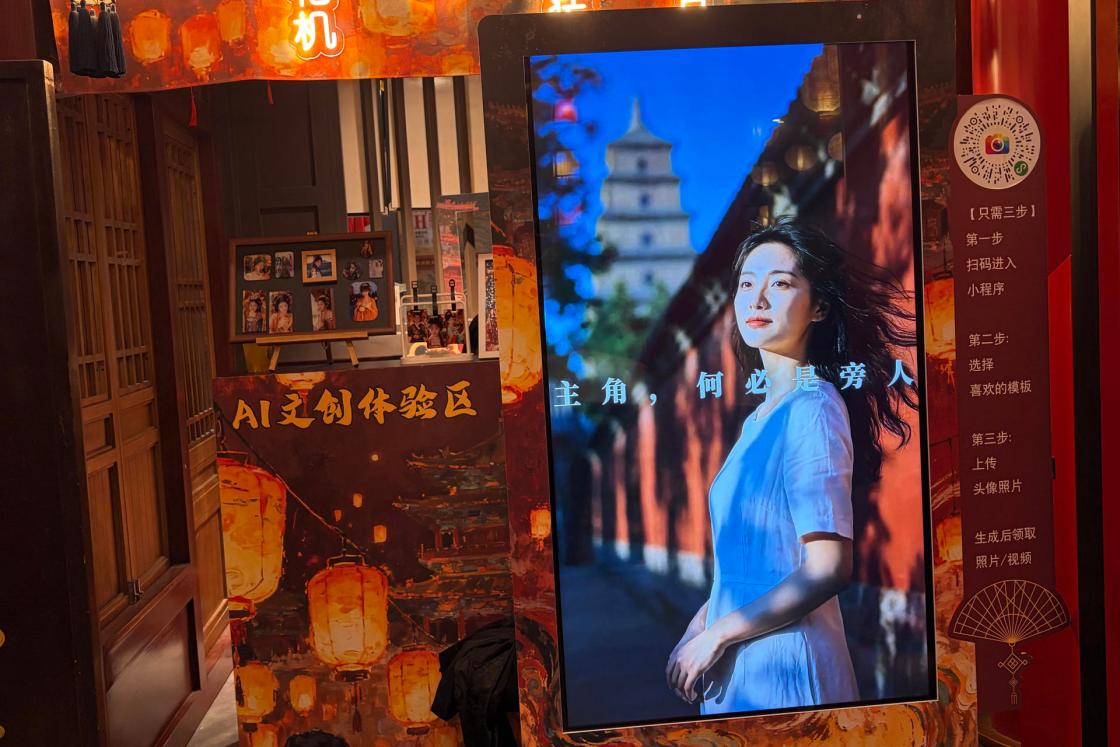
Taking a photo dressed as an emperor from the Tang dynasty, examining a relic reconstructed pixel by pixel, or consulting an artificial intelligence (AI) model trained in local culture: this is the new kind of tourism that the Shaanxi Cultural Investment Group (SCG) and Huawei aim to introduce in the city of Xi’an.
To achieve this, the two companies have jointly developed BoGuan, a large language model (LLM) trained on the cultural and intangible heritage of Shaanxi Province in central China and designed to become the leading digital expert on one of the country’s oldest cities.
In recent years, largely for being home to the famous Terracotta Army, the region has experienced a surge in tourism, welcoming some 862 million domestic visitors in 2025 and recording a 98% year-on-year increase in international tourism, according to figures presented recently by SCG Deputy General Manager Pang Bo.
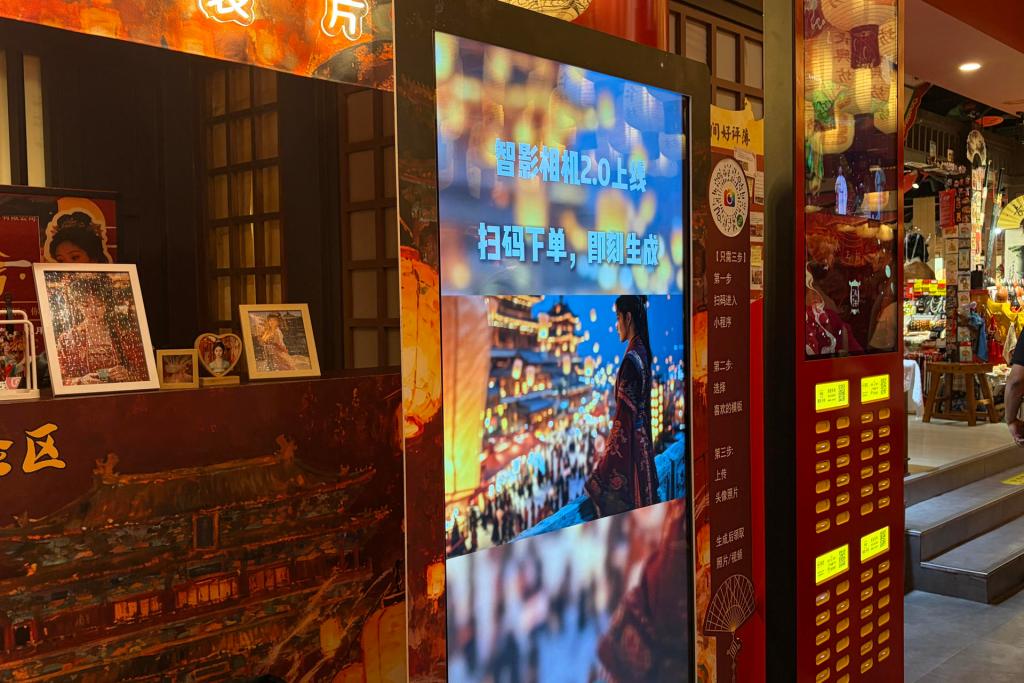
The past inside your smartphone
The most visible app for visitors is Zhiying Camera, which allows tourists to create pictures of themselves in historically accurate scenes and, within seconds, appear dressed in clothing from the Tang dynasty (618-907), when Xi’an—known then as Chang’an—was the capital of China and one of the world’s largest and most cosmopolitan cities.
“You’re in a beautiful place and want to take a great photo, but it’s crowded and difficult to get the perfect shot. With AI, you can still create it,” said Wang Peng, Director of Cultural Tourism Business at Huawei’s Computing Platform.
The LLM also serves as an intelligent travel assistant, allowing visitors to interact through text or voice to plan itineraries, receive real-time answers to questions, or obtain personalized recommendations.
Wang noted that, whereas “before you could only listen to explanations at fixed locations, now you can interact with the model anytime and anywhere,” highlighting its role as a museum guide.
Among its other applications, the model supports the digital reconstruction of historical artifacts and the creation of promotional videos based on the region’s cultural heritage. According to Wang, the goal is “to present culture more accurately and share it more broadly.”

Data is key
Behind those capabilities lies the way the model was built. To ensure the reliability of its responses, images, and videos, BoGuan was trained on more than 1.2 billion data points related to Shaanxi’s cultural heritage, including video footage, audio recordings, three-dimensional models, and text.
Jin Yan, president of SCG’s Digital and Intelligent Cultural Technology Group, said this specialized database distinguishes BoGuan from general-purpose AI models and ensures greater historical accuracy.
“The reproduction of content is more precise and better aligned with historical reality,” Jin said, citing details such as differences in clothing styles across historical periods.
Jin also highlighted the platform’s “entirely domestic” development, in which Huawei’s Ascend 910C chips—an alternative to the Western processors that dominate the global market—are combined with existing open-source and proprietary language models, on top of which the heritage-specific layer was built.
A new standard
The result is BoGuan, launched in September 2025 and presented by SCG and Huawei as the world’s first commercial multimodal AI model for cultural tourism, bringing the tourism industry into the global revolution of large language models.
Edric Chu, General Manager of Huawei’s Shaanxi office, predicted that artificial intelligence will become essential infrastructure and eventually “the standard” for museums and tourist attractions.
“AI is not simply a collection of technologies,” Chu said, adding that it has become a key factor capable of unlocking thousands of years of cultural heritage, transforming travel experiences, and driving the tourism industry forward. EFE