
Panama City, Jan 29 (EFE).— Ecuador, the world’s leading banana exporter, has joined Brazil and CAF—Development Bank of Latin America and the Caribbean to launch a regional project to genetically strengthen the Cavendish banana against pests affecting Latin America.
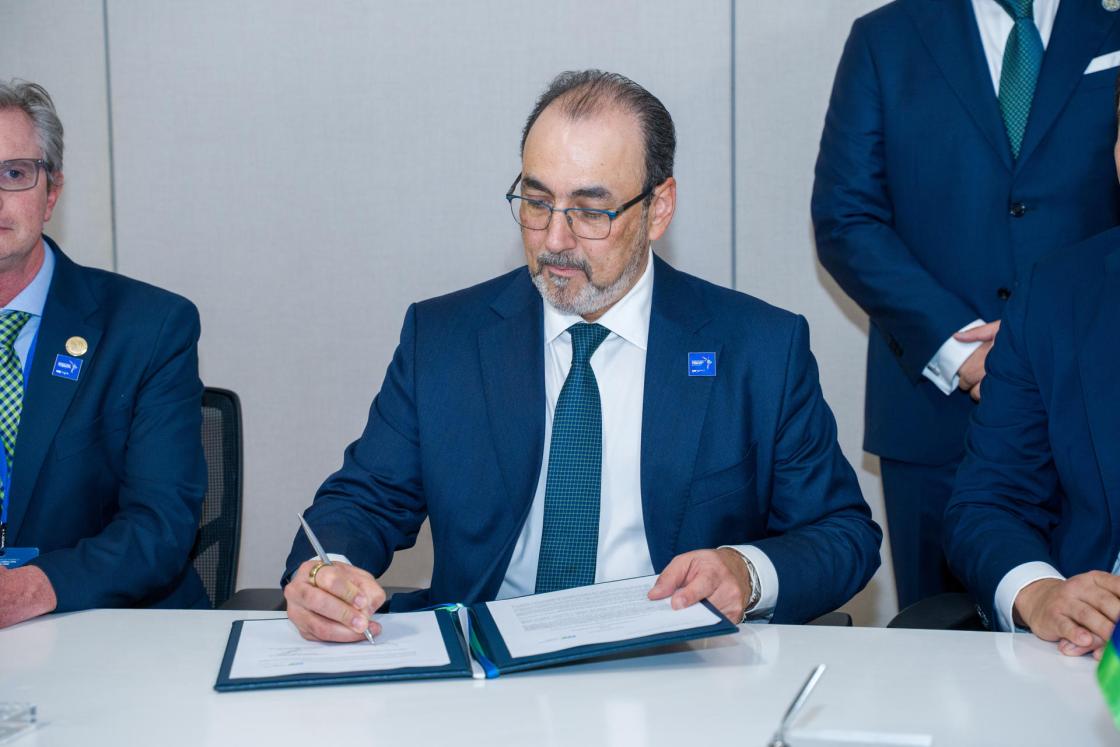
The agreement was formalized through a letter of intent signed by the Asociación de Exportadores de Banano del Ecuador (AEBE) with CAF and Empresa Brasileira de Pesquisa Agropecuária (Embrapa) during the International Economic Forum of Latin America and the Caribbean being held in Panama, the exporters’ association reported.
Regional effort to protect Cavendish bananas
AEBE said the initiative will advance a Cavendish banana genetic improvement program to confront global phytosanitary threats, including Moko disease and Tropical Race 4 Fusarium.
The project will be carried out in partnership with Embrapa, an institution internationally recognized for its scientific research and applied innovation.
With this step, AEBE said it is reinforcing its role as regional coordinator. The goal is to safeguard Ecuador’s main agricultural export through science-based international cooperation.
Financing and binational cooperation with Brazil
The association is also managing financing mechanisms to enable the future implementation of a binational program with Brazil. The initiative focuses on strengthening technical capacities, knowledge transfer and practical solutions for the productive sector.
This effort comes amid “growing sanitary, environmental and commercial challenges that require coordinated, long-term responses,” AEBE said.

Confidence in Ecuador’s banana sector
AEBE board chairman Jorge Encalada highlighted CAF’s support for the initiative. He said it “constitutes a clear sign of confidence in Ecuador’s banana sector and in its ability to build long-term solutions.”
“We also recognize,” he added, “the Empresa Brasileira de Pesquisa Agropecuária, an institution of scientific excellence and an international benchmark, for its openness and willingness to move forward with Ecuador in technical cooperation aimed at improving the Cavendish banana genetically.”
Encalada said the joint effort represents a “strategic opportunity to strengthen the resilience of the banana sector, protect the livelihoods of millions of people, contribute to food security and ensure the sustainability of one of the world’s most widely consumed fruits.”
Bananas’ role in global trade
“The project gains relevance as Ecuadorian bananas continue to play a strategic role in global agricultural trade,” said José Antonio Hidalgo, executive director of AEBE.
Hidalgo noted that in 2025 Ecuador “closed the year with sustained export growth, reaching more than 378 million boxes, despite an environment marked by climatic, commercial and phytosanitary pressures.”
Addressing key phytosanitary threats
Pests such as Tropical Race 4 Fusarium and Moko disease are among the main risks the sector seeks to prevent and mitigate, alongside climatic and commercial threats that have direct impacts on employment, income and food security.
In response, AEBE said it is “promoting a comprehensive strategy for the sustainability of the banana value chain,” which includes phytosanitary prevention, logistics-chain security, and value enhancement of the product. EFE
EFE published this report with the support of AEBE.