

Los Chiles, Costa Rica, Aug 23 (EFE) – The migratory exodus sweeping across the Americas encounters hardships, threats to life and safety, and navigates dangerous crossings at the porous border with Nicaragua, where migrants also face extortions and human trafficking.
In the Los Chiles community, located in northern Costa Rica, the migration crisis marks one of its many stops on the route to the U.S. Authorities say Los Chiles is the designated point for migrants to head to Nicaragua. The majority make the journey at night, under hazardous conditions.
LAND OF THE “TALIBANS”
Official data reveals that in recent weeks, the daily count of migrants entering Costa Rica from Panama via the Paso Canoas border has surged from 1,000 to 3,000. From there, those who can afford the $30 fare board buses to Los Chiles, situated at the Costa Rica-Nicaragua boundary.
Recently, over 40 buses per day have been arriving in Los Chiles.
The death of three Venezuelans on July 19 in Los Chiles, after their vehicle plunged into a river, underscores the dangers these people face when resorting to illegal services using old, dilapidated vehicles.
EFE verified that in the community, numerous transporters, known as “the Talibans,” pick up migrants from bus stops, charging them to drive to secluded border points.
This illicit human transportation thrives due to lax authority oversight and because migrants can’t afford the $150 that the Nicaraguan Government demands as a “safe-conduct” fee for legal entry at the Las Tablillas border post, just six kilometers from Los Chiles.
Another peril for migrants is human trafficking, as “coyotes” can be hired at the Costa Rica-Nicaragua border to transport individuals clandestinely.

“The presence of this coyote group they call ‘the Talibans’ is greatly impacting safety conditions in Costa Rica. They’ve turned this into their business, and to protect their illegal revenue, they exert violence and maintain tighter control over the area,” said Iván Aguilar, humanitarian manager for Oxfam in Central America, to EFE.
A CRISIS FOR BORDER COMMUNITIES
Currently, a significant number of migrants, mainly Venezuelans, are stranded in Paso Canoas at the Panama border since they lack the funds for a direct bus to the Nicaraguan border.
This route is the only one sanctioned by the Costa Rican Government to ensure a smooth transition and prevent migrant congestion in the capital, San José.
In Los Chiles, the canton with the lowest human development index in Costa Rica, many residents believe authorities are neglecting the situation.
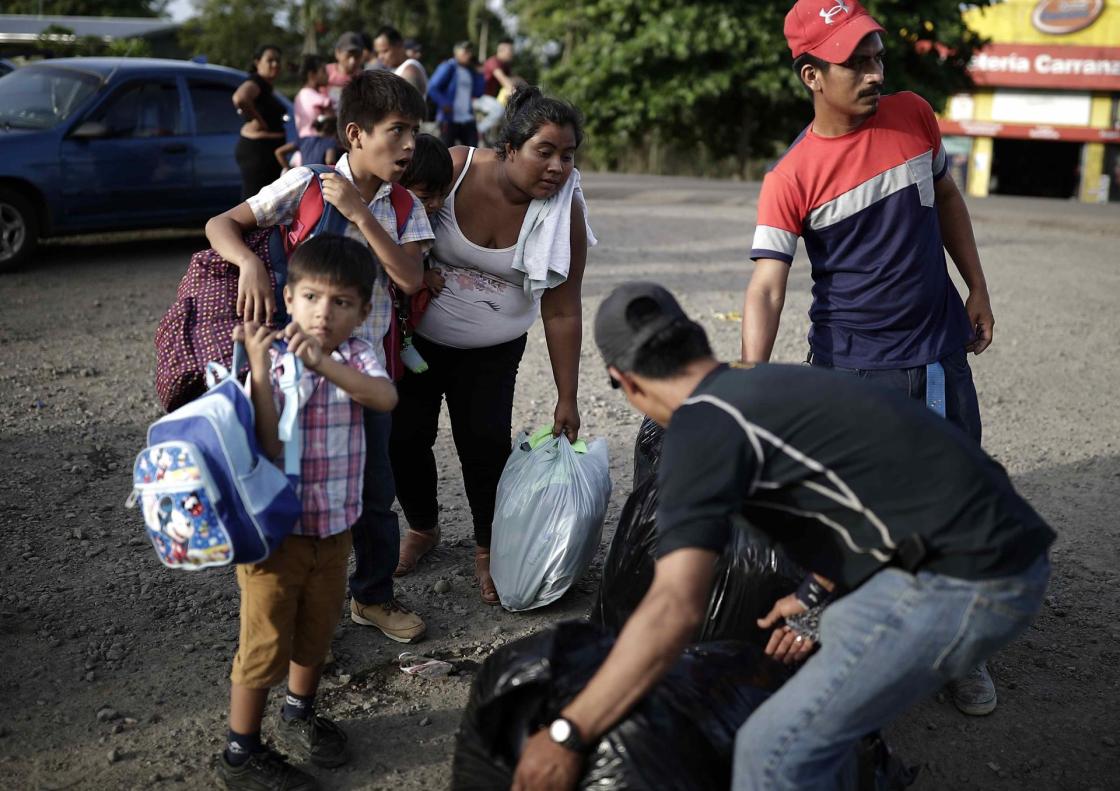
Minor Reyes, president of the Los Chiles Development Association, told EFE this has been happening since “the first migrant waves of 2015”.
“There are health issues, people arriving without money. We have to provide financial and food assistance. The government hasn’t taken this seriously; we’ve observed neglect,” Reyes said.
Due to a shortage of police and strained health services, the community has had to band together with support from international cooperation, UN agencies, and NGOs like the Migrant Social Rights Center (Cenderos) to provide humanitarian aid.
For many migrants, what was intended as a quick stopover in Los Chiles has turned into a rest point, a visit to a small public clinic, or a prolonged stay due to financial constraints.
“We’re very tired, we just want to keep moving forward, but we’ve been advised to travel at night to avoid the Nicaraguan Army. We don’t have money, coming from a devastated country where we can’t even eat. With faith in God, we believe we’ll reach our goal,” said Pedro Álvarez, a Venezuelan migrant preparing to travel with a “Taliban” to an exit point at the border.
This report was produced with support from Oxfam in Central America and funding from the Humanitarian Aid Department of the European Commission (ECHO). EFE.