
More than 4,500 international events are held annually, approximately 75,000 horses and over 40,000 athletes are registered, and more than 750 million people are interested in equestrian sports, according to data from a major study by Nielsen Sports commissioned by the International Equestrian Federation (FEI), which is pursuing a global strategy for 2026–2030 to enhance the fan experience by highlighting “the excitement of the sport” alongside its commitment to animal welfare.
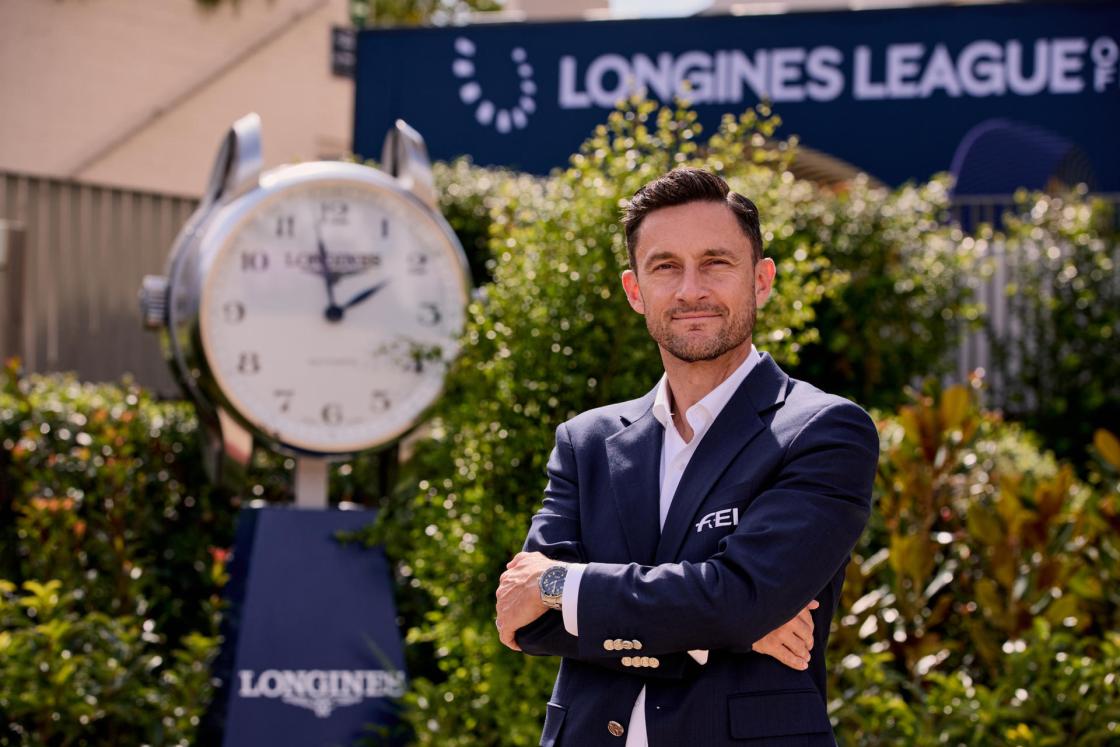
During the Longines League of Nations final held on Sunday at the Real Club de Polo de Barcelona, François Vergnol, FEI Executive Director of Commercial, Marketing, and Communication, explained that the strategy stems from the federation’s responsibility to care for horses and showcase “the unique excellence of this sport,” which relies on a strong bond between human and animal.
To achieve this, Vergnol emphasized the importance of sharing not only the results of major competitions—such as the Olympic and Paralympic Games and world championships—but also “the high-stakes tension of top-level competition” and the day-to-day realities of breeding, training, and care.
In this context, he also referenced scientific studies highlighting the societal benefits of guided interaction with horses, including stress reduction, treatment for certain disorders, and physical rehabilitation.
FEI’s goal for 2030
Vergnol’s personal goal is for the FEI to maintain a “positive perception” of equestrian sports by 2030 while expanding the sport’s reach through increased viewership, larger television audiences, and higher global revenues.
According to the European Horse Network (EHN), the European equestrian sector generates an economic impact of over €100 billion annually. The American Horse Council (AHC) estimates the figure in the United States at $122 billion.
Looking ahead, the executive from the FEI—an institution that has collaborated with EFE to distribute this content—also envisions a plan to attract sponsors that are “not necessarily equestrian-specific.” The objective is to make the sport appealing to a broader range of companies, interconnected with the overall strategy’s core goals.
“We want to build more direct relationships and engage brands not just for what they want to sell, but because they want to remain relevant and increase brand awareness. Major companies outside our industry—such as automotive manufacturers, banks, or insurance firms—can gain access to a very high-quality audience that is otherwise difficult to reach through other media,” he detailed.
Vergnol believes these companies have an opportunity to recognize that equestrian sports fans represent a “highly compelling” and expansive global audience.
Future of League of Nations final
Regarding current operations, he expressed deep gratitude to the Real Club de Polo de Barcelona for hosting the Longines League of Nations final once again, noting that this is the third year of a four-year agreement, with the bidding process for the next cycle set to open in 2027.
“For us, it is essential to have an accessible venue with a strong image, excellent facilities, and an organizer capable of delivering at the level we require, and we have found all of that in Barcelona,” he concluded. EFE