
São Paulo, Oct 29 (EFE).— Solutions exist for sustainable transport in Brazil’s Amazon. What is lacking, researchers say, is funding to support those solutions. The Federal University of Pará (UFPA) in Belém, host of COP30, is developing electric boat prototypes for a region where transport still largely relies on diesel.
Ceamazon works to improve daily life through applied technology
Professors, researchers, and technicians at the Center of Excellence in Energy Efficiency of the Amazon (Ceamazon) are working toward a shared goal: applying technology to improve life in the world’s largest tropical forest.
One of its research labs specializes in electric mobility.
Nearly 30 million people live across the Brazilian Amazon, one-quarter of them in rural areas, according to official figures.
With 16,000 kilometers of navigable rivers, water transport is essential in a region long affected by infrastructure deficits, mining, and agricultural expansion.
In response, Ceamazon is developing renewable-energy-powered boats.
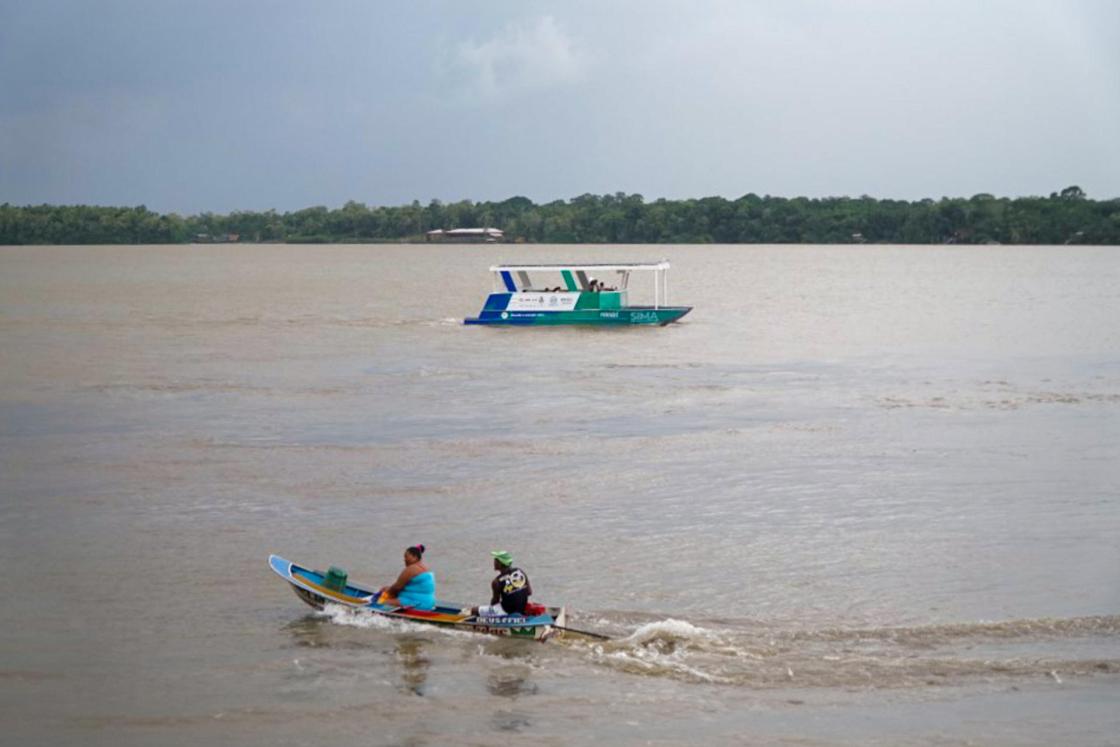
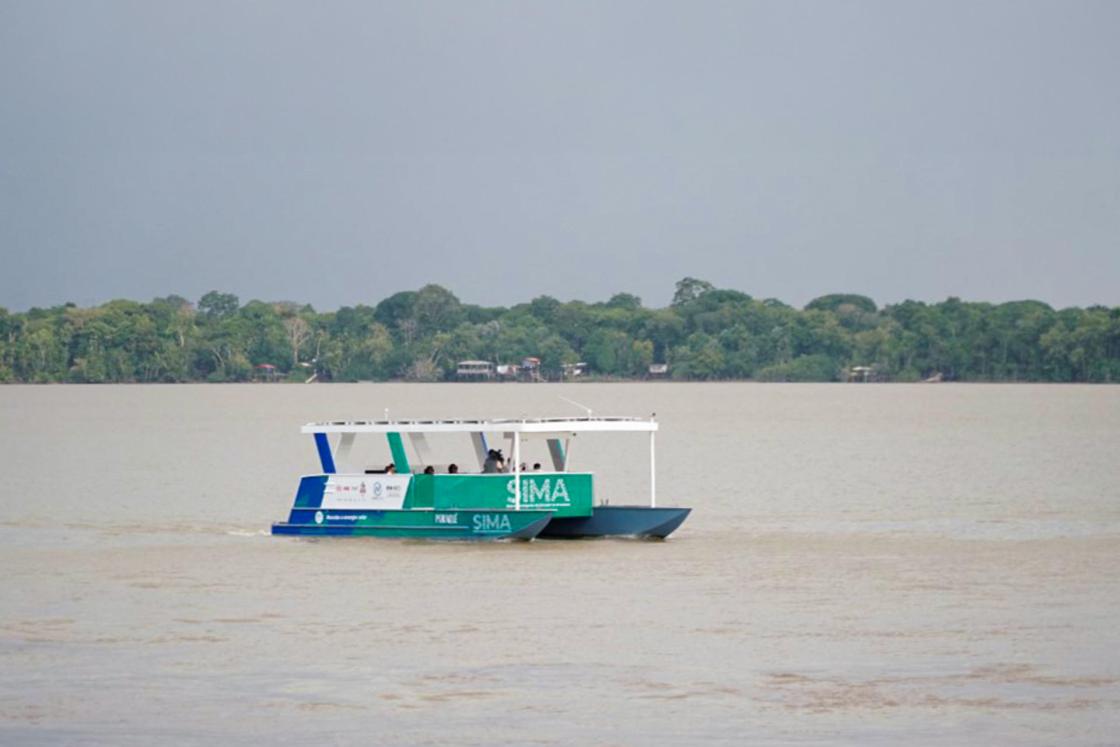
Electric catamaran powered by lithium batteries and solar panels
“We developed from scratch an electric catamaran with capacity for 25 seated passengers,” said Maria Emília de Lima Tostes, professor at UFPA’s Institute of Technology and coordinator of Ceamazon.
The vessel is built from aluminum, a lighter material that supports lithium batteries, and is equipped with solar panels on the deck.
It has an eight-hour operational range and is already in use on UFPA’s campus in Belém, where travel distances can reach nine kilometers.
Two electric buses now complement the catamaran, forming what Silvia Cabral, director of Regulation, Commercialization and Sustainability at Norte Energia, called “the first green corridor in the Amazon.”
Partnerships expand electric boat development
The project is supported by Norte Energia, operator of the Belo Monte hydroelectric plant in Pará.
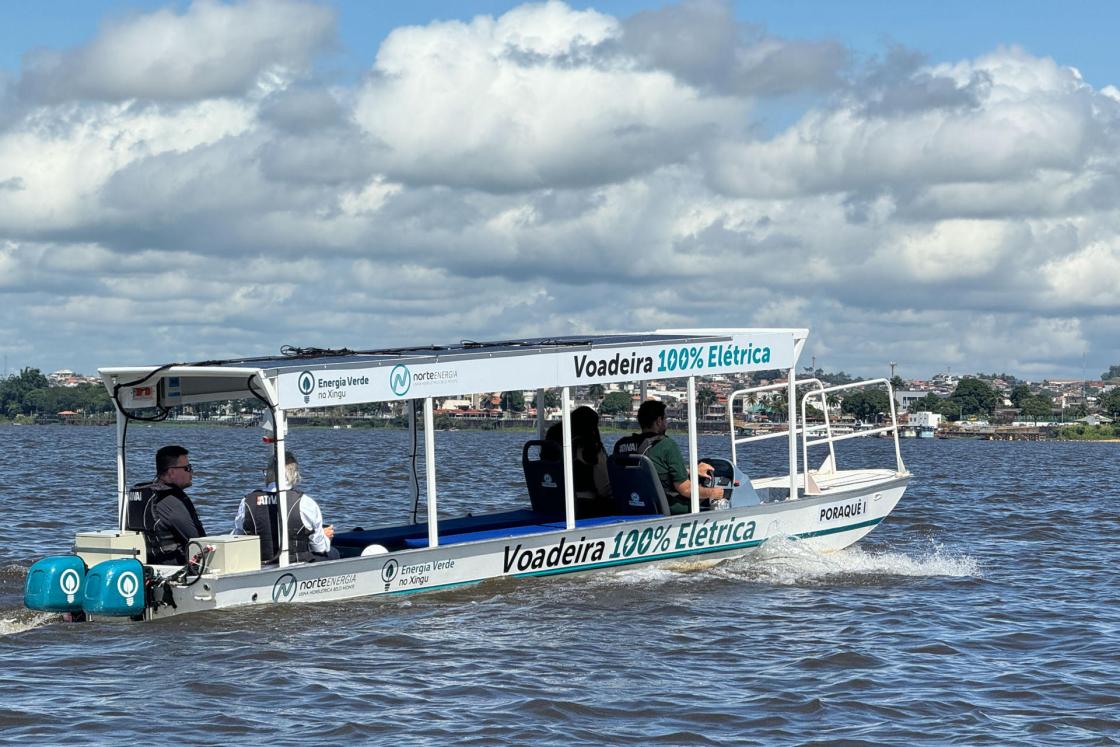
Norte Energia is also investing in the development of electric speedboats in a joint initiative between Ceamazon and UFPA’s Naval Engineering department.
The small voadeiras are deeply rooted in Amazonian daily life. They are essential for fishing, commuting, and local trade.
Replacing diesel motors to solve environmental and social risks
In parallel, Ceamazon is engineering electric motors to replace the rabetas, traditional diesel-powered boats with exposed propeller shafts.
The shift would reduce river pollution, protecting the primary food sources of many riverine communities.
It would also reduce serious accident risks.
“With electric motors, this problem would be reduced to practically zero,” Tostes said, noting Finep is supporting the initiative.
Medical transport and hybrid systems in development
Tostes and her team are also developing a hybrid medical boat to enable long-distance travel.
The project is supported by the National Service for Industrial Training (Senai).
Due to limited public funding, partnerships with private companies have become crucial to advance these initiatives.
“There are many skilled and well-trained people in the Amazon, but what’s missing is investment,” she said.
COP30 may unlock long-term zero-emission transport
Despite challenges, Tostes believes zero-emission transport in the Amazon is possible in the long term.
She said COP30, which will take place in November, will be “fundamental,” and expressed confidence that international delegations will be open to seeing the reality of the Amazon. EFE
EFE published this report with the support of Norte Energia.