Manaus (Brazil), Jun 10 (EFE).- Promoting large-scale development investments for Latin America and the Caribbean is the objective of Sustainability Week, organized by IDB Invest, the private arm of the Inter-American Development Bank, which kicks off Tuesday in the Brazilian city of Manaus, in the heart of the Amazon.
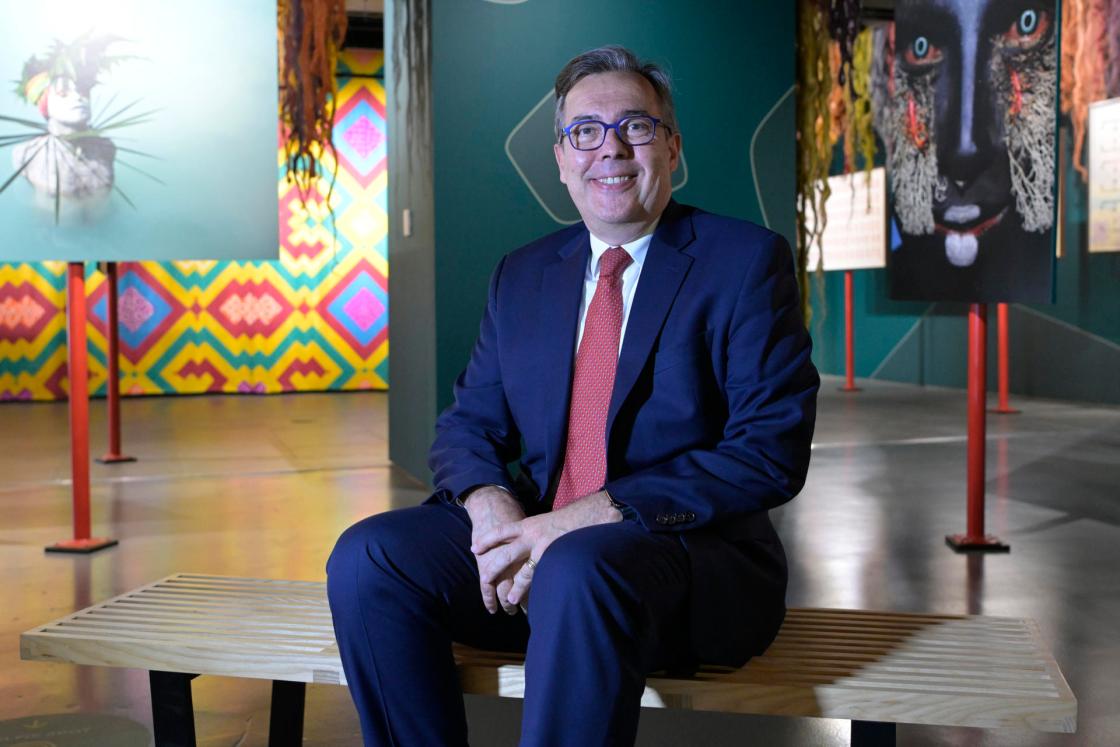
“We will address a wide range of topics in five areas: impact investment, inclusion, bioeconomy, the Amazon, and climate change,” Gabriel Azevedo, Chief Strategy Officer at IDB Invest, told EFE.
Over three days, nearly fifty presentations are to be held and more than 800 registered in-person participants (and some 9,000 online participants) are to attend, many of them executives from companies in sectors such as banking, technology, and food.
Agrotechnology, new green financing instruments, the use of artificial intelligence in development, and the challenges arising from climate change are some of the topics that are to be discussed at the forum, which, above all, has the aim to generate concrete projects.
“The objective of this platform and what makes it different from other forums is that we want to make things happen, that there are results. In other words, it is a forum for ‘doers’ and not for thinkers,” Azevedo said.
In addition, the aim is that projects conceived during Sustainability Week are not “boutique projects,” but that they serve to “transform,” that they have an impact and are “on a large scale.”
“We’re not going to make a difference with a small project. So, I believe that impact and scale are two main factors that we are pursuing at BID Invest,” said Azevedo, adding that executives from multinationals such as Amazon, Santander, City Bank, and Coca-Cola are to participate in the presentations.


Originate to share
The forum comes after the IDB Group’s last annual meeting, held in October in Punta Cana (Dominican Republic) when IDB Invest announced a proposed capital increase of $3.5 billion, double the previous amount.
The operation was approved in March by the governors of the 48 countries that own the bank, 26 of which are from the Latin American and Caribbean region.
The capital increase is linked, Azevedo said, to “a new business model” that seeks to “multiply” and “scale” the development impact of IDB Invest, all connected to a concept: “originate to share.”
“The idea is that we are going to change from the traditional development bank model in which you develop a project and stay on the balance sheet for years as the lead investor,” he said, to a model in which IDB Invest is “a catalyst to attract and facilitate investment from other impact investors.”
At the heart of all this is “the confidence” that the development bank can generate for investors and the fact that, thanks to the increase in capital, the bank will be able to “assume greater risk” in the projects in which it invests.
The Amazon as the center of ‘co-creation’
The theme of this edition of Sustainability Week is ‘Co-Creating Impact’ and the fact that it is being held in the heart of the Amazon is fundamental to understanding the concept.
“In the Amazon specifically there is a history of initiatives that failed because they were initiatives created and designed outside and brought in as a magic solution, like a shoe that fits any size foot,” he said.
They were development projects that were failures but they served a lesson: “In environments with such particular characteristics as the Amazon, it is important to co-create, to take into account the knowledge, the cultural traits, the aspirations of the local communities and to create with them solutions that are effectively applied to the region,” he explained.
The Amazon lies in nine countries in Latin America and the Caribbean and is home to some 50 million people, including hundreds of indigenous groups, who need a way of life that coexists with the ecosystem of a region that provides 40% of Latin America’s freshwater and helps mitigate climate change by absorbing a quarter of all the CO2 absorbed by the planet.
It has a population with the “lowest human development indicators” in their countries and they need “work, education, health and economic development” to leave behind a way of life that has damaged the region so much in the past, deforestation. EFE