Santiago, Mar 28 (EFE).— The Inter-American Development Bank (IDB) on Friday opened the annual meeting of its Board of Governors with a call to deepen Latin American and Caribbean integration and strengthen cross-border, cross-sector collaboration in response to rising protectionism and global trade tensions.
“We need to organize ourselves in a transnational way, and the IDB helps with that,” said IDB President Ilan Goldfajn during the meeting’s opening session.
Held in the Chilean capital, the gathering began Wednesday with preliminary seminars and includes the annual meeting of IDB Invest, the bank’s private-sector arm. It has drawn 3,000 participants from 48 countries across public and private sectors.
Goldfajn noted that the turnout reflects a shared understanding that “development requires ideas, investment, but also action from every sector.”
“The IDB must be more than just a bank. We continue working hand in hand with our countries,” he added.
Chile Emphasizes Unity Amid Global Uncertainty
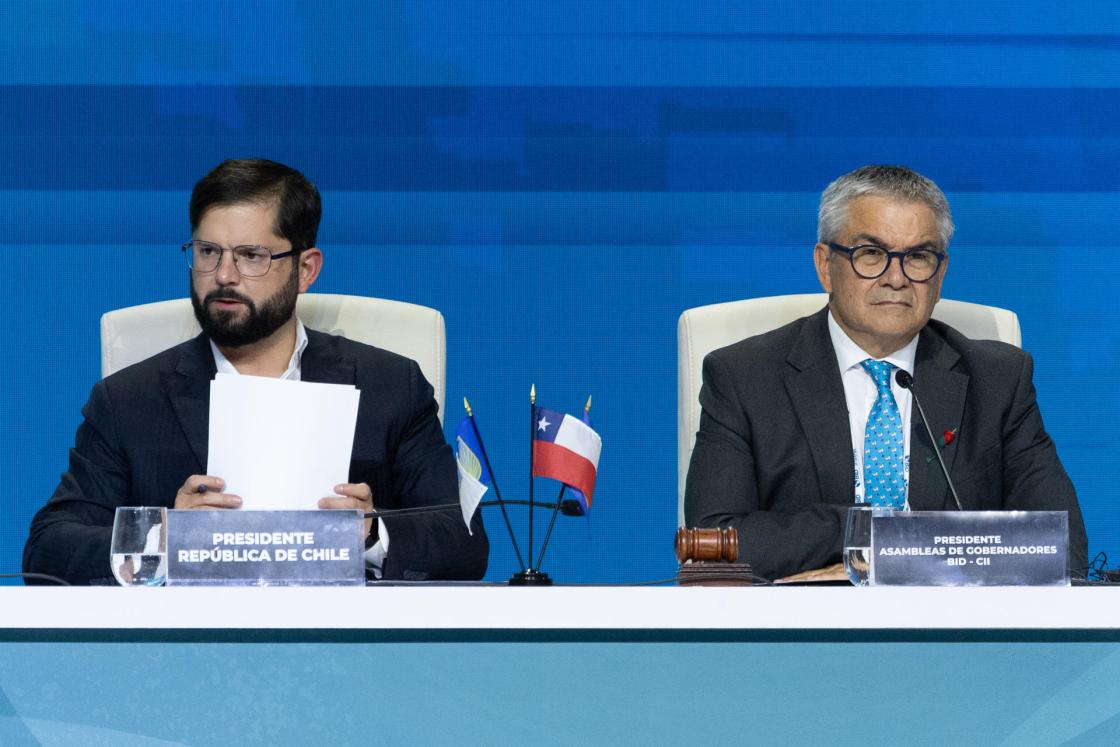
The new chair of the IDB Board of Governors, Chilean Finance Minister Mario Marcel, acknowledged that the global context is complex.
“We are aware that these are challenging times internationally,” Marcel said. “But we also know that the Latin American and Caribbean region has competitive advantages in a number of areas that allow us to keep moving forward.”
As the region confronts geopolitical uncertainty, including the looming implementation of reciprocal tariffs by U.S. President Donald Trump, expected April 2, Goldfajn avoided direct comment but reinforced the importance of regional unity.
“It’s too early to know exactly where we’re headed and what the situation will be,” he told reporters. “What we can do is work on regional integration—a region with 660 million people is a major market that can attract investment.”
Efforts to integrate Latin America and the Caribbean, he added, would ensure that “the hemisphere as a whole can become more prosperous.”
Boric: “No One Will Be Saved on Their Own”
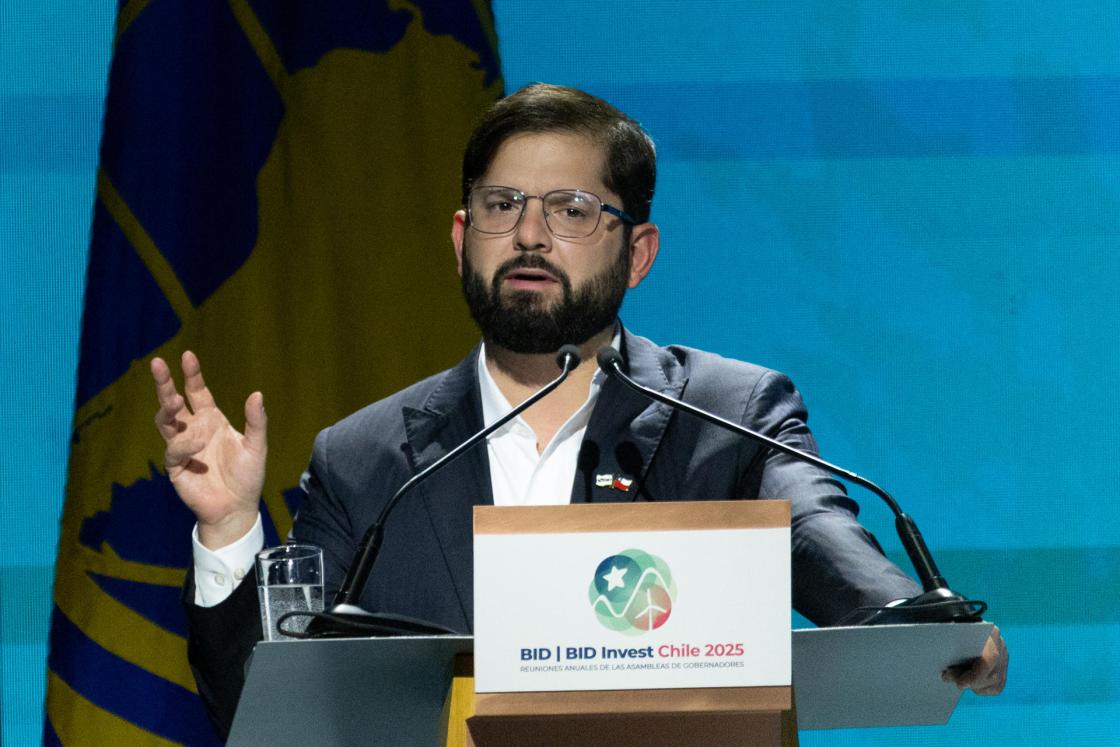
Chilean President Gabriel Boric, host of the event, delivered a strong appeal for cooperation in his address to ministers.
“Isolationism, cutting ties, building walls, and imposing unilateral tariffs will not bring us solutions,” Boric warned. “It’s precisely joint work—like what the IDB facilitates and supports—that will allow us to keep developing.”
“No country, no matter how powerful, can face today’s global challenges alone. We need one another. No one will be saved on their own,” he said.

Momentum for Regional Growth and Reform
Goldfajn reaffirmed the IDB’s focus on progress:
“We’re delivering a message of unity and progress to our members—a message that we’re implementing what was agreed upon last year.”
At the 2024 meeting in Punta Cana, the IDB launched its IDB Impact+ strategy, alongside a $3.5 billion capital increase for IDB Invest. Countries have until 2026 to complete the process, but 33 of the 48 member countries have already subscribed or made significant progress—representing more than 70% of the bank’s voting power.
New Initiatives: IDB Cares and Conexión Sur
This year’s meeting also serves as the launchpad for new initiatives:
-
IDB Cares, aimed at strengthening care systems to reduce inequality
-
Conexión Sur, a plan to connect fragmented markets and attract investment, co-created with South American countries
These efforts reflect the IDB’s evolving mission to address structural challenges while supporting inclusive growth.
A Key Development Institution for the Region
Founded in 1959, the IDB currently provides over $25 billion in annual financing, with a goal of reaching $38 billion by 2030. It remains one of the primary sources of long-term funding for economic, social, and institutional development in the region.
The bank’s three largest shareholders are the United States, Argentina, and Brazil.
This is the first time since 2001 that Chile has hosted the Board of Governors meeting.
EFE