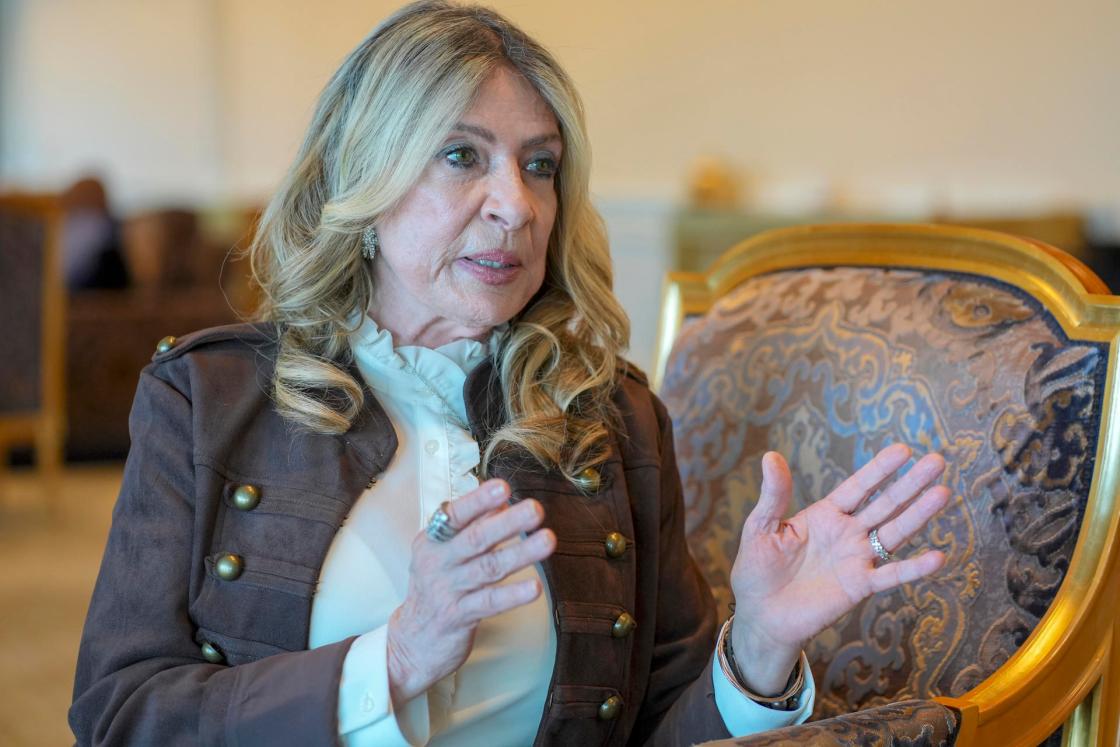
Veteran Ecuadorian diplomat Ivonne Baki joined the race in August to become the next Secretary-General of the United Nations after being nominated by the Kingdom of Tonga. Although she acknowledges being an “outsider” candidate, she hopes her message of restoring trust, dialogue, efficiency, and results to the multilateral organization resonates with the countries deciding Antonio Guterres’ successor.
“The United Nations’ problem is not a problem of resources, but of trust,” Baki said in an interview with EFE. She boasts a long career as an ambassador and has served as a cabinet minister, president of the Andean Parliament, and candidate for the Presidency of Ecuador.
Baki is in New York for the busiest week of the year at UN Headquarters, the 81st session of the UN General Assembly, to boost her candidacy.
The session will bring together nearly 130 heads of state and government from around the world.
“I don’t want to be a secretary or a general; I want to be a mediator, moderator, neutral, and completely transparent, to get countries to sit at the table not as enemies, but as leaders who want to find solutions for their people,” Baki said.
On Friday, the results of an informal straw poll by the United Nations Security Council on candidacies for Secretary-General were revealed, in which Costa Rica’s Rebeca Grynspan obtained nine “encourage” votes, five “discourage” votes, and one “no opinion.”
Baki’s experience and objectives
Baki wants to highlight to the veto-wielding members of the Security Council her experience in the peace process between Ecuador and Peru, which culminated in 1998 with the signing of agreements that ended the long-standing border conflict between both nations.
“There were many people opposed to that peace, but we achieved it by building trust, creating close friendships, sharing a table without maps, with the support of guarantor countries, and mobilizing resources,” Baki explained.
The diplomat believes reforms initiated at the UN to improve efficiency and transparency, and to eliminate bureaucracy and duplication, are a solid base. However, she plans to expand the relevance of the UN, founded in 1945, so it reaches its 100th anniversary stronger.
“The United Nations is now more important than ever. It was created (after the Second World War) to prevent a Third World War, and we are almost on the doorstep of one, a scenario that is even more terrifying because it will not only be nuclear, but will also feature artificial intelligence, which must be well-regulated,” Baki said.
“The three main goals of the UN Charter go hand in hand: if we don’t have peace and security, there can be no development, and if there is no development, we cannot build human rights. Everything is connected,” she stressed.
A need for change
Regarding US President Donald Trump’s criticism of the UN, Baki says she agrees with him that “there must be a change” and considers it necessary to make the body “more efficient” and credible, in addition to renewing and reforming it.
Furthermore, she sees initiatives like President Trump’s Board of Peace —conceived outside the United Nations with 27 countries to manage the peace plan for the Gaza Strip—as positive because “everything adds up when it comes to achieving peace.”
Baki, who has met with Trump in the Oval Office, assures that if elected, she will seek to play a neutral role, aiming to build bridges globally and among the permanent members of the Security Council, especially between the United States, China, and Russia. EFE