
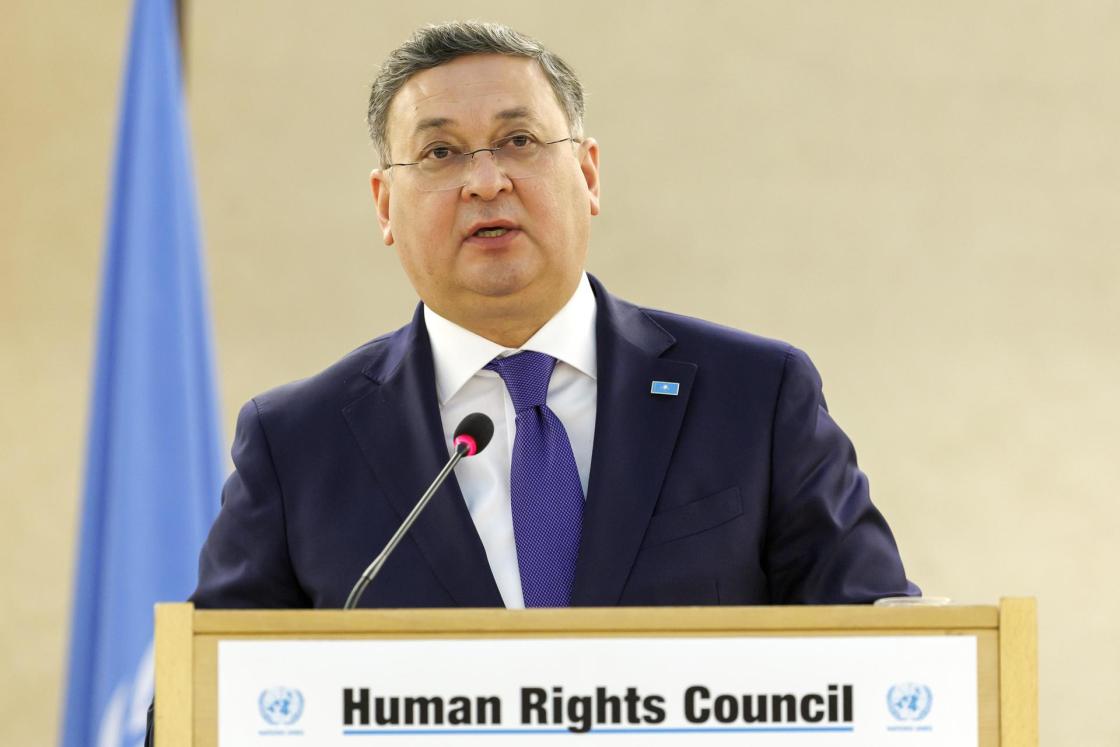
Geneva, Feb 26 (EFE).- Kazakhstan’s Deputy Prime Minister and Foreign Minister, Murat Nurtleu, stated on Monday at the United Nations Human Rights Council that the democratic changes in Kazakhstan, especially those driven in the last five years since Kassym-Jomart Tokayev became president, are “irreversible.”
Speaking at the opening of the Council’s first session of the year, which will last six weeks, Nurtleu emphasized that in a very short time, the Central Asian country, a key crossroads in Eurasia, has embarked on a series of unprecedented and significant democratic processes.
In stark contrast to the nearly three decades of governance by his predecessor, Nursultan Nazarbayev, Tokayev has opted for a government where the Parliament plays a greater counterbalance to presidential power.
Additionally, reforms have been introduced that “limit the president’s term to a single seven-year term and, for the first time in our history, six political parties were able to enter the Lower House of Parliament, including opposition groups,” Kazakhstan’s top diplomat said.
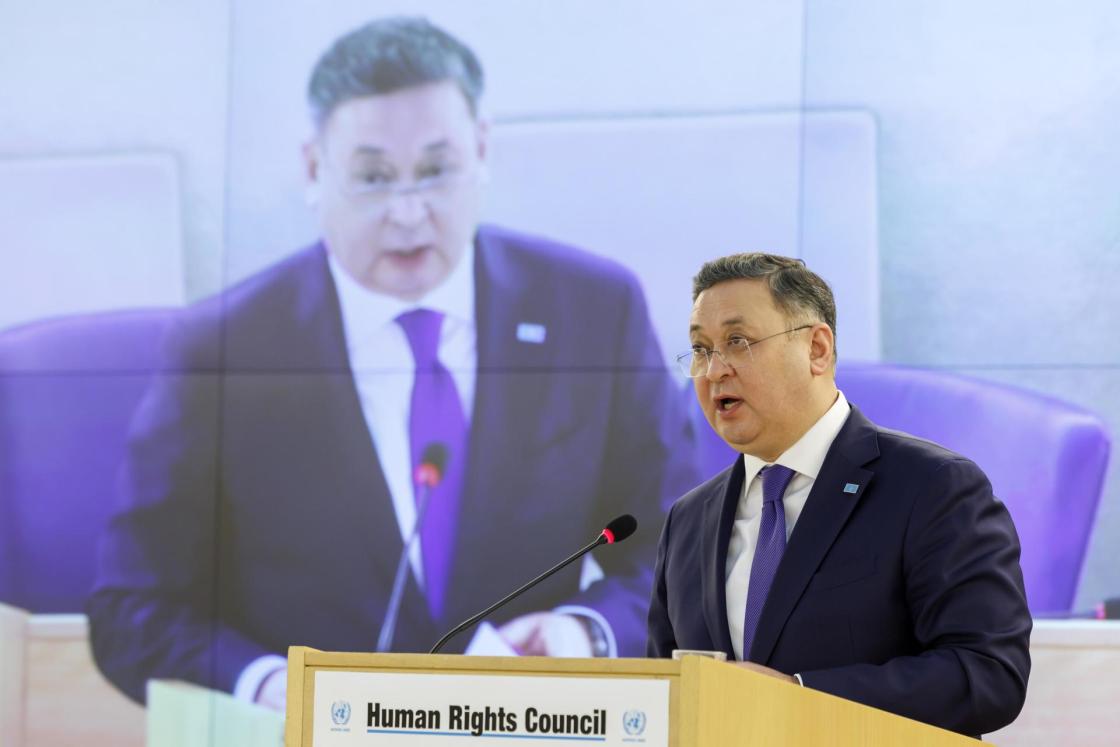
Other significant advancements, highly regarded by international experts, include the abolition of the death penalty, the establishment of a zero-tolerance policy against torture and ill-treatment, and the inclusion of the National Human Rights Institution in the national constitution, he added.
Nurtleu also recalled that last year Kazakhstan ratified the Optional Protocols to the Convention on the Rights of the Child and the Convention on the Rights of Persons with Disabilities.
“As a member of this Council, Kazakhstan will continue to contribute to collective efforts by promoting human rights and sharing our national experience and best practices in the areas of peacebuilding and ethnic and interreligious tolerance,” he said.
In this regard, the Foreign Minister assured that the country’s ethnic diversity (with 23% of its population being Russian and significant Uzbek, Ukrainian, and Uighur minorities, among others) “is our strength and our unique hallmark in multilateralism.”
Tokayev, a member of the same party as Nazarbayev, Nur Otan, assumed the presidency in March 2019 as the Senate’s leader after Nazarbayev resigned from his post, confirming his position in the June elections of the same year. Nazarbayev had been the country’s sole leader since the fall of the Soviet Union in 1990. EFE