
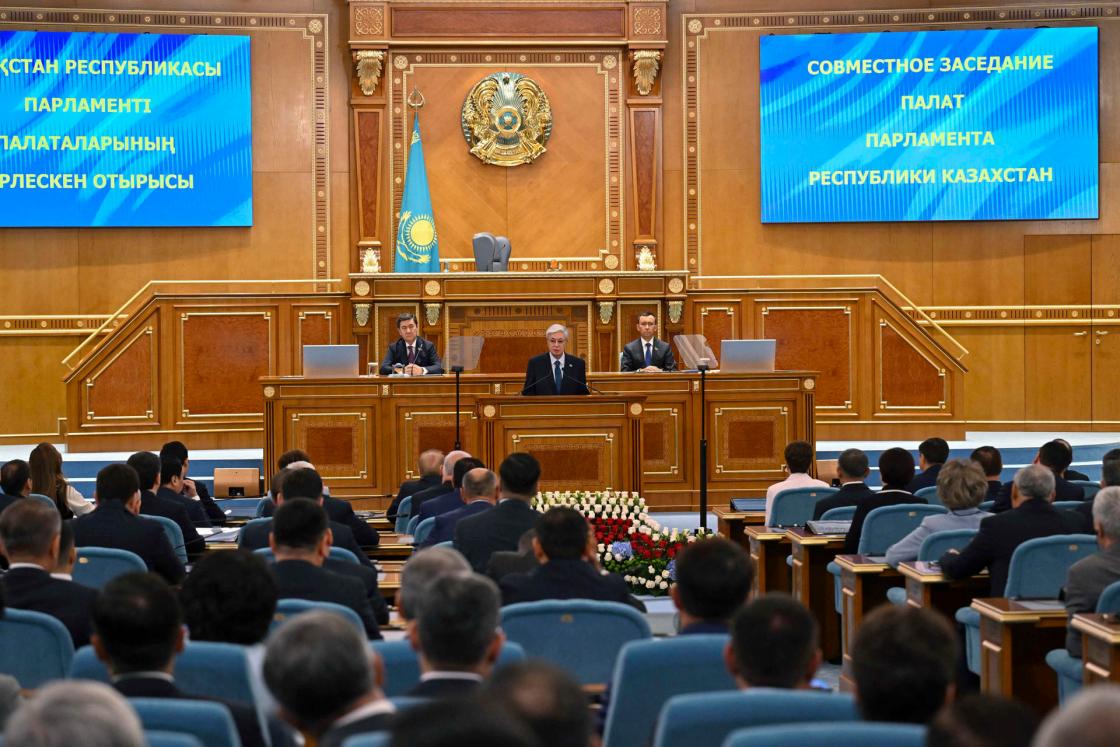
Astana, Jun 30 (EFE).- Kazakhstan is preparing to face growing international threats and challenges with its new constitution, which overhauls its parliament, President Kassym-Jomart Tokayev said on Tuesday, on the eve of the new charter’s entry into force.
“We should expect an increase in threats and challenges. Our main objective is to improve people’s well-being, guarantee security and raise citizens’ quality of life, making these trends irreversible,” Tokayev said during the final session of the bicameral parliament, which will become unicameral starting Wednesday.
Kazakhstan’s new constitution, approved earlier this year, is to enter into force on July 1, replacing more than 80 percent of the previous constitution, which had been in effect since 1995.
Among the changes is the creation of a new unicameral parliament, known as the Kurultai, with elections scheduled for August.
The Kazakh president recalled that nearly 3,500 laws had been passed over the past three decades.
“We intend to carry out a fundamental reform of the foundations of the Kazakh state. We are obliged to improve the state governance system qualitatively,” he said, adding that achieving this goal will depend on Kazakhstan becoming “a developed digital state” within the next three years.
Even so, he acknowledged that “the challenges we face in safeguarding Kazakhstan’s independence and sovereignty have not yet been fully resolved.”

A strategic priority
Tokayev, who inherited the current political system from his predecessor, Nursultan Nazarbayev, who ruled the country for three decades, said digitalization “is a task of critical importance because it will determine Kazakhstan’s ability to compete globally.”
He therefore described the transition to a new economic model as a strategic priority amid numerous international conflicts and challenges.
“Despite this, we are pursuing a balanced policy and moving forward with confidence. We will continue to follow this course,” he said.
Tokayev noted that the country’s gross domestic product grew by 6.5 percent last year, surpassing $300 billion.
In that context, he stressed the importance of Kazakhstan’s energy independence and the planned start of construction of the country’s first nuclear power plant in 2027. EFE