
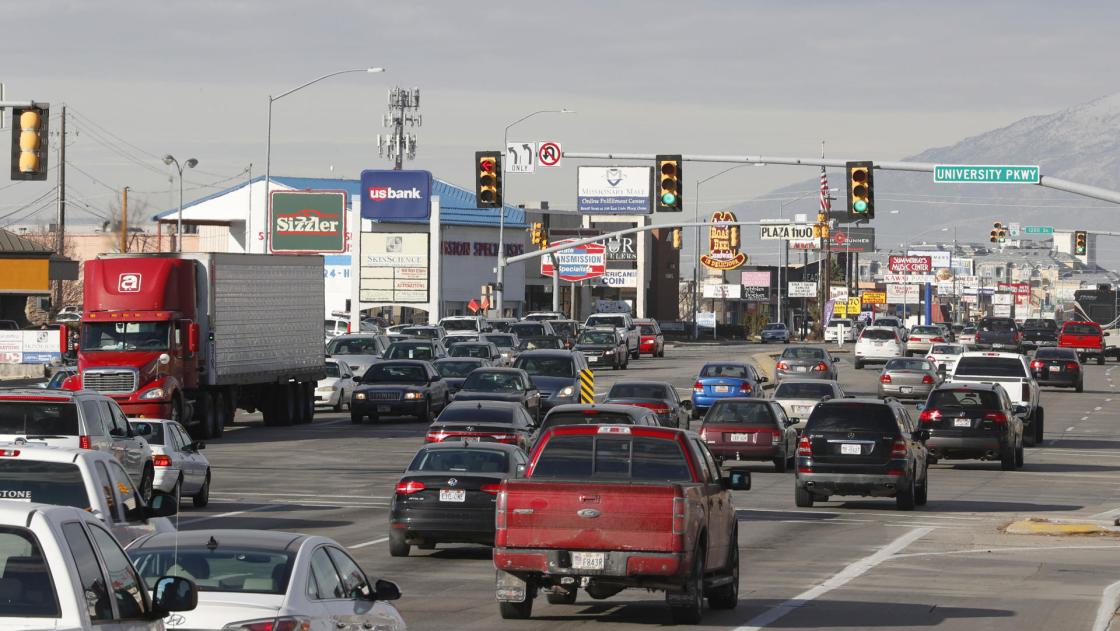
Mexico City, Feb 8 (EFE).- Latin Americans spend an average of 92 minutes a day commuting, equivalent to 25 days a year, according to data from the study “Unlocking the power of urban mobility in Latin America and the Caribbean,” published by Visa.
The report also highlights the need to introduce payment methods with mobile devices to encourage the modernization and use of public transport.
“For people to start preferring public transport to private means of transportation, programs and policies that improve access and comfort, services with better coverage, a modern fleet of vehicles, shorter travel times, and simpler payment options are needed,” the company said in a statement.
The countries in the region with the highest penetration of contactless payment methods, such as cell phones or smart watches, are Chile (93%), Peru (88%), and Guatemala and Panama (80%).
According to Visa, a survey by the multinational among 75 companies around the world revealed that 80% saw an increase in passengers due to the implementation of universal payment systems, while 94% of public transport users expect contactless technology for their convenience.
Different payment options
In cities such as Rio de Janeiro (Brazil), Guatemala City, and San José (Costa Rica), total transactions increased by close to 10% among users who started using bank cards on public transport, while there was a rise in the reactivation of travel cards that had been inactive for at least three months.
With universal or open-loop payment systems, passengers can pay securely and conveniently with the cards they use to make other purchases at different businesses, the company said.
“Visa’s latest research found that 94% of public transport users now expect to be able to pay with (contactless) “tap-to-ride” technology, while 83% of transport providers do not yet have a plan to implement the technology, so it is clear that we are passing the tipping point,” Visa’s Vice President for Products in the Andean Region and Latin America and the Caribbean Urban Mobility, Humberto Guihur, said.
“We are evolving to a world where consumers expect to be able to pay with a (contactless) ‘tap’ on public transport, so it is only a matter of time before systems adopt this technology,” he added.
Sustainable urban mobility
The report also shows that in Latin America and the Caribbean work has been done to reduce the carbon footprint. For example, Santiago de Chile has a fleet of 287 electric buses and eight charging terminals.
In Bogotá (Colombia) new charging stations will supply 379 electric buses and in Peru the first electric bus was introduced in October 2023.
In addition, these projects already include open-loop payment technology, which allows passengers to access with various methods, because “when users feel they can pay with their preferred card or app, they tend to travel more frequently because of the security and confidence this provides.” EFE
EFE has received support from Visa in the production of this content.