
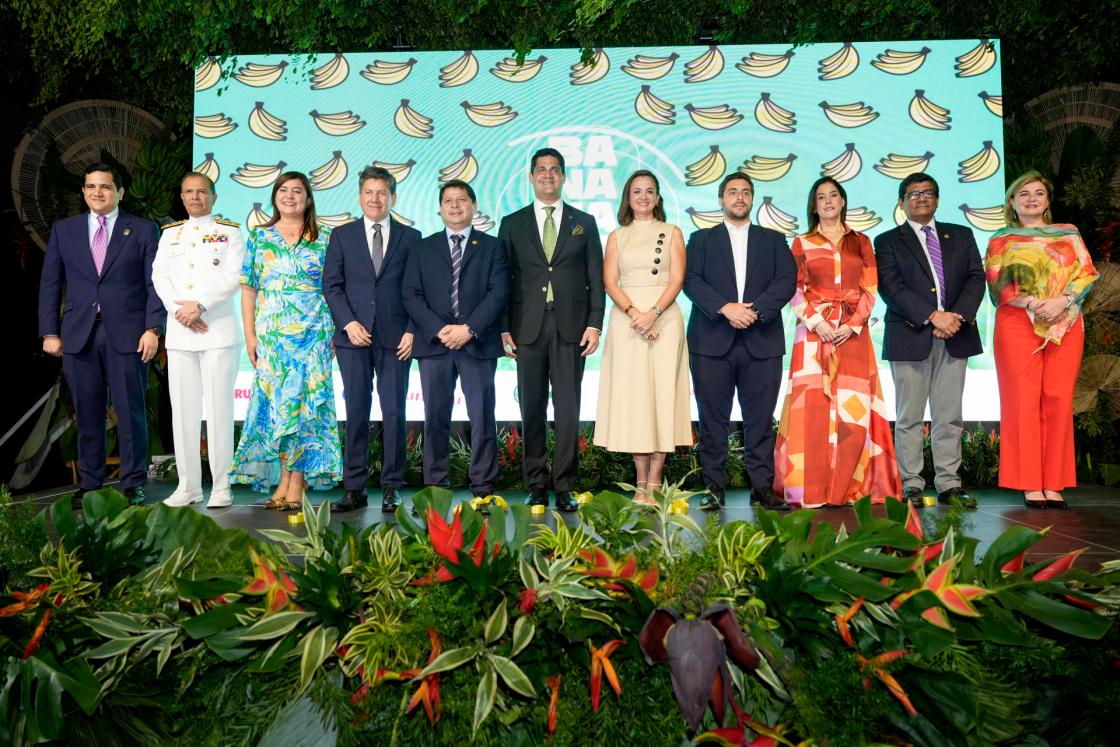
Guayaquil, Ecuador, Oct. 24 (EFE).- The 21st edition of “Banana Time,” the largest international convention for the banana industry, opened with a call for unity from Ecuador, the world’s leading exporter of the fruit, to tackle global challenges such as low supermarket prices in Europe, phytosanitary threats, and the security of the logistics chain.
“Banana Time,” held annually in Guayaquil by the Ecuadorian Association of Banana Exporters (AEBE), which represents more than 70% of Ecuador’s total banana export volume, runs from October 23 to 25, featuring keynote speeches, trade exhibitions, and a culinary contest showcasing dishes with bananas as the key ingredient.
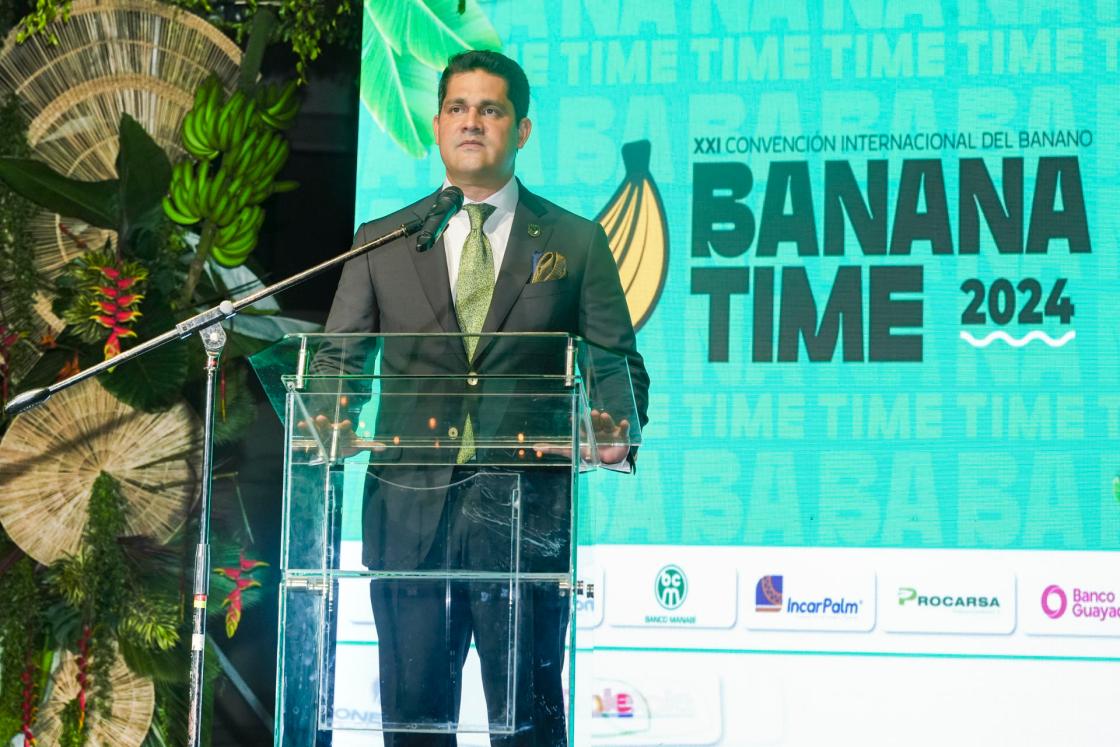
During the convention’s opening late Tuesday, AEBE President Jorge Encalada emphasized the need for unity, saying, “the key to overcoming these challenges lies in the unity and joint efforts of all actors in the production chain.”
“The future of bananas depends on our ability to remain united,” Encalada stressed.
Challenges Facing Ecuador’s Banana Sector
At the national level, Ecuador’s banana sector is facing difficulties due to the country’s energy crisis, leading to power outages of up to ten hours a day, and a security crisis fueled by the rise of organized crime gangs.
Added to these are international challenges such as geopolitical instability and diseases affecting banana plants, like Fusarium TR4 and bacterial Moko. There are also new sustainability regulations from the European Union (EU), Ecuador’s main banana export market, requiring producers and exporters to invest in compliance.
Encalada stressed that these regulations must be applied consistently.
Fair Compensation and Sustainability
“We will not allow our producers to be treated unfairly. Supermarkets, as key players in the chain, must commit to not using bananas as a loss leader, sending the wrong message to consumers and undervaluing the efforts demanded of us,” he said, referring to recent cases in European supermarkets.
Encalada stressed the need for the new market requirements imposed on producer countries to be compensated with the true cost of sustainability. “We can’t have a green pact with red numbers,” he noted.
He also highlighted the unity achieved in Latin America through the Latin American Joint Task Force, which, since 2020, has brought together export associations from Ecuador, Guatemala, the Dominican Republic, Costa Rica, Peru, Panama, and Colombia to confront challenges with buyer countries. Meanwhile, Ecuador, Colombia, and Costa Rica are also collaborating on solutions to combat Fusarium.
Promoting Sustainable Growth and Solutions
“Together, we can develop solutions that mitigate crises and promote sustainable growth. I believe that formality in the sector is essential to face the challenges of our main markets,” Encalada said.
“This event reflects our sector’s persistence in maintaining jobs and foreign exchange for our country by producing and exporting sustainable bananas and paying fair wages, despite local and international challenges,” he added.
Ecuador’s Banana Industry and Global Presence
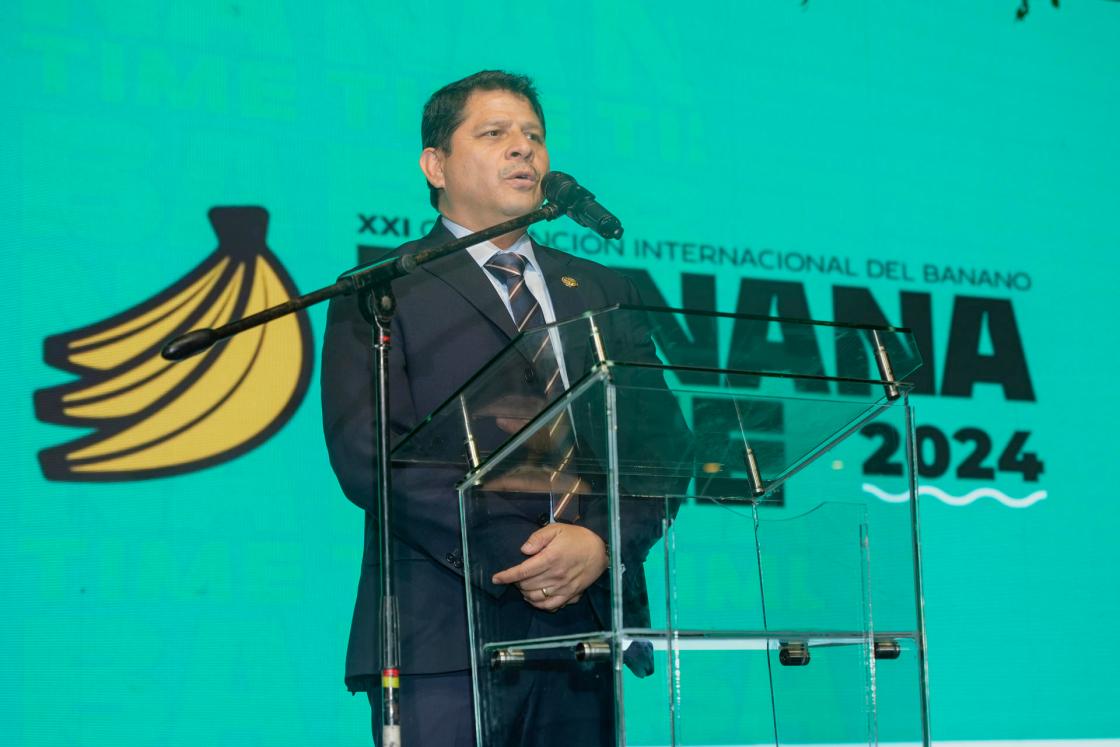
Also attending the inauguration was Ecuador’s Minister of Agriculture and Livestock, Danilo Palacios, who reaffirmed the government’s commitment to achieving full formality in the banana sector, as “bananas are the country’s flagship product,” reaching dozens of countries worldwide.
Palacios highlighted Ecuador’s significant presence at the recent international fair “Fruit Attraction,” held in Madrid, where Ecuadorian bananas were among the top products on display, and the country won the award for best exhibition stand.
Key Figures Attending the Inaugural Event
The inaugural event was also attended by Ecuador’s Minister of Production, Foreign Trade, Investments, and Fisheries, Luis Alberto Jaramillo; the EU Ambassador to Ecuador, Jekaterina Dorodnova; the French Ambassador to Ecuador, Philippe Létrilliart; the prefect of the Ecuadorian province of Guayas, Marcela Aguiñaga; and the prefect of Los Ríos, Johnny Terán, along with other local authorities.
Economic Importance of Ecuador’s Banana Industry
The banana industry is one of the driving forces of Ecuador’s economy, contributing more than $3.5 billion annually to the country’s gross domestic product (GDP) and generating 250,000 direct jobs. In 2023, Ecuador’s banana exports were primarily directed to the EU (28.42%), Russia (21.12%), the Middle East (16.65%), and the United States (9.08%). EFE
EFE collaborated with AEBE in the production of this content.