
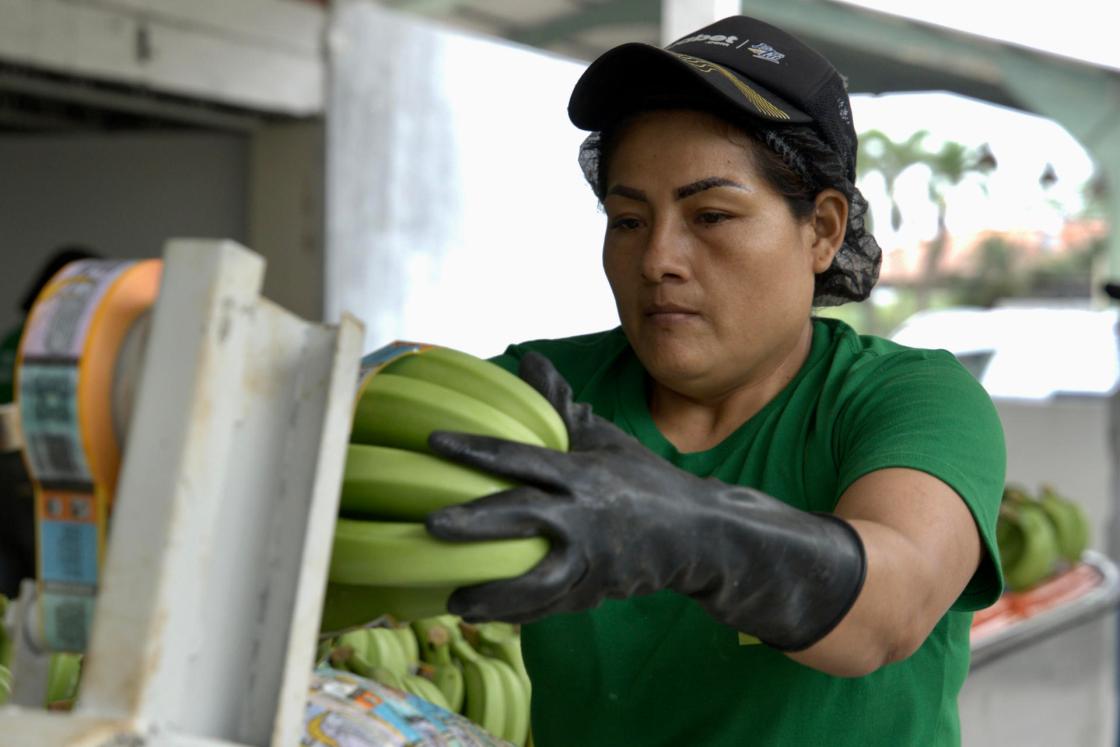
Guayaquil (Ecuador), Oct 28 (EFE).- Ecuador’s banana industry expects that after a “historic fall” in exports to Russia suffered in the last year, it will maintain market share at 18.09%, and aims to increase shipments to China with the entry into force of a free trade agreement.
“Russia is a very large market and we cannot afford to lose more share again. I think the important thing at the moment is to maintain for next year the same 18% we have now because we know that the solution to the conflict between Russia and Ukraine is not just around the corner,” Association of Banana Exporters of Ecuador (AEBE) Vice President Marianela Ubilla told EFE.
Russia is the most important country to which Ecuador exports bananas although the European Union (EU) accounts for a larger 30% share.
Recovering lost ground
Last year shipments to Russian customers fell by more than 3%, the sharpest drop for any region or country.
The executive of the world’s leading banana exporter believes that it will be difficult for Ecuador to recover the ground lost between 2023 and 2024 because, due to the conflict, there are only two shipping companies that travel to the country, which has caused a rise in transport prices.
This in turn translates into an increase in the final price of bananas. “The sensitivity of consumers to a price increase causes demand to fall,” said Ubilla.
The AEBE vice president said that the association is confident that transportation costs can be reduced, even a little. They also aim to establish annual contracts with Russian customers to achieve greater stability and “a projection of maintaining exports or achieving a small rise.”
Ubilla gave a lecture on the subject on Thursday during the 21st Banana Time, the largest international convention of the banana industry organized annually in Guayaquil by AEBE. This year the event takes place from October 23 to 25.


Opportunities in China and Japan
At the conference, the industry representative made a comprehensive analysis of current and emerging trends in the global banana trade. She also explained the challenges and opportunities for companies to adapt to an ever-changing market.
During the talk, Ubilla identified China and Japan as the markets Ecuador should target in the coming years to expand its share of global trade.
According to association figures, China is the second largest importer of bananas after the United States. For this reason, the industry associations and the export sector insisted on the importance of a trade agreement, which came into force in May.
“And we see that Japan ranks sixth, with more than 4% of the world’s banana imports. For this reason, the signing of a trade agreement with Japan is also important,” she added.
Ubilla said that with the consolidation of both agreements, it would be possible to face emerging countries such as Cambodia, India, and Vietnam who also want to build market share.
The agricultural engineer believes they also have an opportunity to continue growing in the United States. This comes especially after direct competitors such as Guatemala recorded drops in banana exports to the North American country.
In fact, between 2023 and 2024, Ecuador increased its share of the U.S. market by almost 3% after decreases in recent years. “It would be important to maintain that position that today we have gained with the industry’s professionalism,” she said. EFE