
By Kulpash Konyrova
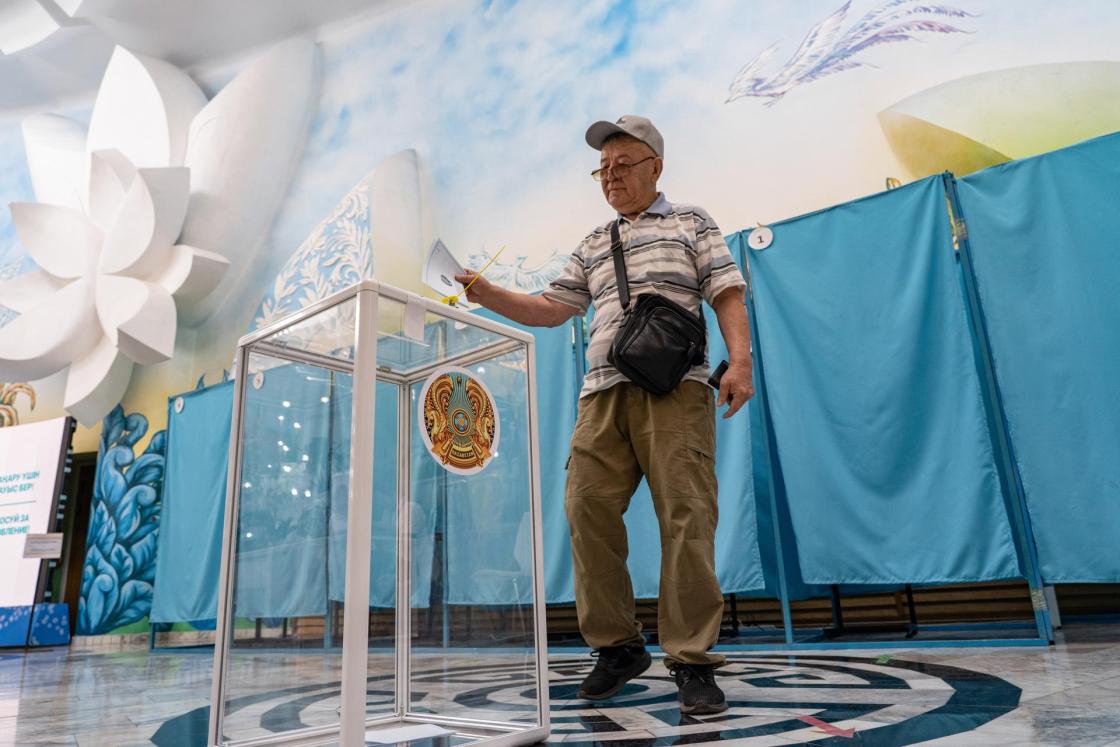
Kazakhs head to the polls on Sunday to vote in legislative elections for the new Kurultai, a unicameral parliament, hoping that it will preserve traditions and combat bureaucracy.
“Today I went to my polling station for two reasons. Firstly, I support replacing the foreign term ‘Parliament’ with ‘Kurultai,’ a word that is more understandable and closer to our national spirit, which has existed for centuries in the history of our people. Secondly, I want to believe that the proclaimed principles of ‘Zhana’ (New Kazakhstan) will improve our lives,” Alikhan, 45, who is a driver living in Kosshi, a town on the outskirts of the Kazakh capital, told EFE.
The vote is taking place as part of the political reforms announced by the president of the Central Asian republic, Kassym-Jomart Tokayev, who said on Sunday that there is still much work to be done to implement all projects to transform the country.
Historical memory of the Great Steppe
“Kurultai” is a historical term used by Turkic peoples to describe an assembly or meeting where key national issues were discussed.
As a result, some parts of society see the recovery of this term in Kazakhstan’s modern political system as a return to the traditions of Kazakh statehood and the political legacy of the Great Steppe.
Less bureaucracy
Alikhan expressed confidence that the Kurultai will adopt new laws more quickly and combat bureaucracy. Nazerke Beketanova, a 35-year-old Kazakh language teacher, agrees.

“As a Kazakh language teacher, I am glad that one of the branches of political power has been renamed in the Kazakh style: from ‘Parliament’ to ‘Kurultai.’ I think it is an important step for the Kazakh people in reclaiming our identity and revitalizing historical names,” she said.
In addition, she said the public expects “more measures of this kind” from the authorities, as this will signify that the country is moving in the right direction.
According to Kazakh political analyst Talgat Kaliyev, the symbolic value of the parliament’s new name could also influence voter turnout.
“Establishing the Kurultai as a legislative body holds enormous significance for the Kazakh people, as it is based on centuries of the steppe’s democratic traditions and symbolizes continuity with the history of Kazakhstan’s statehood,” he explained to EFE.
“Against all,” one more option
According to the Central Election Commission, 72.15% of registered voters had already exercised their civic right by 6:00 p.m.
However, some voters interviewed by EFE, who asked to remain anonymous, stated that they voted for the “Against all” option.
“There is no trust in the parties presenting themselves,” they explained.
Seven political parties are competing for 144 seats in the unicameral Kurultai in these elections.
According to Kazakhstan’s Central Election Commission, 10,363 polling stations across the country’s 20 regions opened their doors at 7:00 a.m. and will close at 8:00 p.m. (15:00 GMT).
For these elections, 79 voting locations were set up abroad in 61 countries.
Exit poll results are expected to be announced after polling stations close. EFE